
Growing at a glance
- Sow indoors: usually March to early April, in warmth and bright light; seed is slow to germinate and needs a long season.
- Plant outside: after hardening off, once frost risk has passed and conditions are mild, often late May or June.
- Spacing: about 30 cm between plants and 40–45 cm between rows; keep the crown at soil level.
- Position and care: full sun, fertile soil that stays evenly moist, steady watering and mulch.
- Harvest: from autumn through winter; lift as needed before hard ground prevents access.
Sow seed and raise strong plants
Celeriac is a slow-growing form of celery grown for its swollen stem base. It needs a long growing season and young plants dislike cold, so indoor sowing is more reliable than direct sowing in most of the UK. Sow in March or early April in a clean tray or modules of fine seed compost. Celeriac seed needs light to germinate, so press it onto the surface or cover only very lightly; keep the compost moist and warm, around 15–20°C, and be patient because germination can be uneven.
Give seedlings bright light after emergence and keep them just moist. Pot on gently when they are large enough to handle, avoiding root damage. Keep young plants protected from cold and do not rush them outdoors. Harden off gradually over a week or more once the weather is suitable.
Prepare the bed and plant out
Choose a sunny bed with fertile, moisture-retentive but well-drained soil. Add mature compost before planting, ideally as part of general bed preparation rather than concentrated around the roots. Celeriac performs poorly if its growth is checked by dryness or weeds. Do not plant into waterlogged ground.
Plant outside after frost risk has passed and the soil is warming, often in late May or June depending on region. Set plants about 30 cm apart with 40–45 cm between rows, keeping the crown exactly at soil level. Do not bury the growing point. Water each plant in thoroughly and use temporary fleece or a cloche in a cold spell, removing or ventilating covers when conditions warm.
Maintain even growth and diagnose problems
Water deeply whenever the root zone begins to dry, especially through summer and while roots swell. Mulch after the soil is moist to conserve water and suppress weeds. Containers need frequent moisture checks and a large volume of compost; small pots tend to produce small roots. A balanced fertiliser may help in poor soil, but avoid excessive nitrogen. As leaves mature, remove outer leaves that fall horizontally if they are covering the crown; keep the central growing leaves intact and do not earth up the plant.
Slugs can damage young plants, and leaf spot can appear in humid, crowded growth. Space plants well, remove badly affected leaves and avoid wetting foliage late in the day. Small or woody roots often result from early cold, drought, competition, shallow soil or late planting. The crop may not recover fully after prolonged stress, so steady care from establishment is more effective than a late feed.
Harvest and store
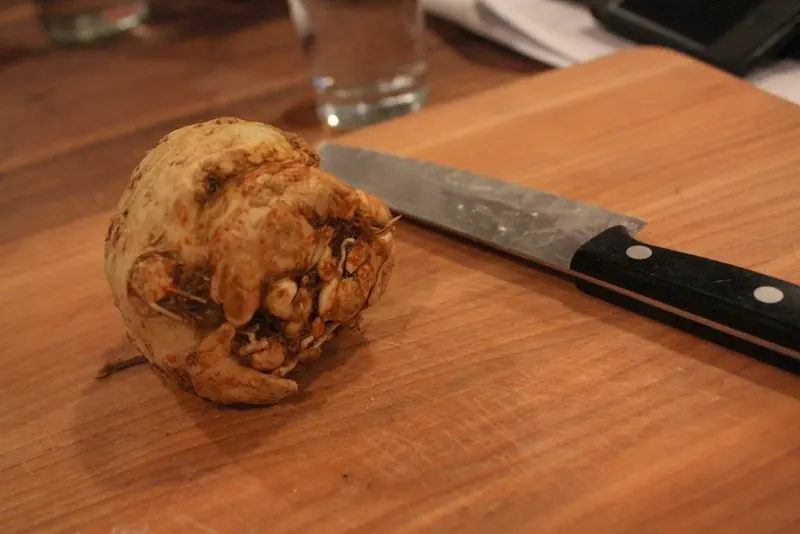
Harvest from autumn when roots are large enough to use, lifting individual plants carefully with a fork. Celeriac is hardy and can often remain in the ground through winter in free-draining soil, allowing you to lift it as needed. In colder or wetter sites, lift before the ground freezes or becomes saturated, trim leaves and store roots cool and frost-free in a box of slightly damp sand or compost. Check stored roots regularly and remove any that soften or rot.
Common mistakes
- Sowing outdoors too late for the crop to mature, or keeping seedlings cold after germination.
- Planting too deeply and burying the crown, or trying to earth up the bulb like a potato.
- Allowing soil to dry while the root is swelling; fluctuating moisture can limit size and quality.
- Stripping too many leaves or assuming extra fertiliser will fix cold, drought or poor spacing.