
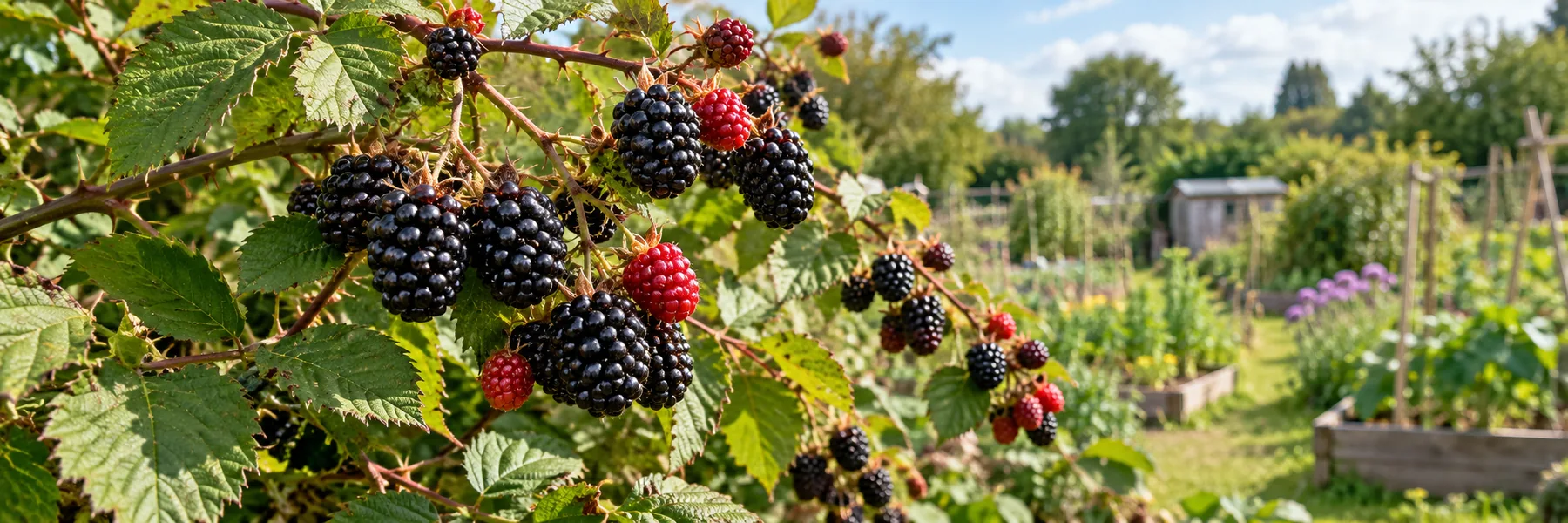
Freezing Blackberry
General preservation or storage guidance
Prepared blackberries can be frozen in portions for later cooking; the texture will be softer after thawing.
Method
- Sort sound blackberries, discard bruised or mouldy fruit, remove stalks and leaves, rinse gently if needed and dry thoroughly.
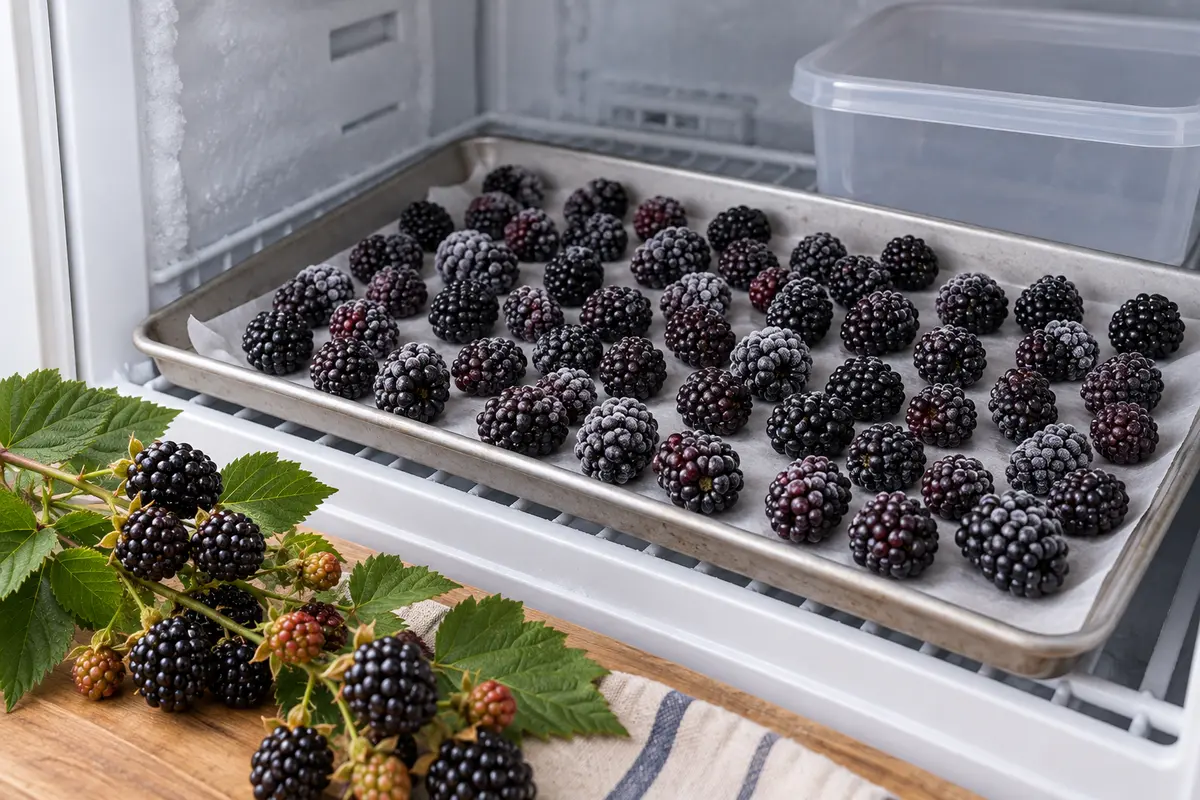
- Spread prepared fruit in one layer on a lined tray so pieces freeze separately.
- Freeze until firm, then transfer carefully to a labelled freezer-safe container or bag and remove excess air.
- Seal and return promptly to the freezer.
- Use from frozen in cooking or thaw in the refrigerator; do not refreeze once thawed.
Storage
Freezer at −18°C or colder · No method-specific quality period stated
Sources and scope
- Fruits — National Center for Home Food Preservation
Method-specific source recorded in the prior content audit
Blackberry Jam
General preservation or storage guidance
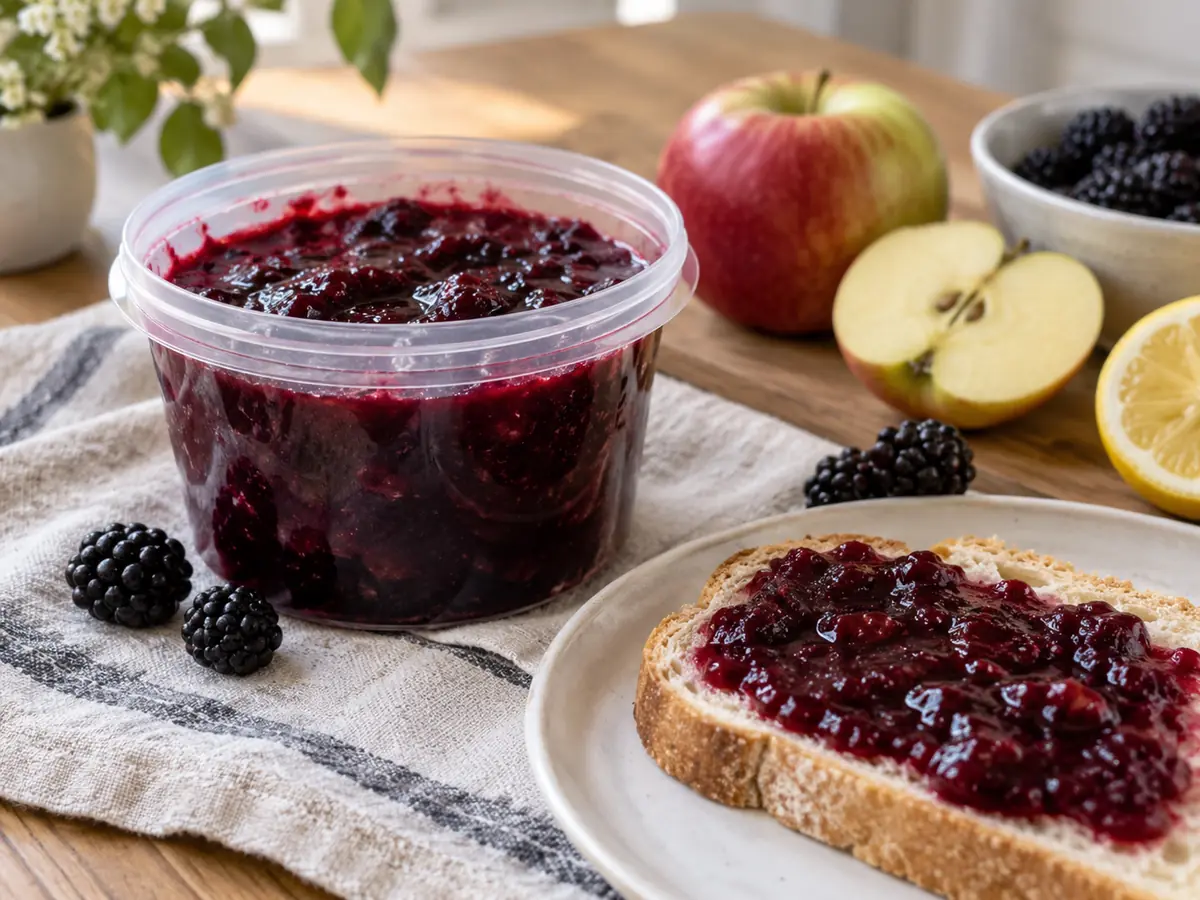
This tested powdered-pectin blackberry jam gives a measured fruit-to-sugar ratio and a short full-boil stage; follow the quantities exactly for reliable setting and processing.
Method
- For one batch, measure 6 US cups crushed blackberries (about 3 US quart boxes), 1 package powdered pectin and 8½ US cups sugar. Do not change the proportions or batch size.
- Sort and wash fully ripe berries; remove stalks and leaves, drain and crush. If the berries are very seedy, sieve some or all of the crushed fruit before measuring.
- Stir the powdered pectin into the measured fruit. Heat on high, stirring constantly, until the whole surface reaches a full boil. Add the measured sugar and bring back to a full bubbling boil.
- Boil hard for 1 minute, stirring constantly, then remove from the heat and skim. Fill hot, sterile half-pint or pint jars immediately, leaving ¼ inch (6 mm) headspace; wipe rims and fit prepared lids.
- Process in a boiling-water canner for the tested time: 5 minutes up to 1,000 ft (305 m), 10 minutes at 1,001–6,000 ft (306–1,829 m), or 15 minutes above 6,000 ft (1,829 m). Cool undisturbed, check seals and refrigerate any jar that did not seal; refrigerate after opening.
Storage
Store sealed, correctly processed jars in a cool, dark place; refrigerate after opening · Use the tested recipe’s storage guidance; no extra duration is added here
Sources and scope
- Blackberry Jam Pectin — National Center for Home Food Preservation
Method-specific source recorded in the prior content audit
Blackberry Jelly
General preservation or storage guidance
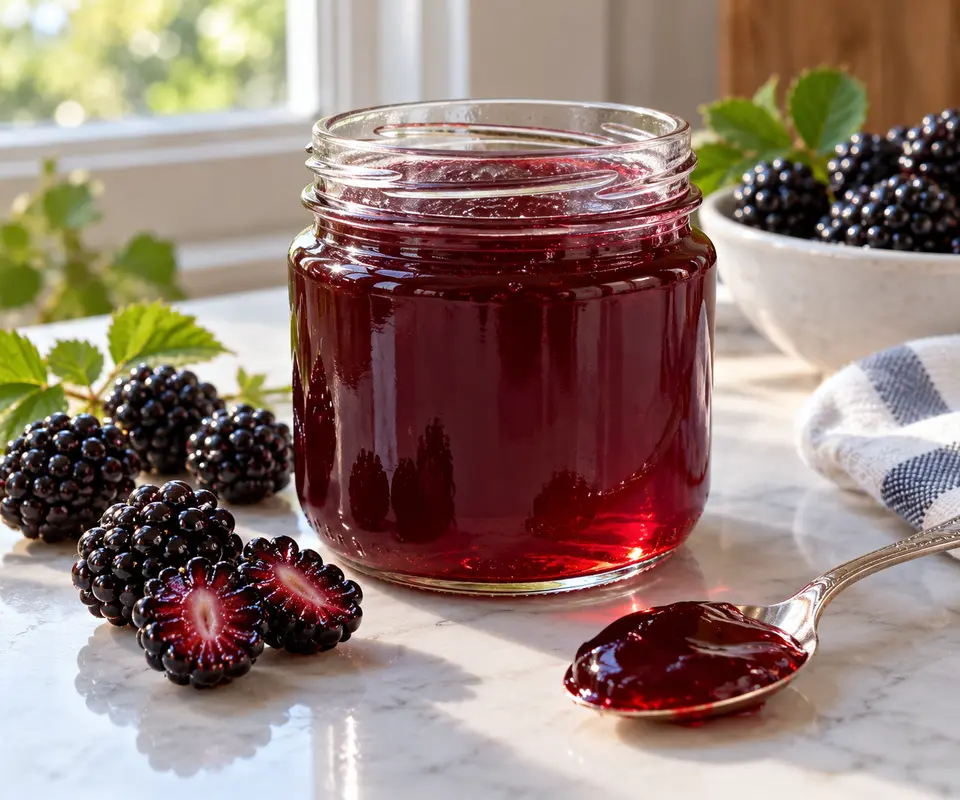
A clear blackberry jelly is made by simmering crushed berries, draining the juice without squeezing, then cooking that measured juice with sugar to the jellying point.
Method
- For one batch, prepare about 2½ US quart boxes of blackberries and ¾ US cup water to yield 4 US cups juice; measure 3 US cups sugar for that amount of juice. Sort and wash the berries and remove stalks or caps.
- Crush the berries, add the measured water, cover and bring to the boil. Stir to prevent scorching, then simmer for 5 minutes until tender.
- Pour the fruit through a double layer of damp cheesecloth or a damp jelly bag suspended over a bowl. Let it drain without pressing or squeezing, which can make the jelly cloudy. Measure 4 cups of juice.
- Put the measured juice and 3 cups sugar in a pan. Boil over high heat until it reaches 8°F (about 4.5°C) above the local boiling point of water, or 220°F (about 104°C) at sea level, or sheets from a metal spoon. Skim promptly.
- Fill hot, sterile half-pint or pint jars, leaving ¼ inch (6 mm) headspace; wipe rims and fit prepared lids. Process in a boiling-water canner for the tested time: 5 minutes up to 1,000 ft (305 m), 10 minutes at 1,001–6,000 ft (306–1,829 m), or 15 minutes above 6,000 ft (1,829 m). Cool undisturbed, check seals and refrigerate any jar that did not seal; refrigerate after opening.
Storage
Store sealed, correctly processed jars in a cool, dark place; refrigerate after opening · Use the tested recipe’s storage guidance; no extra duration is added here
Sources and scope
- Blackberry Jelly Without Pectin — National Center for Home Food Preservation
Method-specific source recorded in the prior content audit
Fruit Leather for Blackberry
General preservation or storage guidance
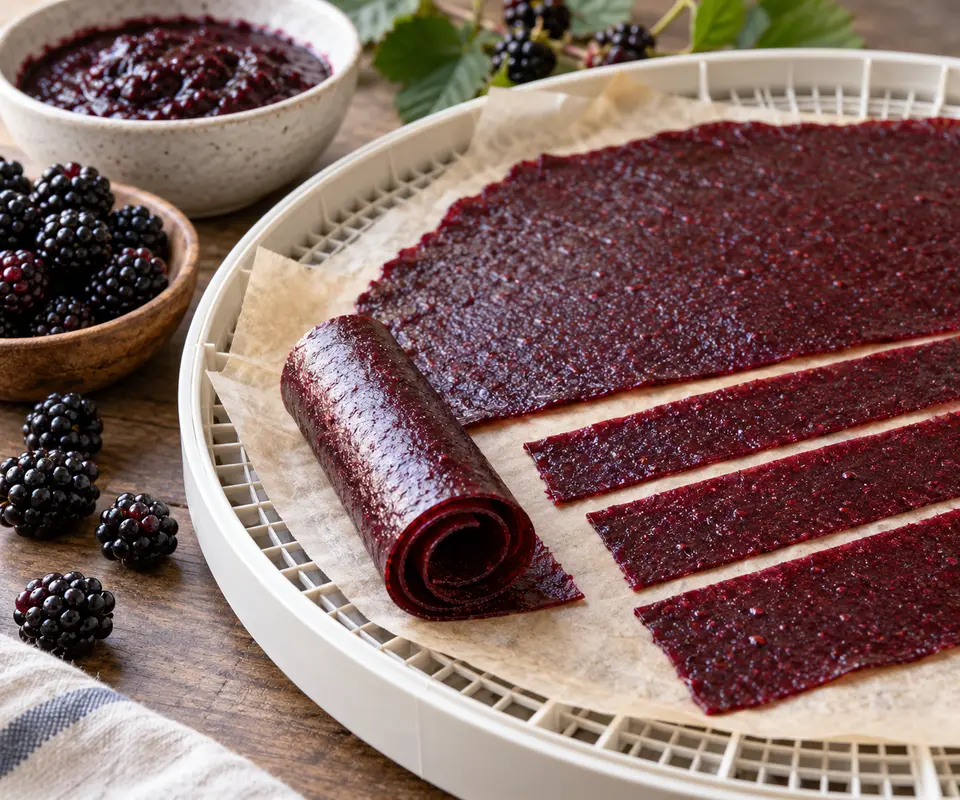
Blackberry purée can be spread thinly and dehydrated into flexible fruit leather; sieving out the seeds makes the finished sheet smoother.
Method
- Sort and rinse sound blackberries; discard mouldy fruit. Purée the berries and press through a fine sieve if you want to remove the seeds. Sweeten only to taste.
- Spread the purée evenly on a purpose-made leather sheet or lined drying tray. Keep the layer even and follow the dehydrator manufacturer’s loading guidance.
- Dry in a dehydrator or warm oven at about 63°C (145°F) until the sheet is leathery throughout and has no wet or moist pockets. Check the centre as well as the edges.
- Peel the sheet from the liner, cool completely, then cut or roll it.
- Pack airtight in a cool, dry place. If condensation appears, dry the leather further; discard it if mould develops.
Storage
Cool, dry place in an airtight pack; refrigerate or freeze if the pack may become warm or humid · No exact storage period stated; keep dry and inspect for condensation or mould
Sources and scope
- Sp 50 780 Preserving Foods Berries — Oregon State University Extension
Method-specific source recorded in the prior content audit