
Freezing Blackcurrant
General preservation or storage guidance
Prepared blackcurrants can be frozen in portions for later cooking; the texture will be softer after thawing.
Method
- Sort sound blackcurrants, discard bruised or mouldy fruit, remove stalks and leaves, rinse gently if needed and dry thoroughly.
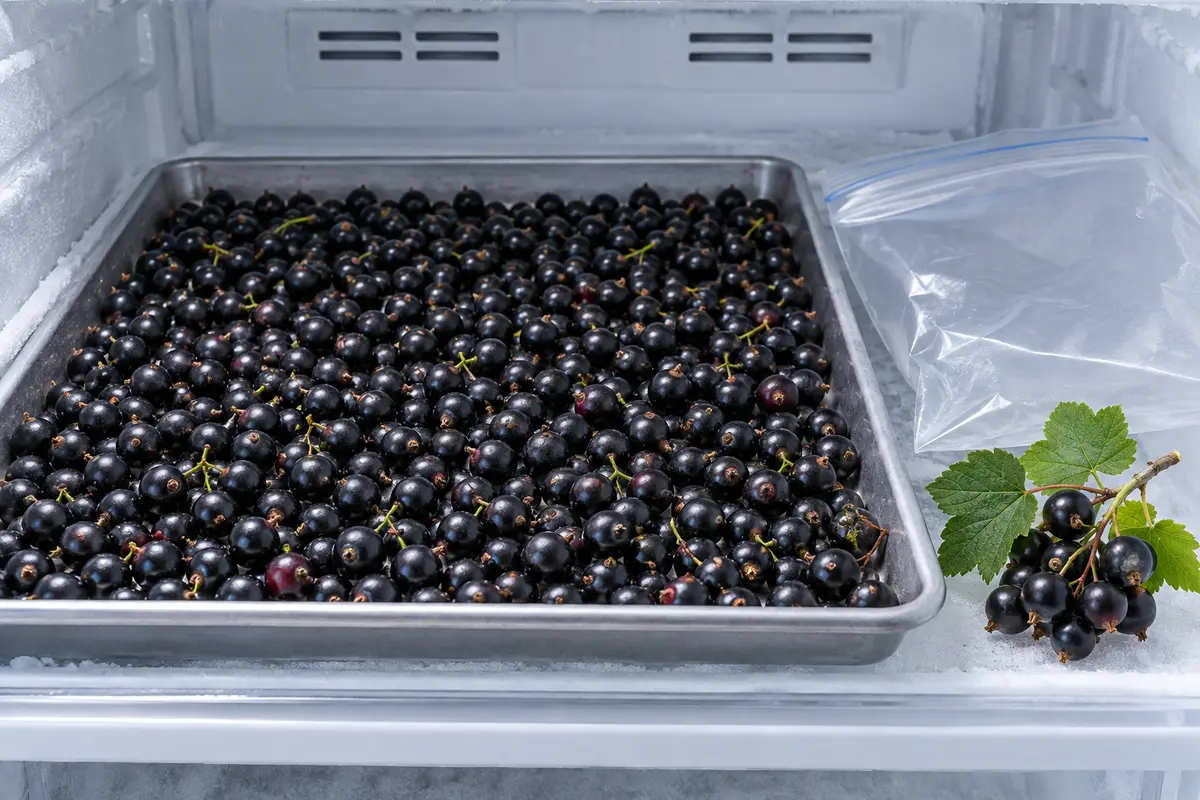
- Spread prepared fruit in one layer on a lined tray so pieces freeze separately.
- Freeze until firm, then transfer carefully to a labelled freezer-safe container or bag and remove excess air.
- Seal and return promptly to the freezer.
- Use from frozen in cooking or thaw in the refrigerator; do not refreeze once thawed.
Storage
Freezer at −18°C or colder · No method-specific quality period stated
Sources and scope
- Freezing Currants — National Center for Home Food Preservation
Method-specific source recorded in the prior content audit
Refrigerator Blackcurrant Jam
Home recipe · fridge or freezer method
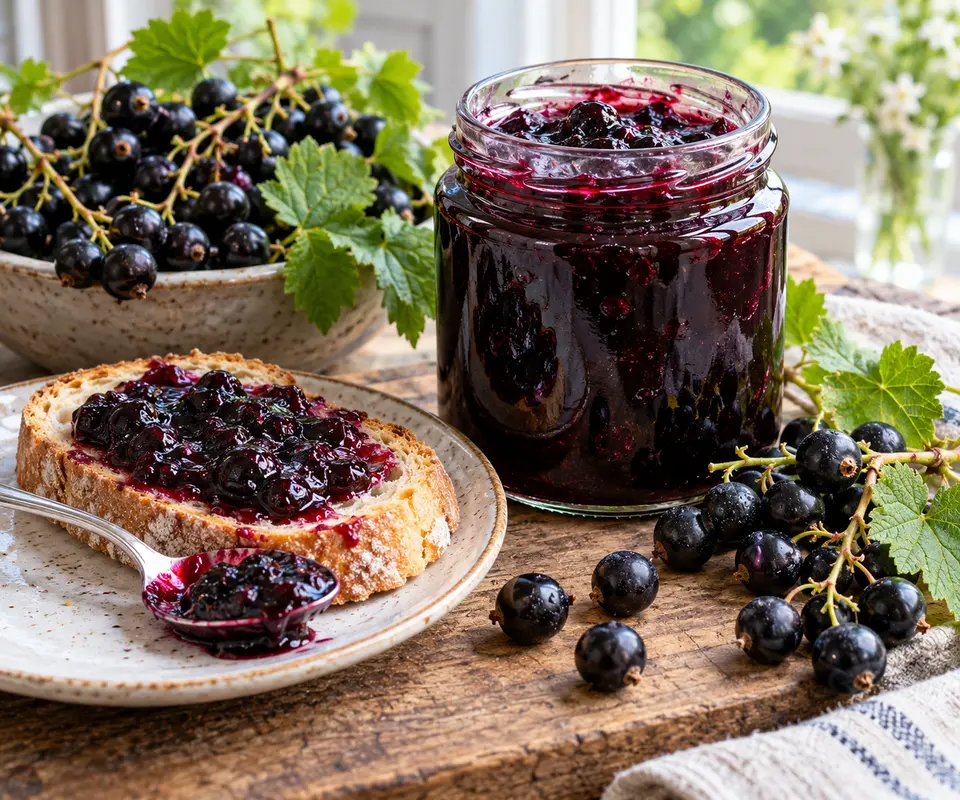
A small cooked blackcurrant jam with measured fruit and sugar, made for chilled use or freezing in portions.
Ingredients
- 300 g blackcurrants, stalks removed
- 250 g granulated sugar
- 2 tbsp water
- 1 tbsp lemon juice
Equipment
- Saucepan
- Wooden spoon
- Chilled saucer for a set check
- Clean shallow lidded containers
Method
- Rinse the blackcurrants and remove stalks and damaged berries. Put them in a saucepan with the water.
- Heat gently until the berries release juice, then simmer for 5 minutes, stirring and crushing some berries with the spoon.
- Add the sugar and lemon juice. Stir over low heat until the sugar dissolves, then bring to a steady boil.
- Boil for 8–12 minutes, stirring frequently. Spoon a little onto a chilled saucer; if it wrinkles when pushed after cooling, remove the pan from the heat. The set check is for texture only and does not make this a shelf-stable preserve.
- Spoon into clean shallow containers. Cool quickly and refrigerate or freeze within 2 hours. Serve on toast, porridge or yoghurt; refrigerate for no more than 48 hours, or thaw frozen portions in the fridge and use within 48 hours.
Storage
Cool promptly; refrigerate at 0–5°C or freeze in portions · Refrigerate within 2 hours and eat within 48 hours, or freeze promptly
Sources and scope
- How to chill, freeze and defrost food safely — Food Standards Agency
Storage guidance only: keep the fridge between 0°C and 5°C, cool cooked food and refrigerate within 1–2 hours, and eat leftovers within 48 hours or freeze. This source does not validate the recipe or any shelf-stable process.
Blackcurrant Jelly
General preservation or storage guidance
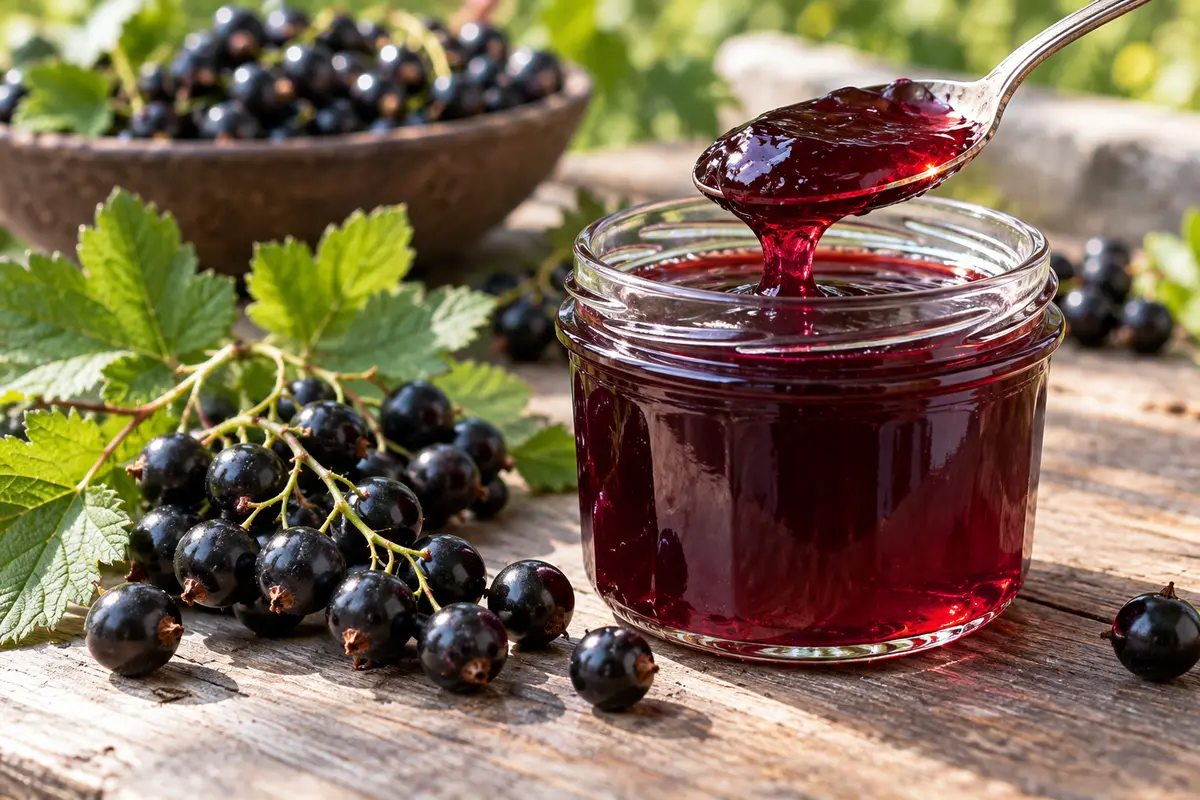
This tested blackcurrant jelly uses strained juice, liquid pectin and a measured sugar quantity; allow the juice to drip without pressing for a clearer set.
Method
- For one batch, measure 9 US cups washed, stemmed blackcurrants, 1 US cup water, 1 pouch (85 ml) liquid pectin and 7 US cups sugar. The recipe makes about eight 250 ml jars.
- Put the currants and water in a stainless-steel saucepan. Bring to the boil, cover and boil gently for 5 minutes, crushing the fruit occasionally.
- Pour the hot fruit through a damp jelly bag or cheesecloth-lined sieve and let the juice drip undisturbed for at least 2 hours or overnight. Measure 5 cups juice for the jelly; do not squeeze if you want it clear.
- Stir the measured juice and sugar together in a large, deep pan. Bring to a full rolling boil that cannot be stirred down, add the entire pouch of liquid pectin, then boil hard for 1 minute while stirring constantly. Skim foam promptly.
- Fill hot jars, leaving ¼ inch (6 mm) headspace, wipe rims and fit prepared lids. Process in a boiling-water canner for 10 minutes at elevations up to 1,000 ft (305 m); cool undisturbed for 24 hours, check seals and refrigerate any jar that did not seal. Store sealed jars cool and dark; refrigerate after opening.
Storage
Store sealed, correctly processed jars in a cool, dark place; refrigerate after opening · Use within 1 year for best quality per the tested recipe
Sources and scope
- Black Currant Jelly — Bernardin
Method-specific source recorded in the prior content audit
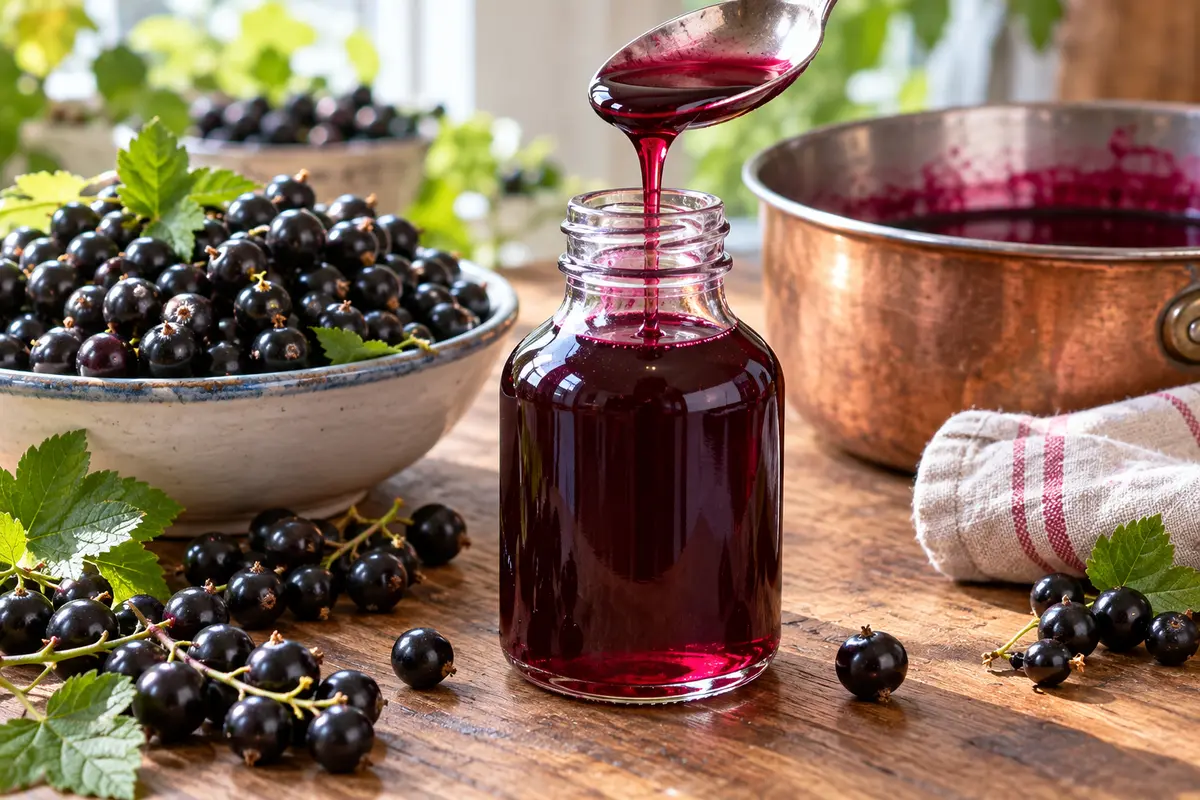
Refrigerator Blackcurrant Syrup
Home recipe · fridge or freezer method
A small cooked syrup for immediate chilled use or freezing in small portions; not a cupboard-stored cordial.
Ingredients
- 300 g blackcurrants, stalks removed
- 150 ml water
- 100 g granulated sugar
- 1 tsp lemon juice
Equipment
- Saucepan
- Fine sieve
- Clean lidded bottle or freezer-safe portions
Method
- Rinse the blackcurrants and remove stalks and damaged fruit.
- Simmer berries and water for 10 minutes until the fruit collapses. Mash gently with a spoon.
- Strain through a fine sieve without pressing through the seeds. Return the juice to the pan, add sugar and lemon, and stir over low heat until dissolved.
- Bring briefly to a simmer, then pour into a clean container. Cool quickly and refrigerate or freeze within 2 hours.
- Dilute to taste with cold water or stir into yoghurt. Keep refrigerated and use within 48 hours, or thaw frozen syrup in the fridge and use within 48 hours.
Storage
Refrigerate at 0–5°C or freeze in small portions · Refrigerate within 2 hours and use within 48 hours, or freeze promptly
Sources and scope
- How to chill, freeze and defrost food safely — Food Standards Agency
Storage guidance only: keep the fridge between 0°C and 5°C, cool cooked food and refrigerate within 1–2 hours, and eat leftovers within 48 hours or freeze. This source does not validate the recipe or any shelf-stable process.