
Freezing Blueberry
General preservation or storage guidance
Prepared blueberries can be frozen in portions for later cooking; the texture will be softer after thawing.
Method
- Sort sound blueberries, discard bruised or mouldy fruit, remove stalks and leaves, rinse gently if needed and dry thoroughly.
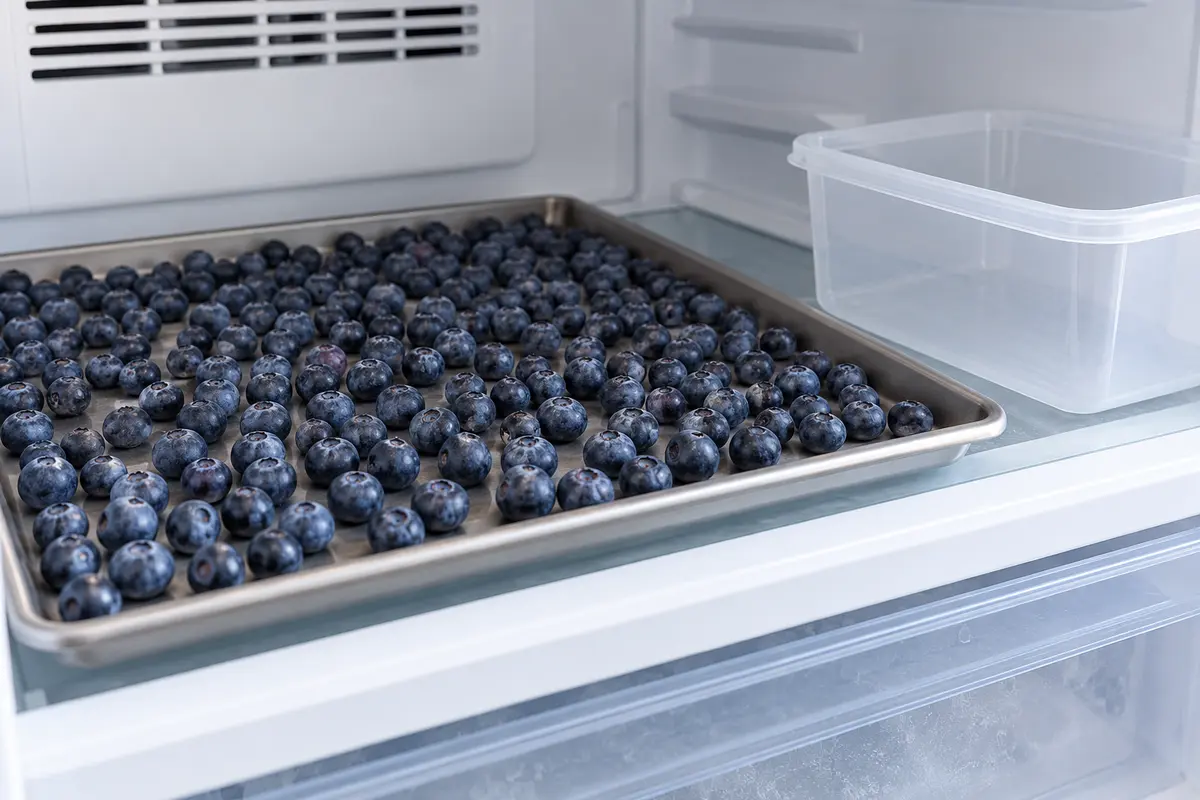
- Spread prepared fruit in one layer on a lined tray so pieces freeze separately.
- Freeze until firm, then transfer carefully to a labelled freezer-safe container or bag and remove excess air.
- Seal and return promptly to the freezer.
- Use from frozen in cooking or thaw in the refrigerator; do not refreeze once thawed.
Storage
Freezer at −18°C or colder · No method-specific quality period stated
Sources and scope
- Dry Or Tray Packing For Fruits — National Center for Home Food Preservation
Method-specific source recorded in the prior content audit
Blueberry Jam
General preservation or storage guidance
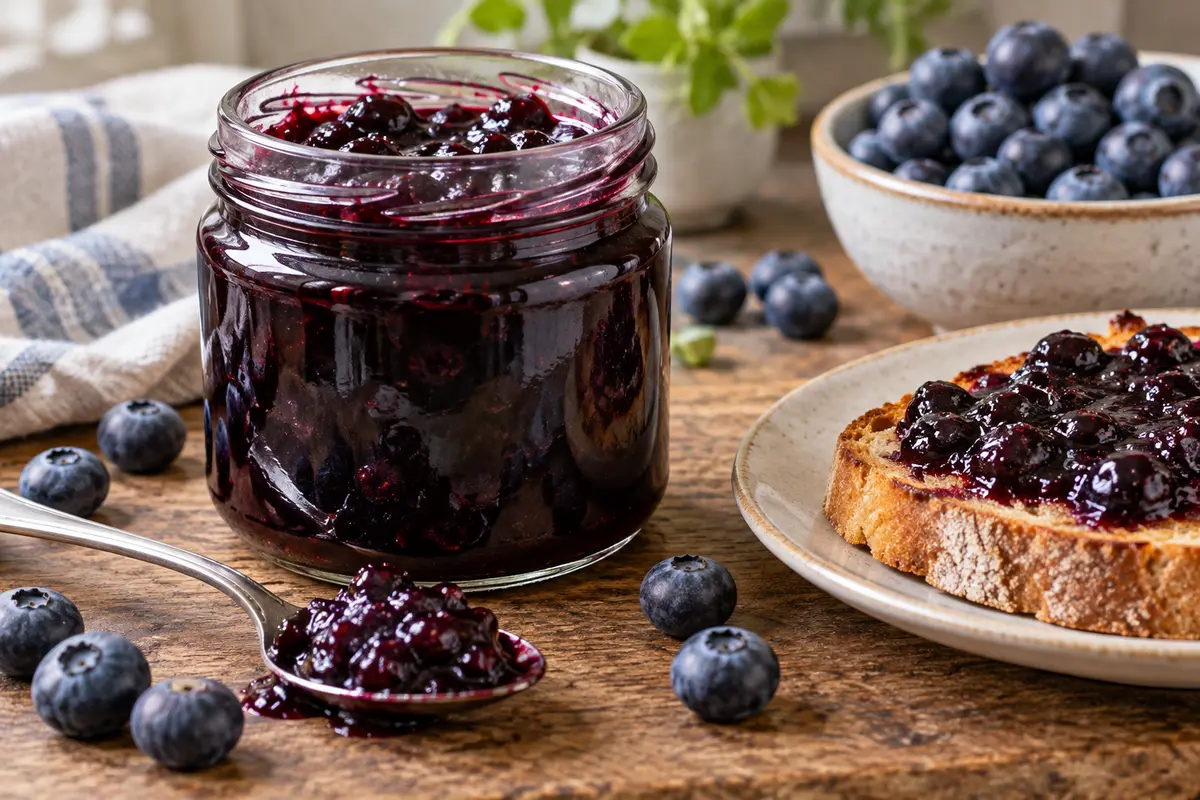
This tested no-added-pectin blueberry jam uses a measured fruit-and-sugar ratio and a rapid cook to the jellying point; it makes about seven or eight half-pint jars.
Method
- For one batch, measure 9 US cups crushed blueberries and 6 US cups sugar. Wash the berries before crushing, remove leaves and stalks, and measure accurately; do not scale up the batch.
- Combine the crushed berries and sugar in a large pan. Heat slowly, stirring occasionally until the sugar has dissolved.
- Cook rapidly, stirring frequently as the mixture thickens to prevent sticking, until it reaches or is just below the jellying point. Use the tested set test and allow for thickening as it cools.
- Remove from the heat and fill hot jam into hot, sterile half-pint or pint jars, leaving ¼ inch (6 mm) headspace. Wipe the rims and fit prepared two-piece lids.
- Process in a boiling-water canner for the tested time: 5 minutes up to 1,000 ft (305 m), 10 minutes at 1,001–6,000 ft (306–1,829 m), or 15 minutes above 6,000 ft (1,829 m). Cool undisturbed, check seals and refrigerate any jar that did not seal; refrigerate after opening.
Storage
Store sealed, correctly processed jars in a cool, dark place; refrigerate after opening · Use the tested recipe’s storage guidance; no additional duration is stated
Sources and scope
- Jams Jellies Preserves No Added Pectin — Oregon State University Extension
Method-specific source recorded in the prior content audit
Drying Blueberry
General preservation or storage guidance
Blueberries can be dehydrated in evenly prepared pieces for later cooking.
Method
- Sort blueberries, remove leaves, rinse and dry; pierce skins so moisture escapes during drying.
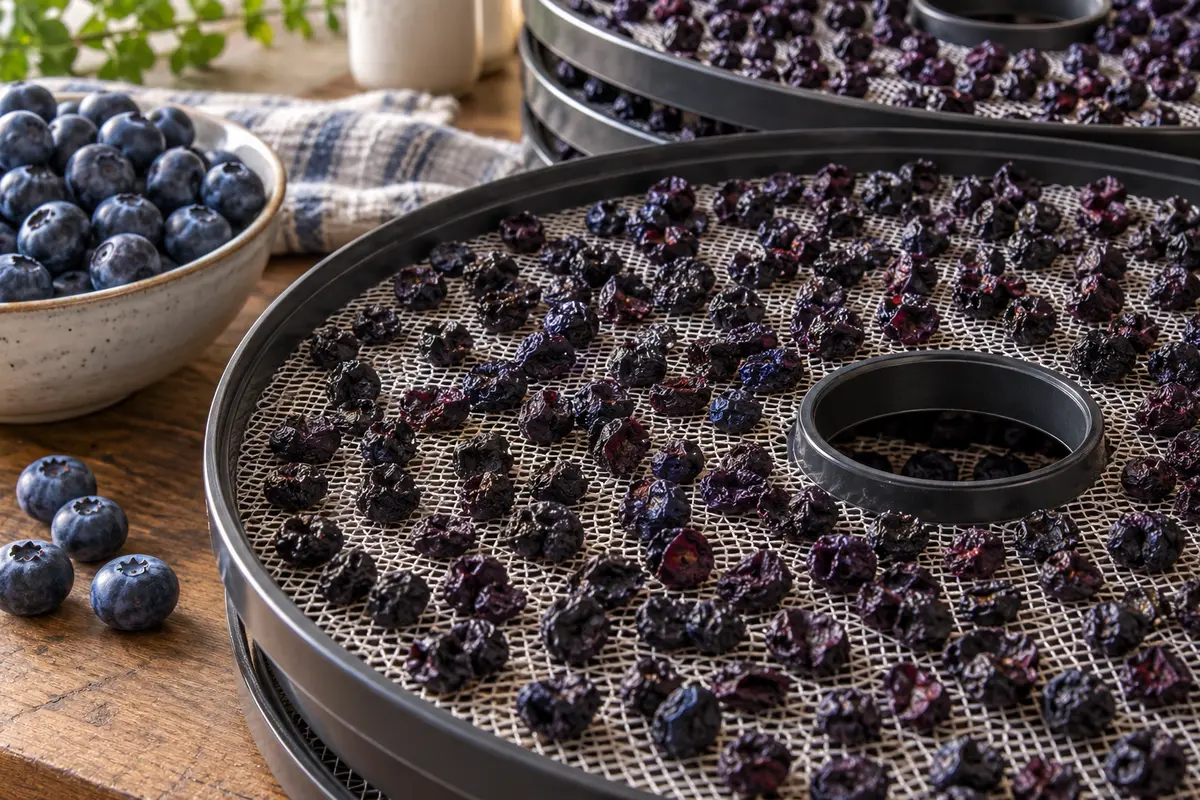
- Arrange in a single layer on dehydrator trays with space for airflow; do not overlap pieces.
- Dry at the appliance’s fruit setting and rotate trays if needed; check the thickest piece. Fruit should be pliable without wet or sticky patches.
- Cool completely; condition in a loosely packed sealed jar for 7–10 days, shaking daily and checking for condensation. Return damp pieces to the dehydrator.
- Pack airtight in small amounts and store cool, dry and dark; discard mouldy food.
Storage
Cool, dry, dark place in an airtight container · No exact storage period stated; check for moisture
Sources and scope
- Beaucoup Blueberries — National Center for Home Food Preservation
Method-specific source recorded in the prior content audit
- Drying Fruits — University of Minnesota Extension
Method-specific source recorded in the prior content audit