
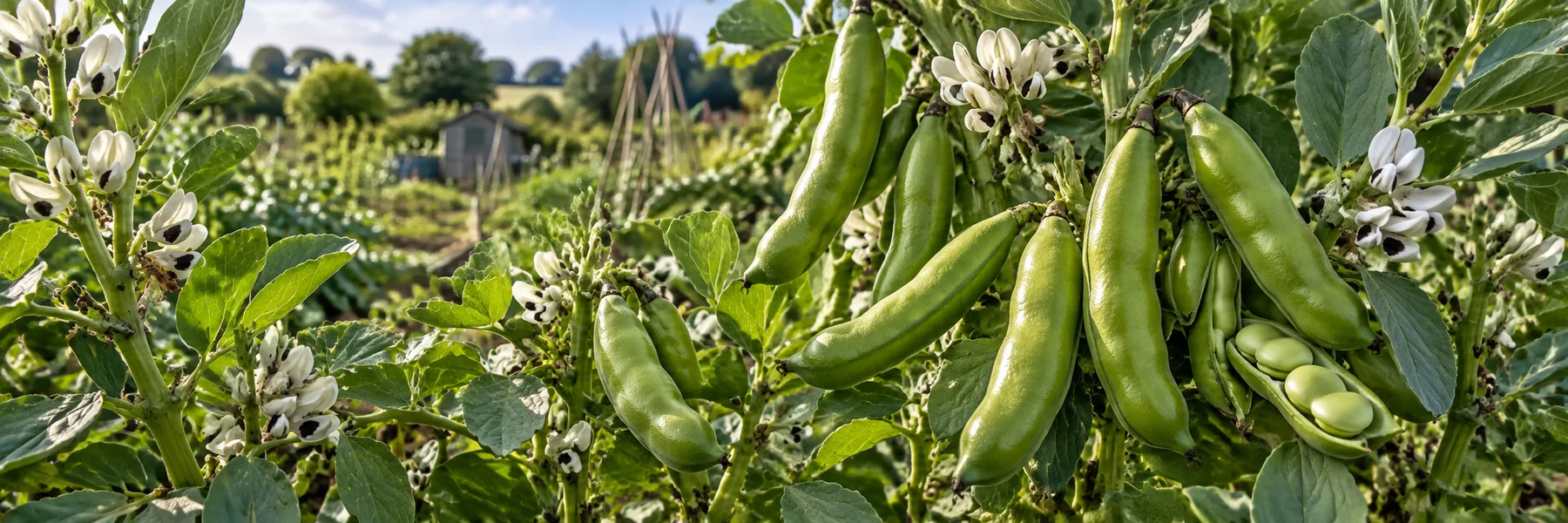
Freezing Broad Bean
General preservation or storage guidance
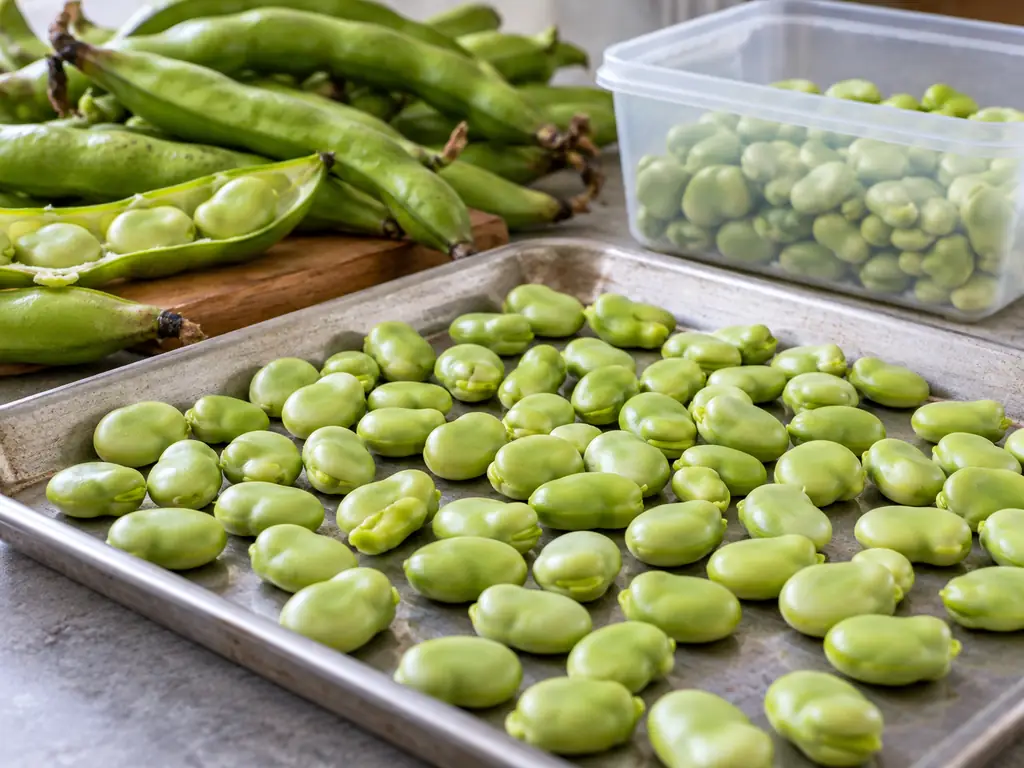
Shelled broad beans freeze well after full cooking, rapid cooling and tray-freezing; keep their skins on until thawing to reduce sticking.
Method
- Choose large, green, well-filled pods that feel plump. Shell the broad beans and rinse them under cold running water.
- Bring a pan of water to the boil and cook small batches of beans for about 4 minutes; this is the tested fava-bean freezing process, as no approved blanch-only process is supplied.
- Lift the beans into ice water and cool for about 4 minutes. Drain and dry thoroughly on a clean towel.
- Leave the outer skins on. Spread the beans in one layer on a lined tray and freeze for about 2 hours until firm.
- Transfer to labelled airtight freezer bags or containers and return promptly to the freezer. Thaw only the amount needed; slip skins off after thawing if desired.
Storage
Freezer at −18°C or colder · Keep continuously frozen; no exact quality period stated
Sources and scope
- How Harvest And Freeze Fava Beans — ucanr.edu
Method-specific source recorded in the prior content audit
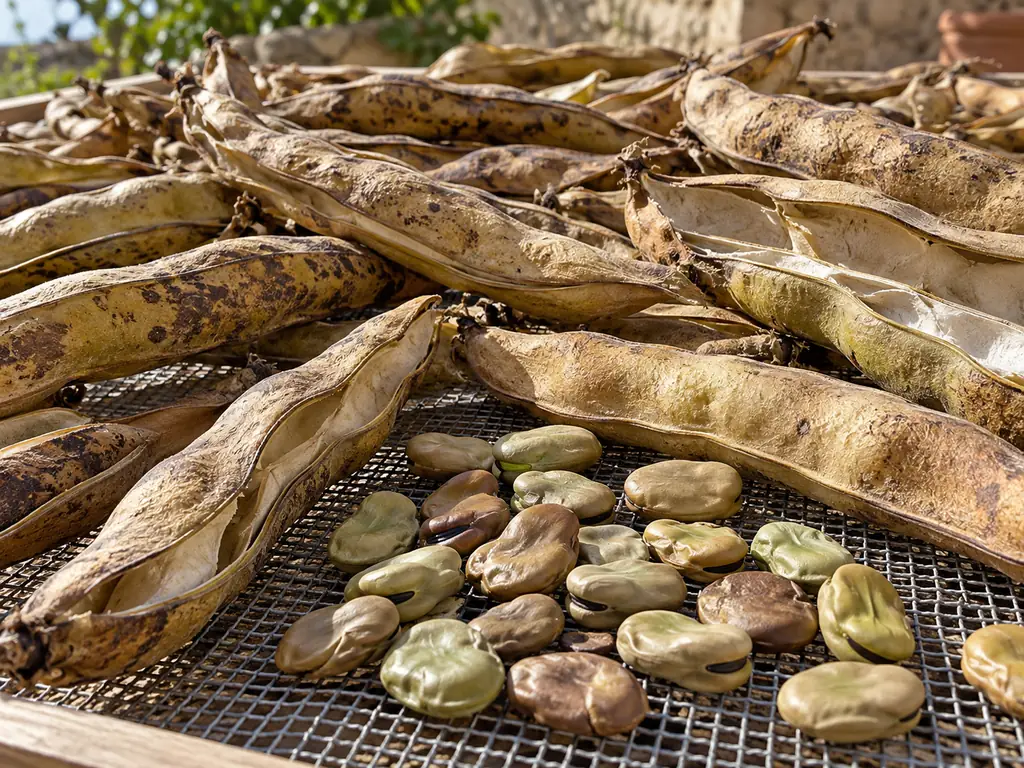
Drying Broad Bean
General preservation or storage guidance
Broad beans for dry storage are left in their pods until the pods and mature seeds dry, then shelled and finished indoors if needed.
Method
- Leave mature broad-bean pods on the plants until the pods are dry and shrivelled and the beans inside rattle when shaken. Harvest in dry weather.
- If frost or wet weather threatens before pods are fully dry, pull the plants and hang or lay them in a dry, airy place until the pods shrivel completely.
- Shell the dry pods and spread the beans on clean paper or trays indoors for several more days. The seeds must be hard and fully dry; any remaining moisture can lead to mould.
- For dried beans intended for food storage, seal them in freezer bags and freeze at −18°C or colder for at least 48 hours to kill insects and eggs, following the NCHFP vine-drying guidance.
- After the insect treatment, keep beans sealed in a cool, dry place. Discard any that show moisture, mould or insect damage; soak and cook thoroughly before eating.
Storage
Sealed container in a cool, dry place after drying and insect treatment · Keep dry and inspect for insects or moisture; no exact period stated
Sources and scope
- Vine Drying — National Center for Home Food Preservation
Method-specific source recorded in the prior content audit
- Harvest And Storage Of Vegetables And Fruits — Utah State University Extension
Method-specific source recorded in the prior content audit