
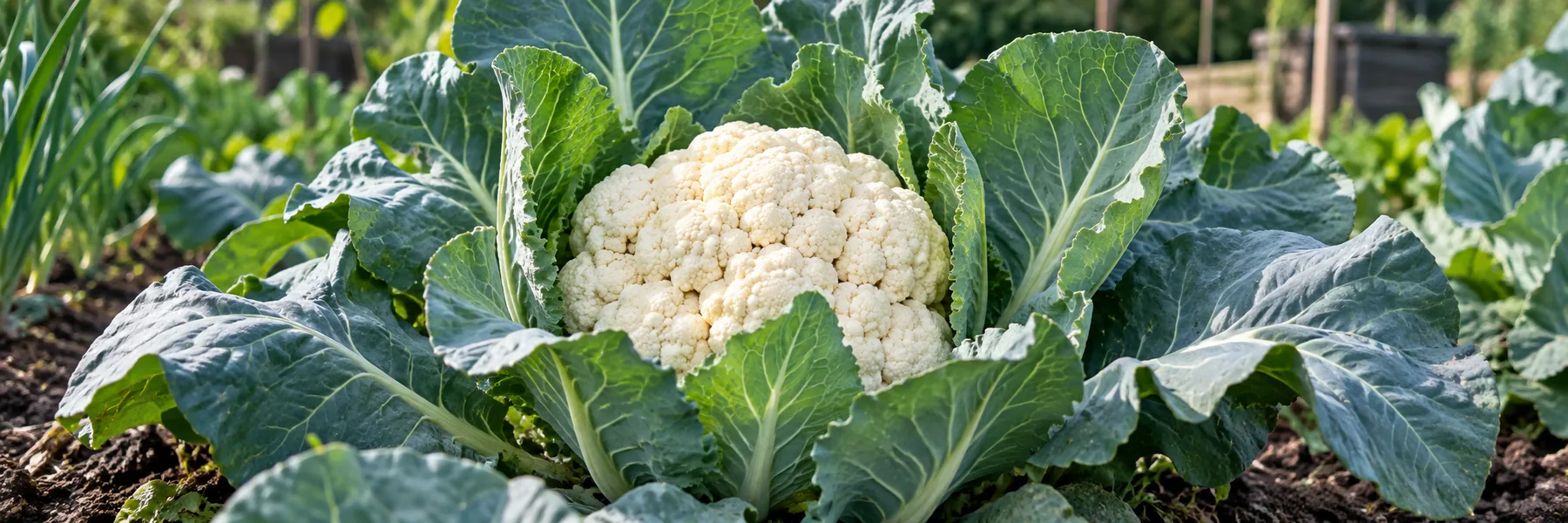
Freezing Cauliflower (Spring)
General preservation or storage guidance
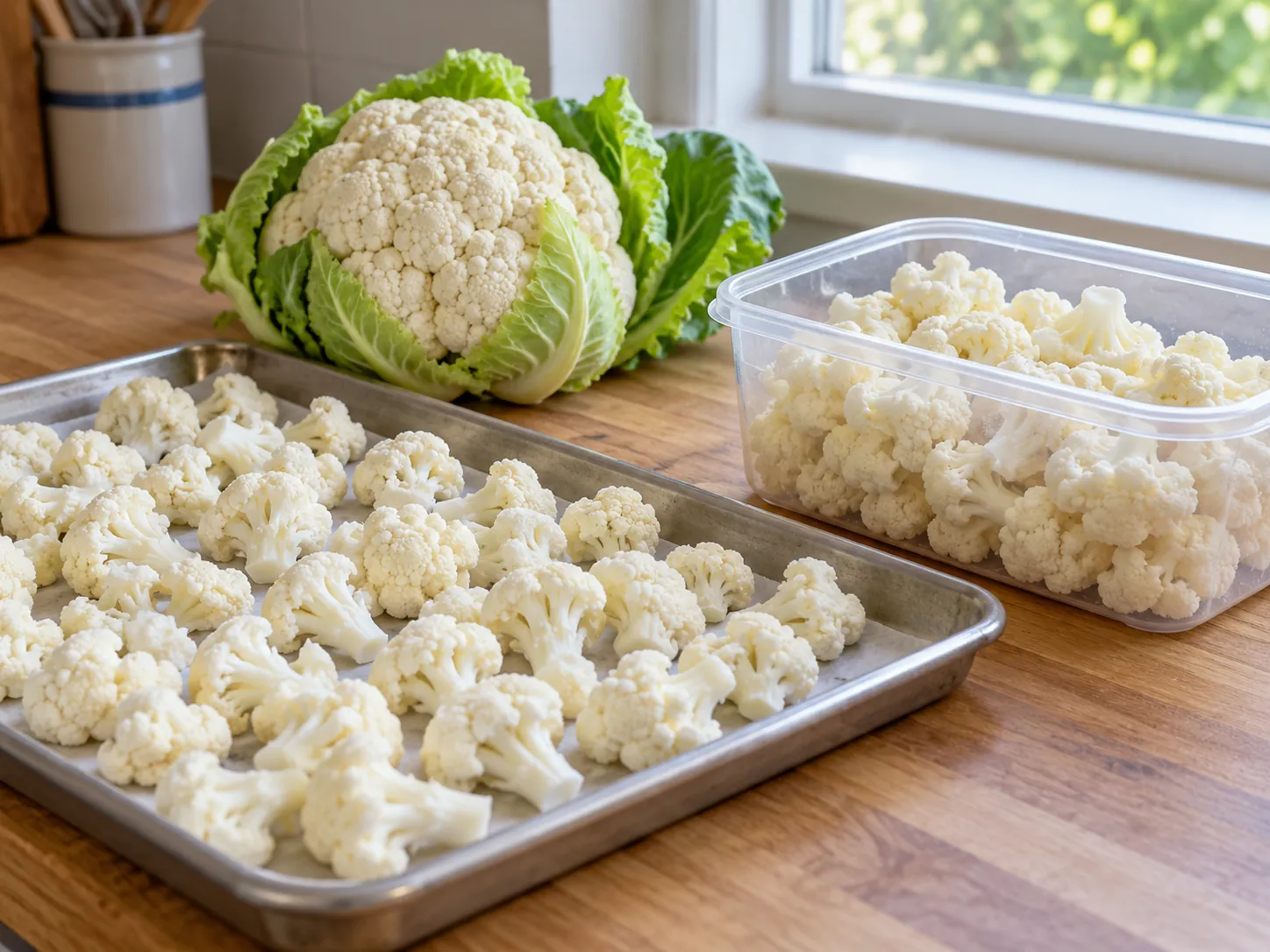
Cauliflower florets freeze well for cooked dishes when blanched briefly, cooled promptly and packed with room for expansion.
Method
- Choose a fresh, firm spring cauliflower. Remove leaves, rinse the head and divide it into even florets about 2.5–5 cm (1–2 in) across.
- Blanch the florets in boiling water for 3 minutes. Use batches small enough for the water to return to a boil promptly.
- Drain and cool immediately in cold water until thoroughly chilled; drain well again.
- Pack into freezer containers, leaving about 1.3 cm (½ in) headspace. Seal, label and freeze promptly.
- Use from frozen in cooked dishes. Keep continuously frozen and do not refreeze after thawing.
Storage
Freezer at −18°C or colder · Keep continuously frozen; no exact quality period stated
Sources and scope
- Freezing Cauliflower — National Center for Home Food Preservation
Method-specific source recorded in the prior content audit
Pickling Cauliflower (Spring)
General preservation or storage guidance
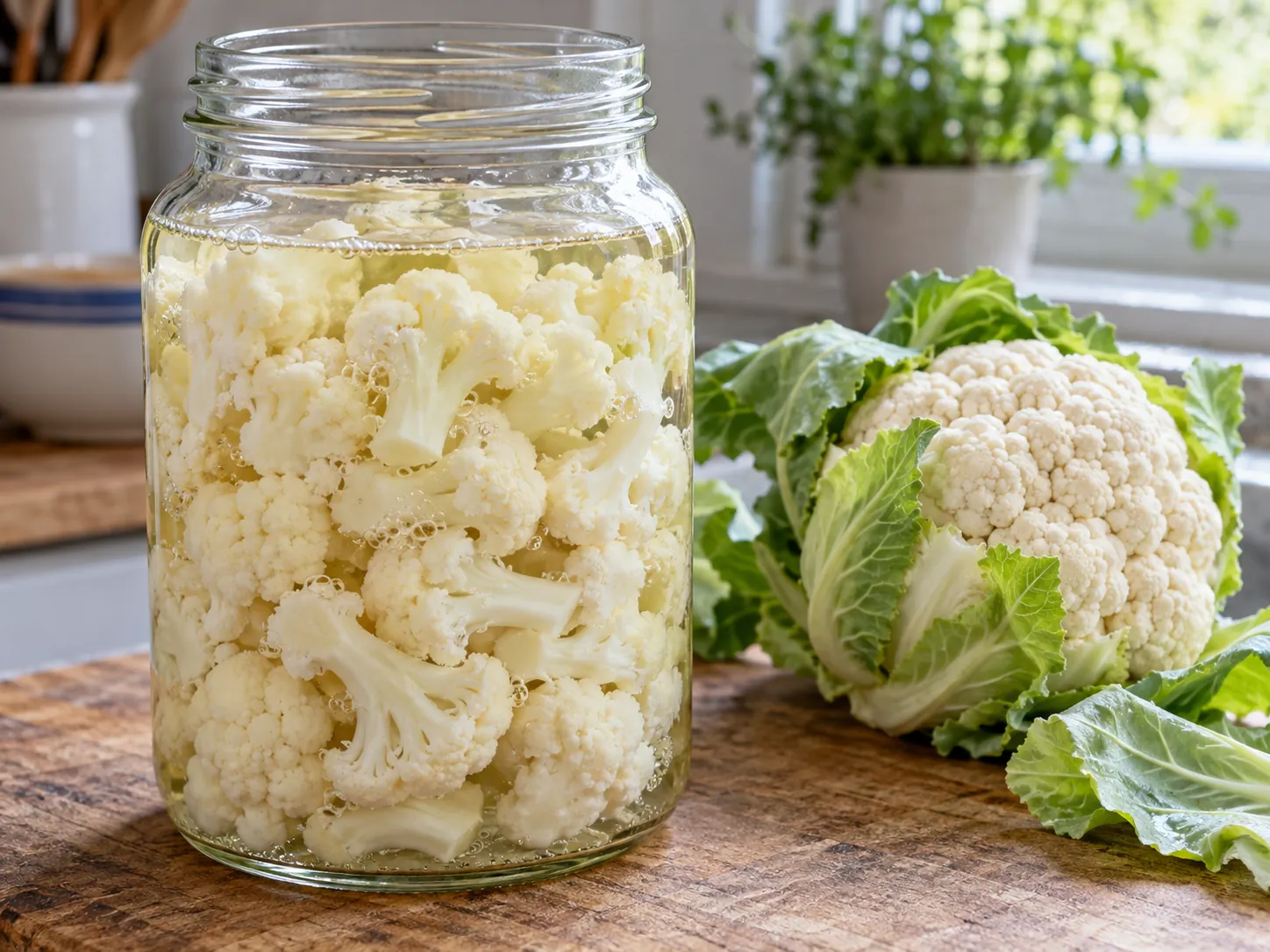
This tested sweet-sour cauliflower pickle uses a measured 5% vinegar mixture, pre-cooks the florets and is processed in a boiling-water canner.
Method
- For about nine half-pint jars, measure 12 cups (about 2.8 L) of 2.5–5 cm (1–2 in) cauliflower florets, 4 cups (950 ml) white vinegar labelled 5% acidity, 2 cups sugar, 2 cups thinly sliced onion, 1 cup diced sweet red pepper, 2 tbsp mustard seed, 1 tbsp celery seed, 1 tsp turmeric and 1 tsp hot red-pepper flakes.
- Wash the cauliflower, remove stems and blemished parts, and separate into even florets. Boil the florets for 3 minutes in water containing 4 teaspoons canning salt per US gallon (3.8 L); drain and cool.
- In a large pan combine the measured vinegar, sugar, onion, red pepper and spices. Bring to a boil and simmer for 5 minutes.
- Distribute onion and pepper among prepared jars. Fill with florets and hot pickling liquid, leaving 1.3 cm (½ in) headspace; remove air bubbles, wipe rims and fit lids.
- Process hot half-pints or pints in a boiling-water canner for 10 minutes up to 305 m (1,000 ft), 15 minutes from 306–1,829 m (1,001–6,000 ft), or 20 minutes above 1,829 m (6,000 ft). Follow the NCHFP process and altitude table exactly.
- Cool jars undisturbed, check seals and refrigerate any unsealed jar. Store properly processed sealed jars cool and dark; refrigerate after opening.
Storage
Cool, dark storage for properly processed sealed jars; refrigerate after opening or if unsealed · Follow the tested NCHFP recipe; no additional shelf life is claimed
Sources and scope
- Pickled Cauliflower Or Brussel Sprouts — National Center for Home Food Preservation
Method-specific source recorded in the prior content audit
Roasted Cauliflower Freezer Portions for Cauliflower (Spring)
Home recipe · fridge or freezer method
Cooked cauliflower portions cooled quickly and frozen for later use. This is a freezer recipe, not a room-temperature preserve.
Ingredients
- 500 g fresh cauliflower, washed and cut into small florets
- 1 tbsp rapeseed or olive oil
- ¼ tsp fine salt
- ½ tsp ground turmeric
Equipment
- Oven tray or wide lidded saucepan
- Baking paper (if roasting)
- Shallow freezer-safe containers
Method
- Heat the oven to 200°C (180°C fan), or set a wide saucepan over medium heat. Wash the cauliflower, remove damaged parts and prepare it: cut into small florets.
- Toss with the oil, salt and listed seasoning. Roast in one layer until fully tender and lightly browned, turning once; if using a saucepan, cook with a splash of water and a lid until completely tender.
- Divide into shallow portions and cool quickly. Refrigerate or freeze within 1–2 hours of cooking.
- Seal, label and freeze at about −18°C. Use from frozen in cooked dishes or thaw in the fridge.
- Once thawed, use within 48 hours and reheat until steaming hot throughout if serving hot. Do not refreeze thawed portions.
Storage
Cool in shallow portions and freeze promptly at about −18°C · Keep continuously frozen; thaw in the fridge and use within 48 hours
Sources and scope
- How to chill, freeze and defrost food safely — Food Standards Agency
Storage guidance only: keep the fridge between 0°C and 5°C, cool cooked food and refrigerate within 1–2 hours, and eat leftovers within 48 hours or freeze. This source does not validate the recipe or any shelf-stable process.