
Freezing Celery
General preservation or storage guidance
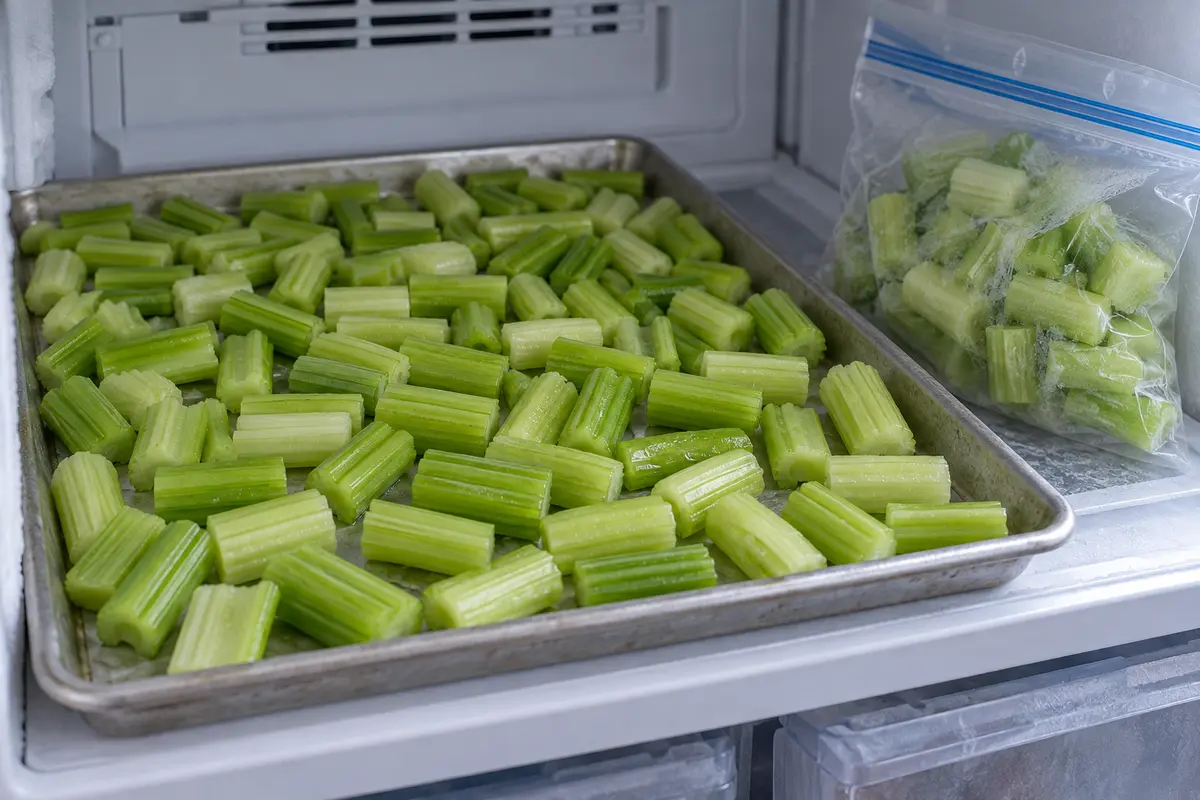
Celery loses its crispness in the freezer, so blanch short stalk pieces and reserve them for cooked dishes such as soup, stew or stock.
Method
- Choose crisp, tender celery stalks without coarse strings. Separate the stalks and wash thoroughly, including the inner grooves.
- Trim the base and leaf tips, pull away tough strings and cut stalks into pieces about 2.5 cm (1 in) long.
- Blanch in boiling water for 3 minutes, then cool promptly in cold water and drain thoroughly.
- Pack in freezer-safe bags or rigid containers without headspace, as the tested celery process directs. Seal, label and freeze promptly.
- Add frozen celery directly to soups, stews and other cooked dishes. It will not remain crisp enough for salads; keep continuously frozen.
Storage
Freezer at −18°C or colder · Keep continuously frozen; no exact quality period stated
Sources and scope
- Freezing Celery — National Center for Home Food Preservation
Method-specific source recorded in the prior content audit
NCHFP Pickled Mixed Vegetables (Includes Celery)
Complete procedure from the cited tested source
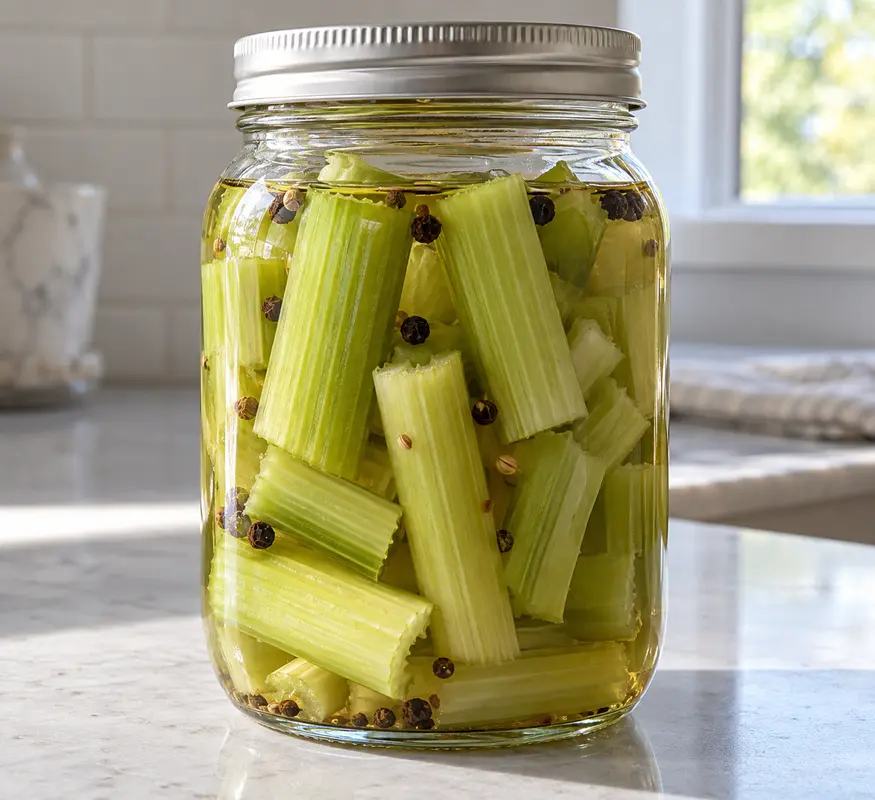
A complete tested mixed vegetable pickle that includes celery alongside cucumber, onion, carrot, sweet pepper and cauliflower. It is not a celery-only pickle; use the source recipe and proportions as a whole.
Method
- For about 10 US pints, measure 4 lb pickling cucumbers cut into 1-inch slices; 2 lb peeled, quartered small onions; 4 cups celery cut into 1-inch pieces; 2 cups peeled carrots in ½-inch pieces; 2 cups sweet red pepper in ½-inch pieces; 2 cups cauliflower florets; 5 US cups white vinegar labelled 5% acidity; ¼ cup prepared mustard; ½ cup canning or pickling salt; 3½ cups sugar; 3 tablespoons celery seed; 2 tablespoons mustard seed; ½ teaspoon whole cloves; and ½ teaspoon ground turmeric. This is a mixed recipe, not a celery-only formulation.
- Wash and prepare each vegetable to the source sizes. Combine them, cover with 2 inches of cubed or crushed ice, and refrigerate for 3–4 hours.
- In an 8-quart kettle, mix the measured vinegar and prepared mustard. Add salt, sugar, celery seed, mustard seed, cloves and turmeric; bring to a boil. Drain the vegetables, add them to the hot pickling solution, cover and slowly bring to a boil. Drain the vegetables but save the solution.
- Pack the vegetables into sterile pint jars or clean quart jars, leaving ½ inch headspace. Add the saved hot pickling solution, also leaving ½ inch headspace. Remove air bubbles, adjust headspace and close jars using the tested source directions.
- Process in a boiling-water canner: pints for 5 minutes up to 1,000 ft (305 m), 10 minutes at 1,001–6,000 ft (306–1,829 m), or 15 minutes above 6,000 ft (1,829 m); quarts for 10, 15 or 20 minutes at those respective elevations. These are US source adjustments; use suitable equipment and do not change recipe quantities or jar size.
- Cool jars undisturbed and check seals. Refrigerate any unsealed jar. Store only correctly processed, sealed jars in a cool, dark place; refrigerate after opening.
Storage
Cool, dark storage for properly processed and sealed jars; refrigerate after opening or if unsealed · Follow the cited recipe; no additional shelf-life claim is made
Sources and scope
- Pickled Mixed Vegetables — National Center for Home Food Preservation / USDA
Exact mixed vegetable recipe; celery is one of six vegetables. Does not validate a celery-only pickle.
Drying Celery
General preservation or storage guidance
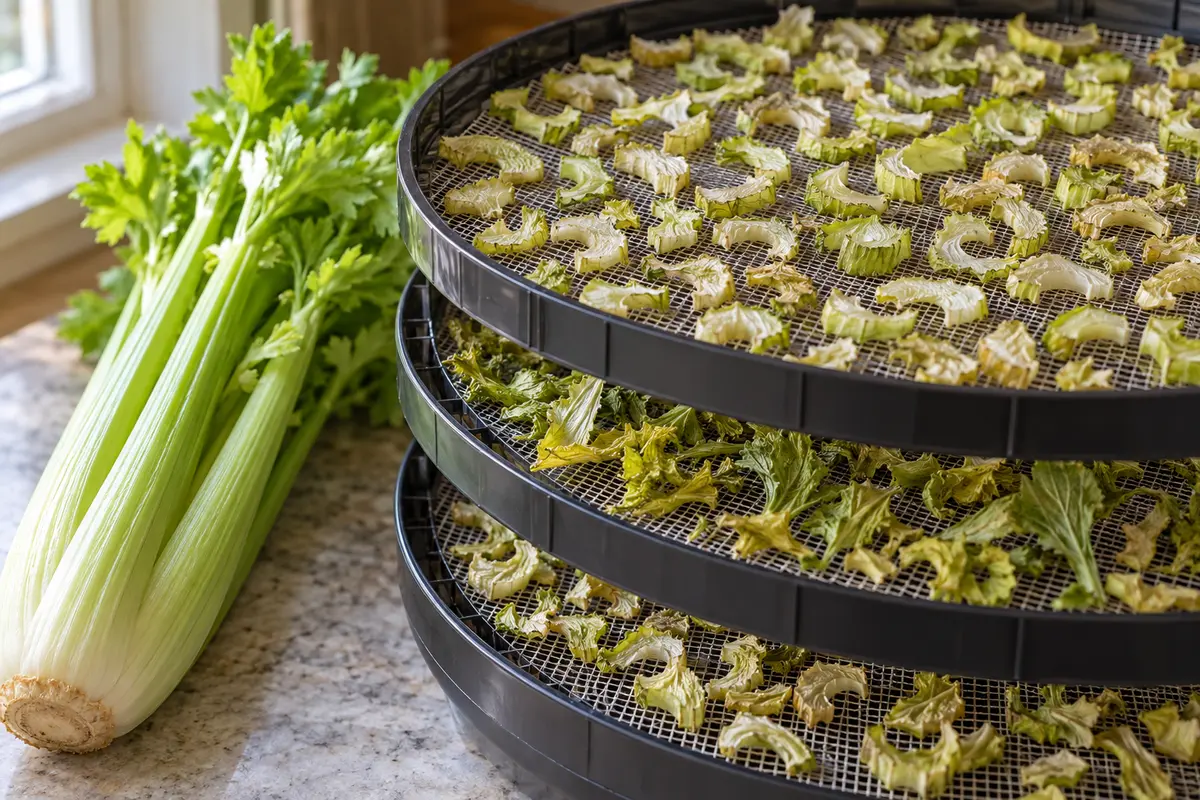
Sliced celery stalks dehydrate into very brittle pieces that can be crumbled into soups and stews; dry the stalks and leaves separately if their pieces differ in size.
Method
- Choose crisp celery stalks. Separate the leaves, wash stalks and leaves thoroughly to remove grit, trim away coarse strings and slice the stalks evenly.
- Blanch the sliced stalks in boiling water for 4 minutes, then cool promptly and drain; dry the leaves separately because they will finish sooner.
- Spread stalk slices in a single layer on dehydrator trays. Rotate trays if the appliance dries unevenly.
- Dry until the thickest stalk pieces are very brittle throughout; this can take about 10–16 hours. Cool a sample before judging dryness.
- Cool for 30–60 minutes, then condition loosely in a covered container for 4–10 days, shaking daily. If condensation appears, dry again. Once stable, pack airtight and store cool, dark and dry.
Storage
Airtight moisture-proof container in a cool, dry, dark place · No exact period stated; check weekly at first for moisture
Sources and scope
- Drying Vegetables At Home — aces.edu
Method-specific source recorded in the prior content audit