
Air Drying for Dill
General preservation or storage guidance
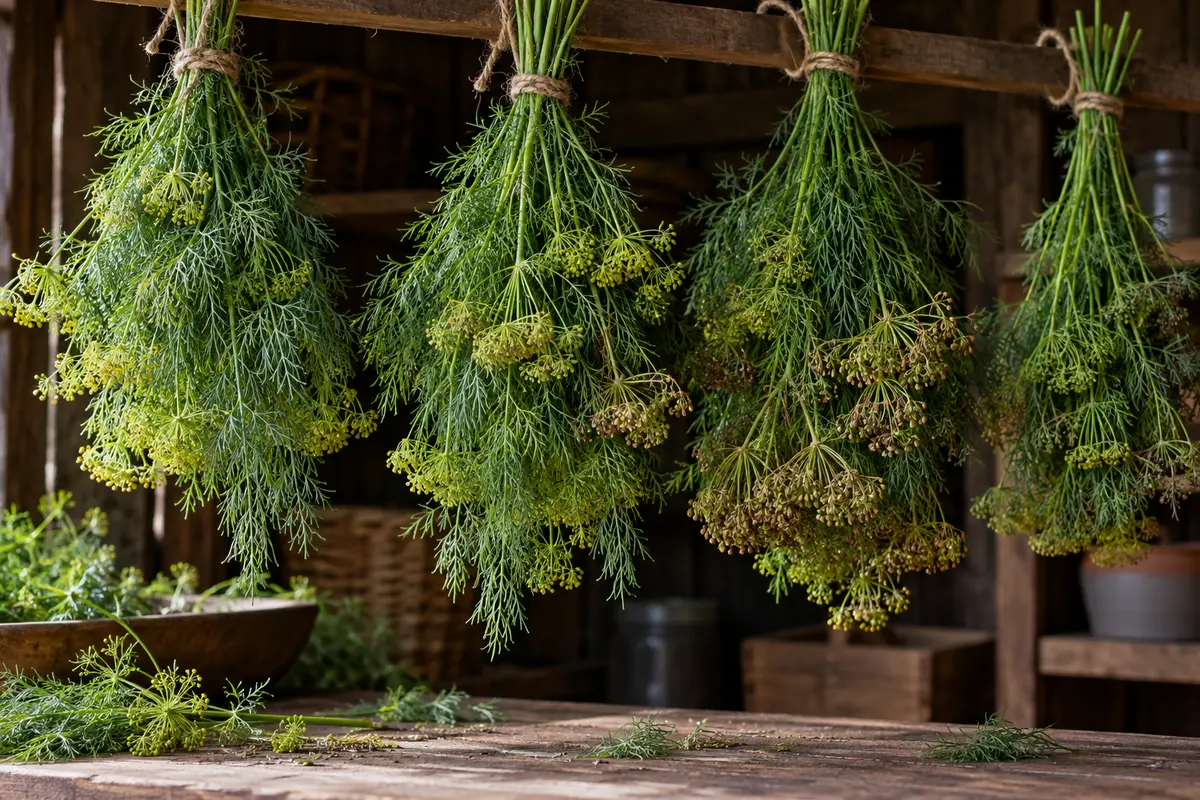
Dill fronds dry best in a thin, airy layer because their fine leaves can retain moisture when bunched together.
Method
- Harvest sound dill after the dew has dried and discard yellow or damaged fronds.
- Rinse only if needed, then dry the surface completely. Strip the fine leaves from thick stems or leave short tender sprigs intact.
- Spread the fronds in a thin layer on a clean mesh rack in a warm, dark, well-ventilated place; avoid thick bunches that dry slowly.
- Turn or gently stir the fronds daily until the leaves crumble readily and any small stems snap; continue drying soft or damp pieces.
- Cool fully and pack airtight away from light and moisture. Discard if condensation or mould appears.
Storage
Airtight container in a cool, dark, dry place · Use while aromatic; discard damp or mouldy herbs
Sources and scope
- Drying Herbs — Oregon State University Extension
Method-specific source recorded in the prior content audit
Freezing Dill
General preservation or storage guidance
Dill freezes in small portions for cooked dishes; the leaves soften after thawing.
Method
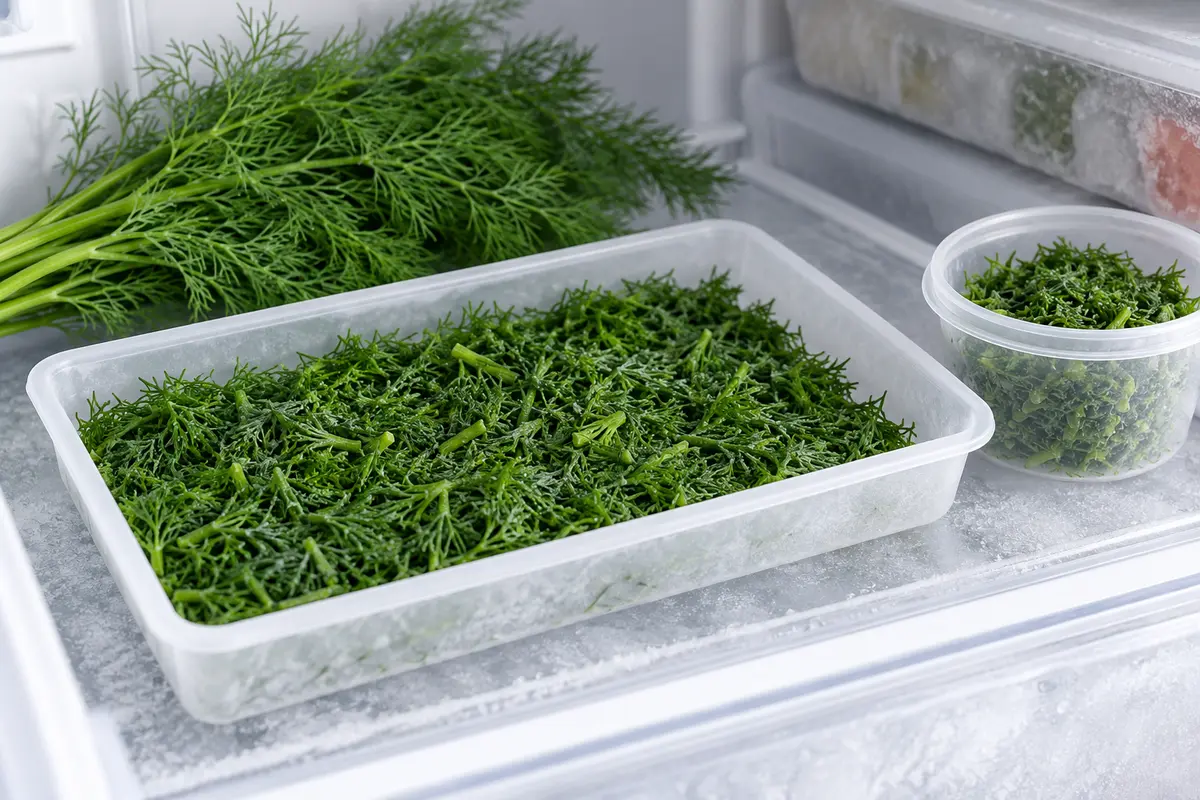
- Rinse dill fronds, drain and pat dry; strip the fine leaves from thick stems and chop loosely.
- Pack in small freezer-safe boxes or ice-cube moulds with a little water; do not add oil unless following a tested recipe.
- Freeze promptly until solid, then seal, label and return to the freezer.
- Add frozen portions directly to cooking, or thaw in the refrigerator only when needed.
- Do not expect a crisp fresh garnish after thawing.
Storage
Freezer at −18°C or colder · No method-specific quality period stated
Sources and scope
- Freezing Fresh Herbs — National Center for Home Food Preservation
Method-specific source recorded in the prior content audit