
Curing Onion (Spring-Sown)
General preservation or storage guidance
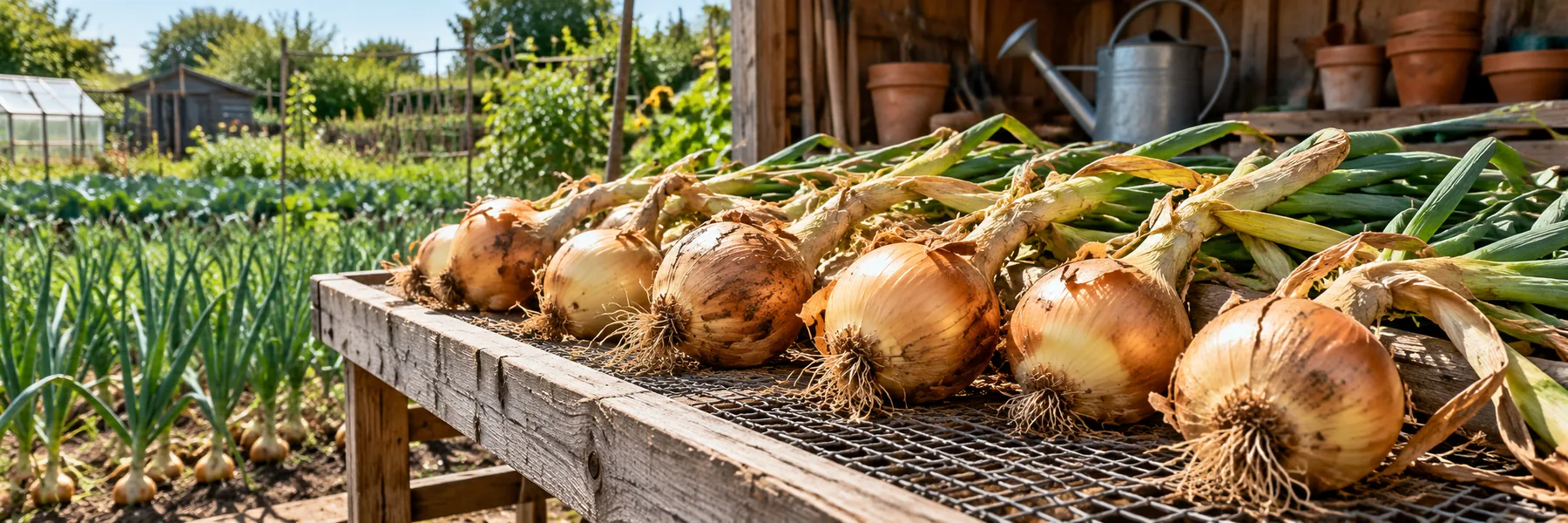
Spring-sown bulb onions cure after lifting as their outer skins and necks dry, which prepares sound bulbs for dry storage.
Method
- Lift mature bulb onions when the foliage yellows and begins to topple. Choose a dry spell and lift carefully to avoid bruising.
- Brush off loose soil without washing. Separate damaged, thick-necked or diseased bulbs for immediate use.
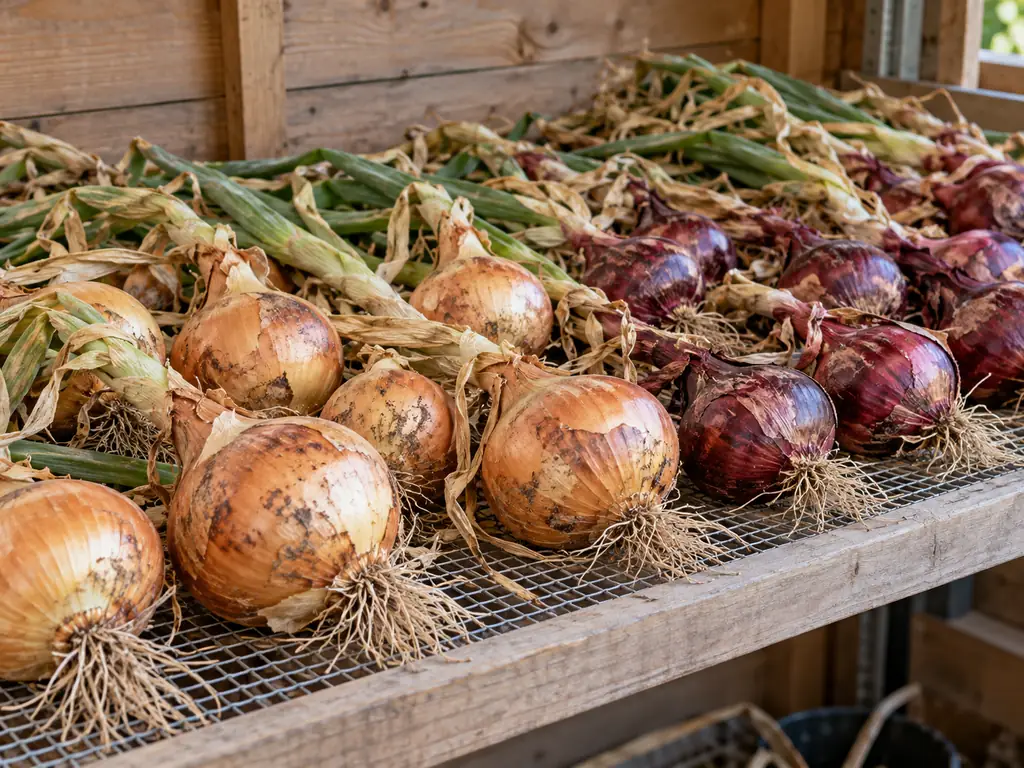
- Spread sound onions in a single layer on a wire rack or slatted tray so air reaches underneath. Dry in the sun when conditions are dry, or in a well-ventilated greenhouse or shed if rain is likely.
- Turn or reposition bulbs if the underside stays damp. Continue until the outer skins are papery and the tops and necks are completely dry, usually around two weeks depending on weather.
- Only trim dry tops and roots after curing. Do not pack damp bulbs for storage.
Storage
Single layer on airy racks under cover if weather is damp · Cure until foliage and necks are fully dry
Sources and scope
- Grow Your Own — Royal Horticultural Society
Method-specific source recorded in the prior content audit
- Harvest And Storage Of Vegetables And Fruits — Utah State University Extension
Method-specific source recorded in the prior content audit
Dry Storage for Onion (Spring-Sown)
General preservation or storage guidance
Fully cured spring-sown bulb onions store best when dry air can circulate around them; light helps limit premature sprouting.
Method
- Select mature, firm bulbs with dry papery skins and closed, dry necks. Use bruised, split, thick-necked or bolted onions first.
- Do not wash the bulbs. Remove only loose dry soil and separate any onion with soft spots or mould.
- Trim fully dry tops and roots, or plait the dried tops if they are long enough; do not cut into the neck.
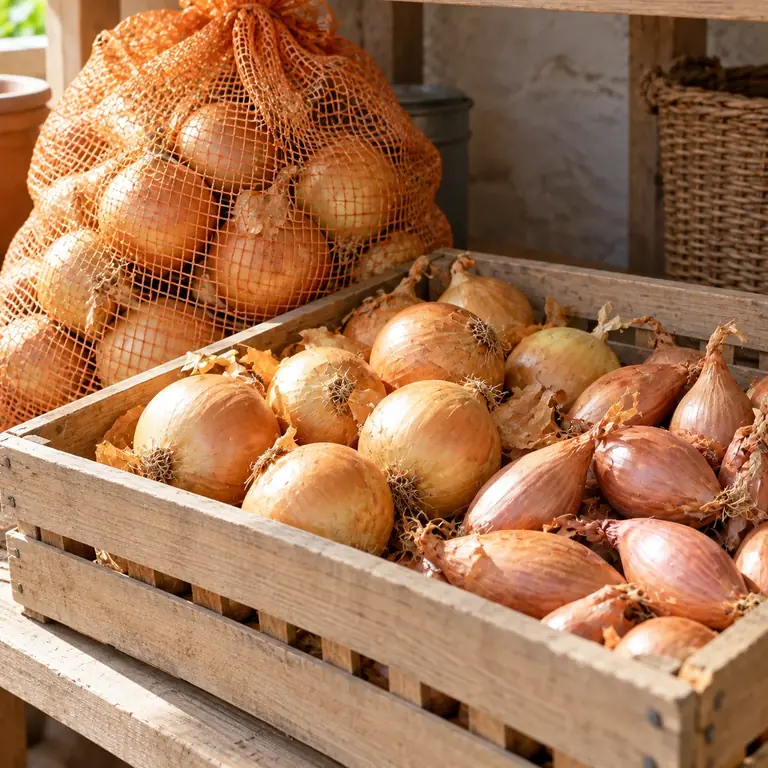
- Place bulbs in mesh bags or a single layer in slatted trays with airflow around them. Keep in a cool, dry, light place rather than a dark store, which can encourage sprouting.
- Check regularly and remove any soft or mouldy onions before rot spreads.
Storage
Light, cool, dry and well-ventilated store · Cultivar and curing affect keeping time; inspect regularly
Sources and scope
- Grow Your Own — Royal Horticultural Society
Method-specific source recorded in the prior content audit
Pickling Onion (Spring-Sown)
General preservation or storage guidance
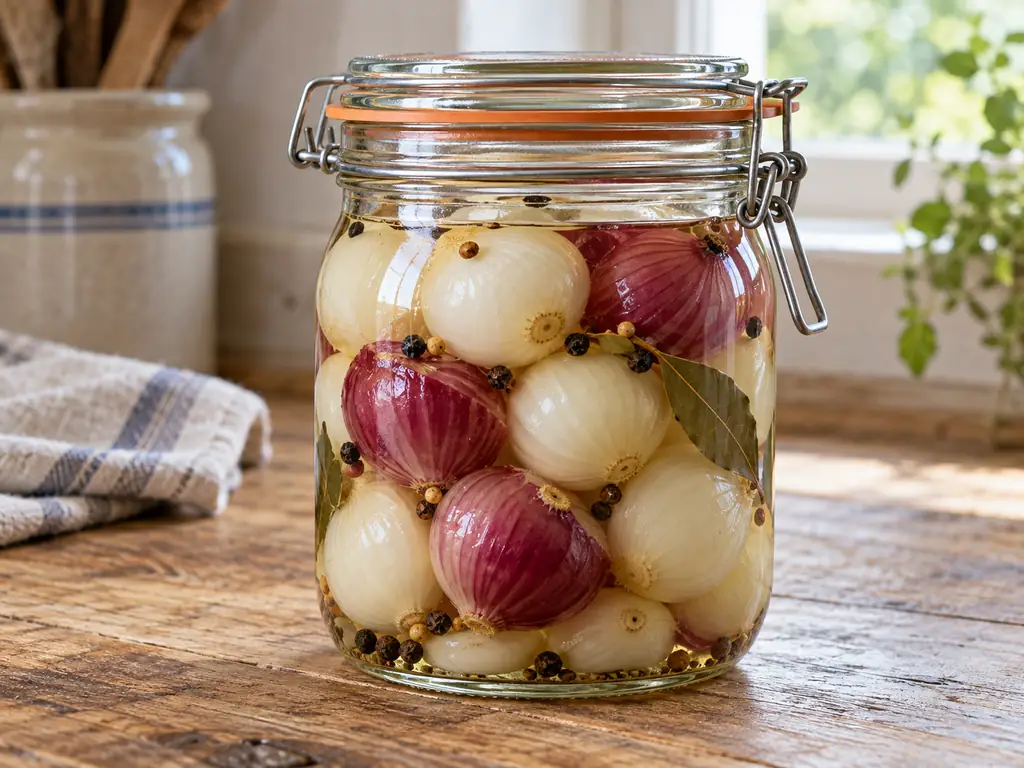
Small white pearl onions can be made into a tested sweet pickle with measured 5% vinegar and boiling-water processing; this formula is for pearl-sized bulbs only.
Method
- For about 3–4 pints, measure 8 cups peeled white pearl onions, 5½ cups white distilled vinegar labelled 5% acidity, 1 cup water, 2 teaspoons pickling salt, 2 cups sugar, 8 teaspoons mustard seed and 4 teaspoons celery seed. Use small pearl onions only; do not substitute sliced or larger bulb onions.
- To peel, dip a few pearl onions in boiling water for 30 seconds, then cold water for 30 seconds. Cut a thin slice from the root end, peel, then trim a thin slice from the other end.
- Combine the measured vinegar, water, salt and sugar in a large pan. Bring to the boil and boil gently for 3 minutes. Add the onions, return to the boil, then simmer about 5 minutes until half-cooked.
- Put 2 teaspoons mustard seed and 1 teaspoon celery seed in each hot pint jar. Fill with hot onions, leaving about 1 inch headspace, then add hot liquid to ½ inch headspace. Remove air bubbles, wipe rims and fit prepared lids.
- Process pints in a proper boiling-water canner for 10 minutes up to 1,000 ft (305 m), 15 minutes from 1,001–6,000 ft (306–1,829 m), or 20 minutes above 6,000 ft (1,829 m). Keep jars under boiling water throughout.
- Cool jars undisturbed for 12–24 hours and check seals. Let sealed jars stand 3–5 days for flavour; refrigerate unsealed jars and opened jars. Do not alter vinegar strength, proportions or processing time.
Storage
Sealed, properly processed jars in a cool, dark place; refrigerate after opening · Follow the tested formula and processing directions; refrigerate unsealed jars
Sources and scope
- Pickled Pearl Onions — National Center for Home Food Preservation
Method-specific source recorded in the prior content audit
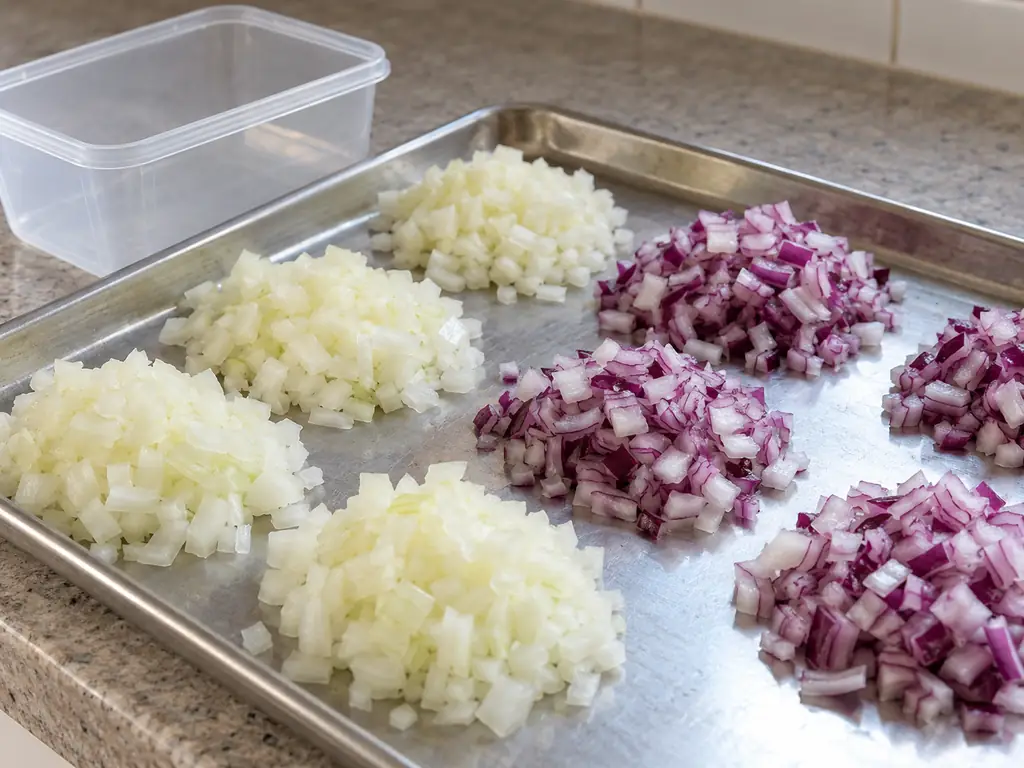
Freezing Chopped Onion for Onion (Spring-Sown)
General preservation or storage guidance
Chopped bulb onion freezes without blanching in measured portions for use in cooked dishes; thawed onion will be soft.
Method
- Peel mature bulb onions, trim the root and neck, and rinse away dirt; dry the surface.
- Dice into roughly 6 mm pieces so portions are easy to measure into cooking. No blanching is needed for diced onion.
- Pack dry into freezer bags or rigid containers, leaving about 1 cm headspace; alternatively spread pieces on a clean tray and freeze separately until firm.
- For tray-frozen pieces, transfer them quickly to an airtight freezer bag or container and press out excess air. Label and return promptly to the freezer.
- Use directly from frozen in soups, sauces and cooked dishes. Onion softens and may lose flavour during freezing; do not refreeze after thawing.
Storage
Freezer at −18°C or colder · Use within a few months for best quality
Sources and scope
- Freezing Onions — National Center for Home Food Preservation
Method-specific source recorded in the prior content audit