
Freezing Raspberry
General preservation or storage guidance
Prepared raspberries can be frozen in portions for later cooking; the texture will be softer after thawing.
Method
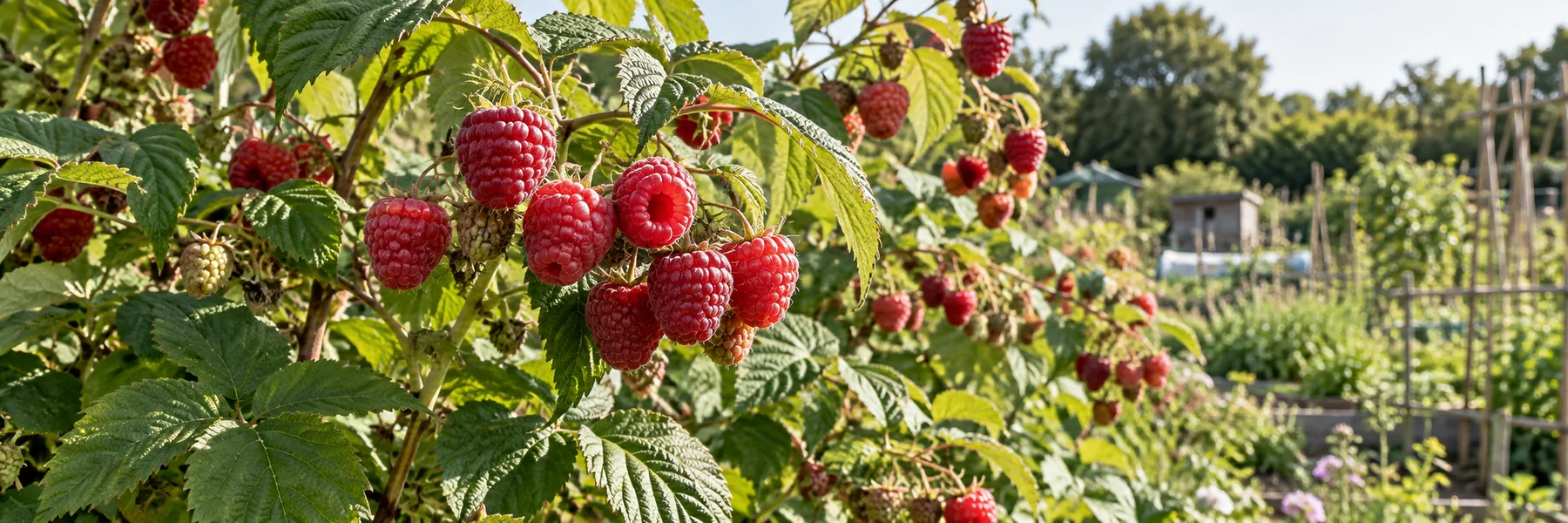
- Sort sound raspberries, discard bruised or mouldy fruit, remove stalks and leaves, rinse gently if needed and dry thoroughly.
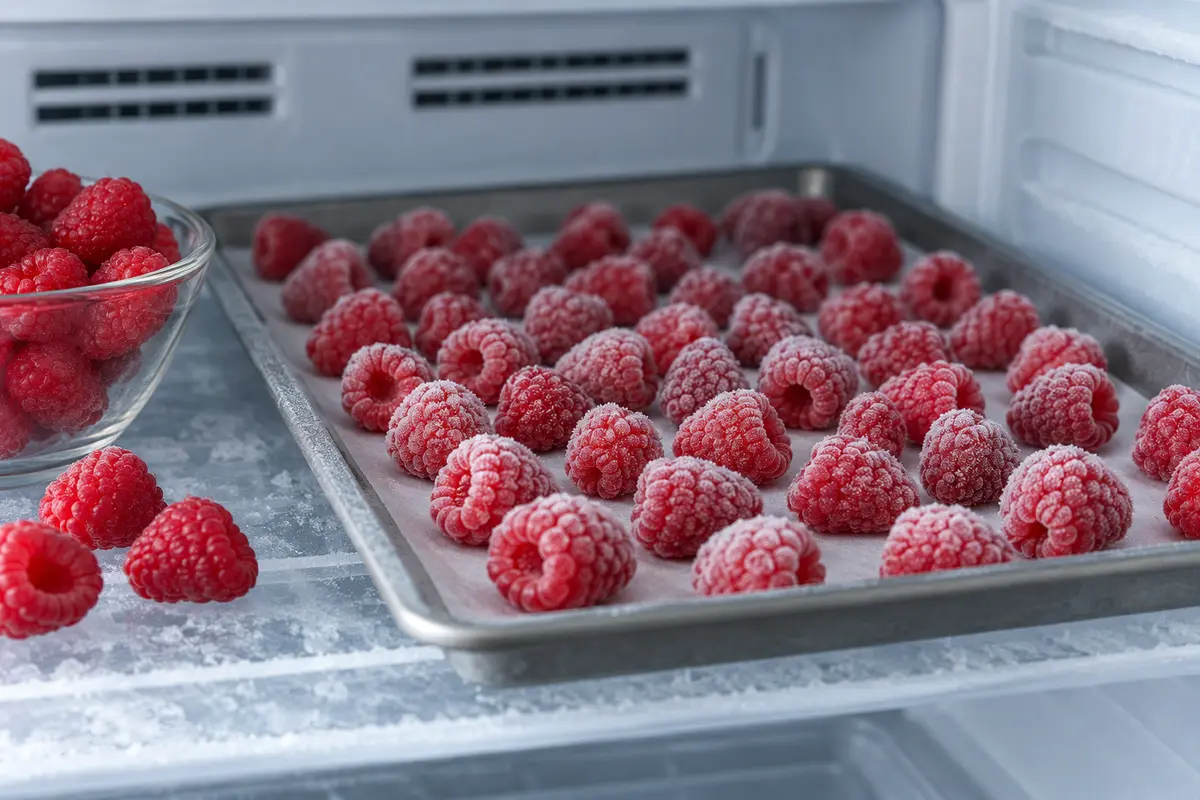
- Spread prepared fruit in one layer on a lined tray so pieces freeze separately.
- Freeze until firm, then transfer carefully to a labelled freezer-safe container or bag and remove excess air.
- Seal and return promptly to the freezer.
- Use from frozen in cooking or thaw in the refrigerator; do not refreeze once thawed.
Storage
Freezer at −18°C or colder · No method-specific quality period stated
Sources and scope
- Fruits — National Center for Home Food Preservation
Method-specific source recorded in the prior content audit
Raspberry Jam
General preservation or storage guidance
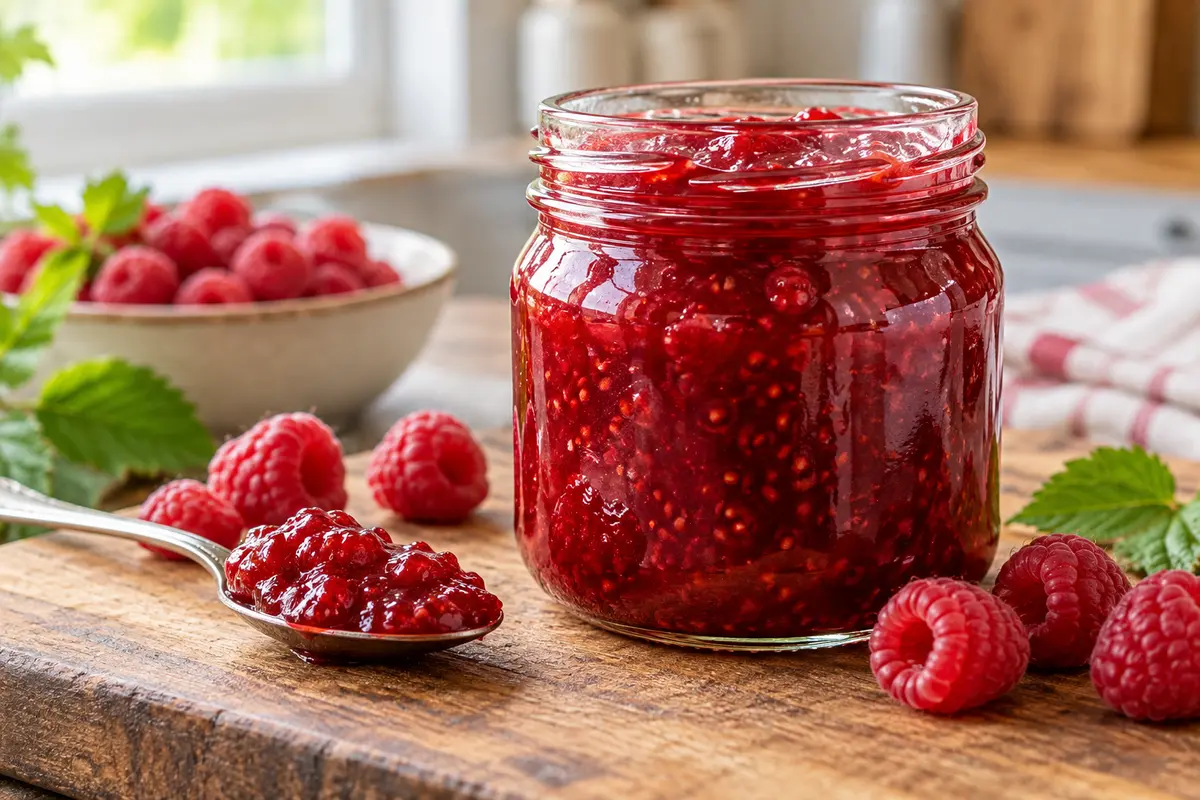
This tested no-added-pectin raspberry jam uses a measured fruit-and-sugar ratio; sieve the softened berries first if you prefer a seedless spread.
Method
- For one batch, measure 9 US cups crushed raspberries and 6 US cups sugar. Sort, remove leaves and stalks, rinse gently and drain the fruit before crushing; measure accurately.
- For seedless jam, heat the crushed berries until soft and press them through a sieve or food mill; then measure the fruit and add the exact sugar quantity.
- Combine the berries and sugar in a large pan. Heat slowly, stirring occasionally until the sugar dissolves, then cook rapidly toward the jellying point.
- Stir frequently as the mixture thickens to prevent sticking. Remove it from the heat and fill hot jam into hot, sterile half-pint or pint jars, leaving ¼ inch (6 mm) headspace; wipe rims and fit prepared lids.
- Process in a boiling-water canner for the tested time: 5 minutes up to 1,000 ft (305 m), 10 minutes at 1,001–6,000 ft (306–1,829 m), or 15 minutes above 6,000 ft (1,829 m). Cool undisturbed, check seals and refrigerate any jar that did not seal; refrigerate after opening.
Storage
Store sealed, correctly processed jars in a cool, dark place; refrigerate after opening · Use the tested recipe’s storage guidance; no additional duration is stated
Sources and scope
- Jams Jellies Preserves No Added Pectin — Oregon State University Extension
Method-specific source recorded in the prior content audit
Fruit Leather for Raspberry
General preservation or storage guidance
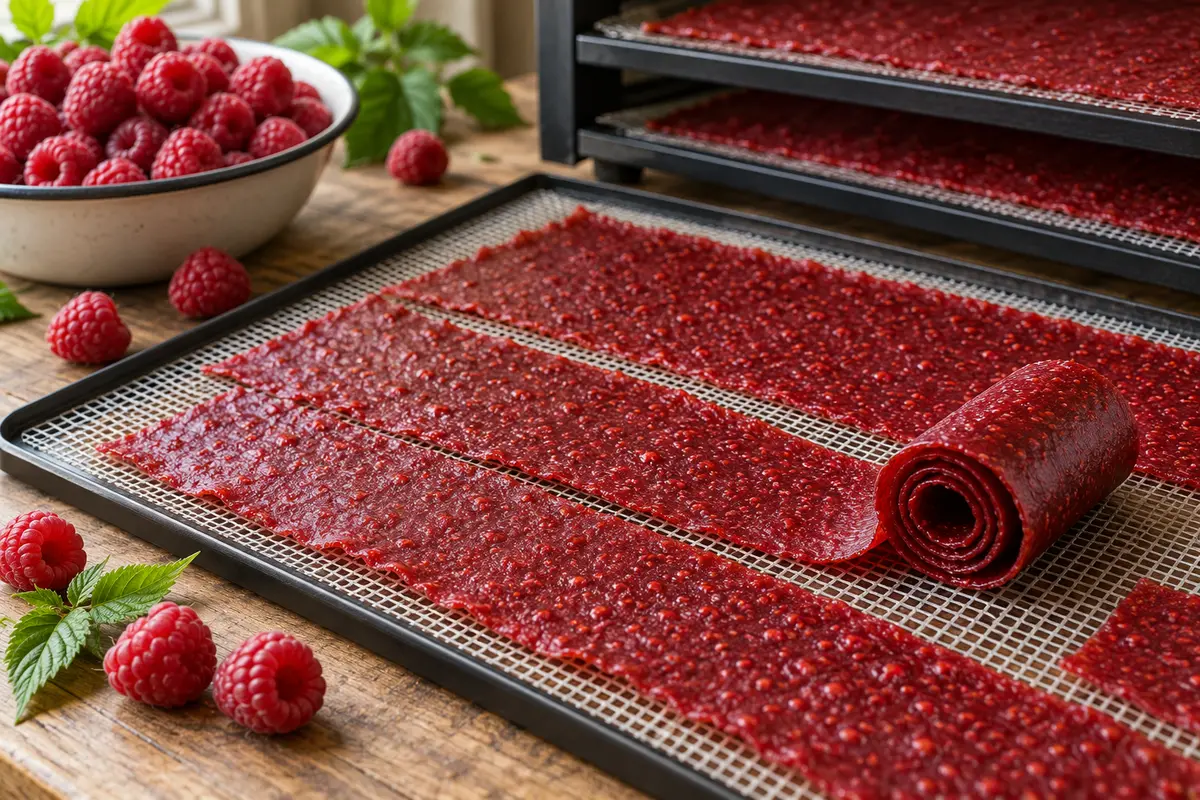
Raspberry purée makes a flexible fruit leather; straining out the seeds gives a smoother sheet and an even layer dries more reliably.
Method
- Sort and rinse sound raspberries, discarding mouldy fruit. Purée the berries and press through a fine sieve if you want a smoother leather; sweeten only to taste.
- Spread the purée evenly on a purpose-made leather sheet or lined drying tray, keeping the layer level and following the dehydrator manufacturer’s loading guidance.
- Dry in a dehydrator or warm oven at about 63°C (145°F) until leathery throughout with no moist pockets. Check the centre, not just the dry-looking edges.
- Peel from the liner, cool completely, then cut or roll the leather.
- Pack airtight in a cool, dry place. If condensation appears, dry the leather further; discard it if mould develops.
Storage
Cool, dry place in an airtight pack; refrigerate or freeze if the pack may become warm or humid · No exact storage period stated; keep dry and inspect for condensation or mould
Sources and scope
- Sp 50 780 Preserving Foods Berries — Oregon State University Extension
Method-specific source recorded in the prior content audit