
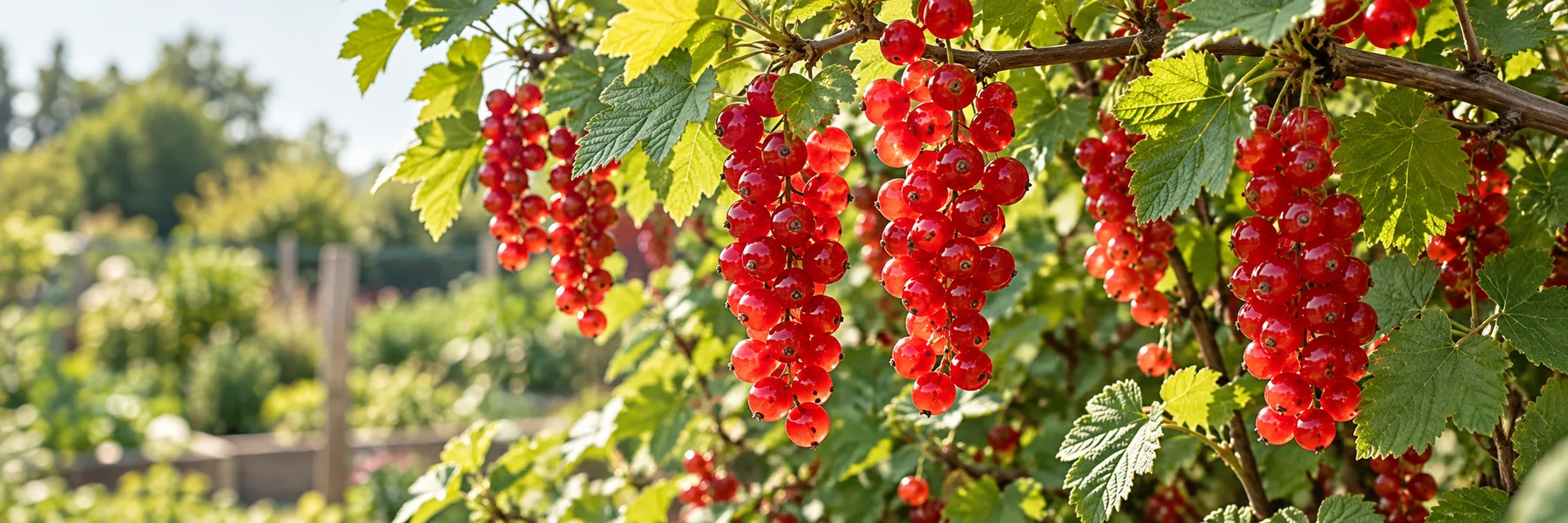
Freezing Redcurrant
General preservation or storage guidance
Prepared redcurrants can be frozen in portions for later cooking; the texture will be softer after thawing.
Method
- Sort sound redcurrants, discard bruised or mouldy fruit, remove stalks and leaves, rinse gently if needed and dry thoroughly.
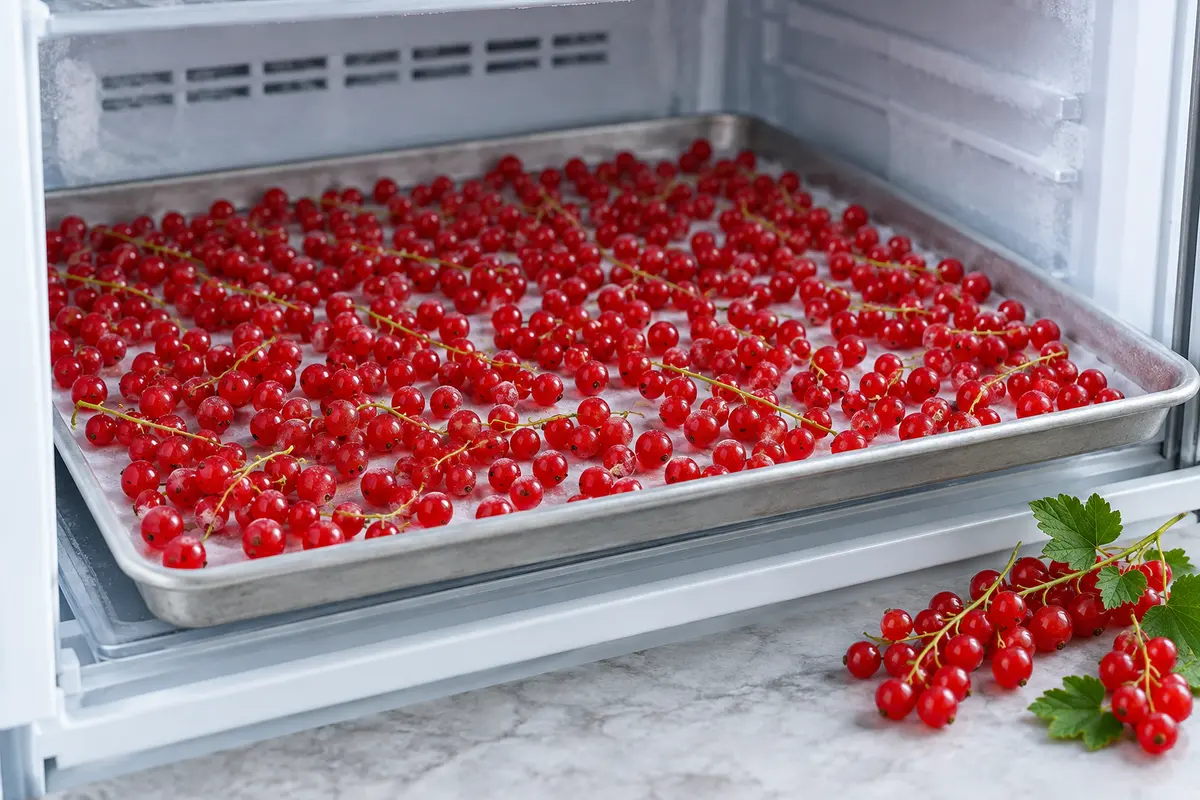
- Spread prepared fruit in one layer on a lined tray so pieces freeze separately.
- Freeze until firm, then transfer carefully to a labelled freezer-safe container or bag and remove excess air.
- Seal and return promptly to the freezer.
- Use from frozen in cooking or thaw in the refrigerator; do not refreeze once thawed.
Storage
Freezer at −18°C or colder · No method-specific quality period stated
Sources and scope
- Freezing Currants — National Center for Home Food Preservation
Method-specific source recorded in the prior content audit
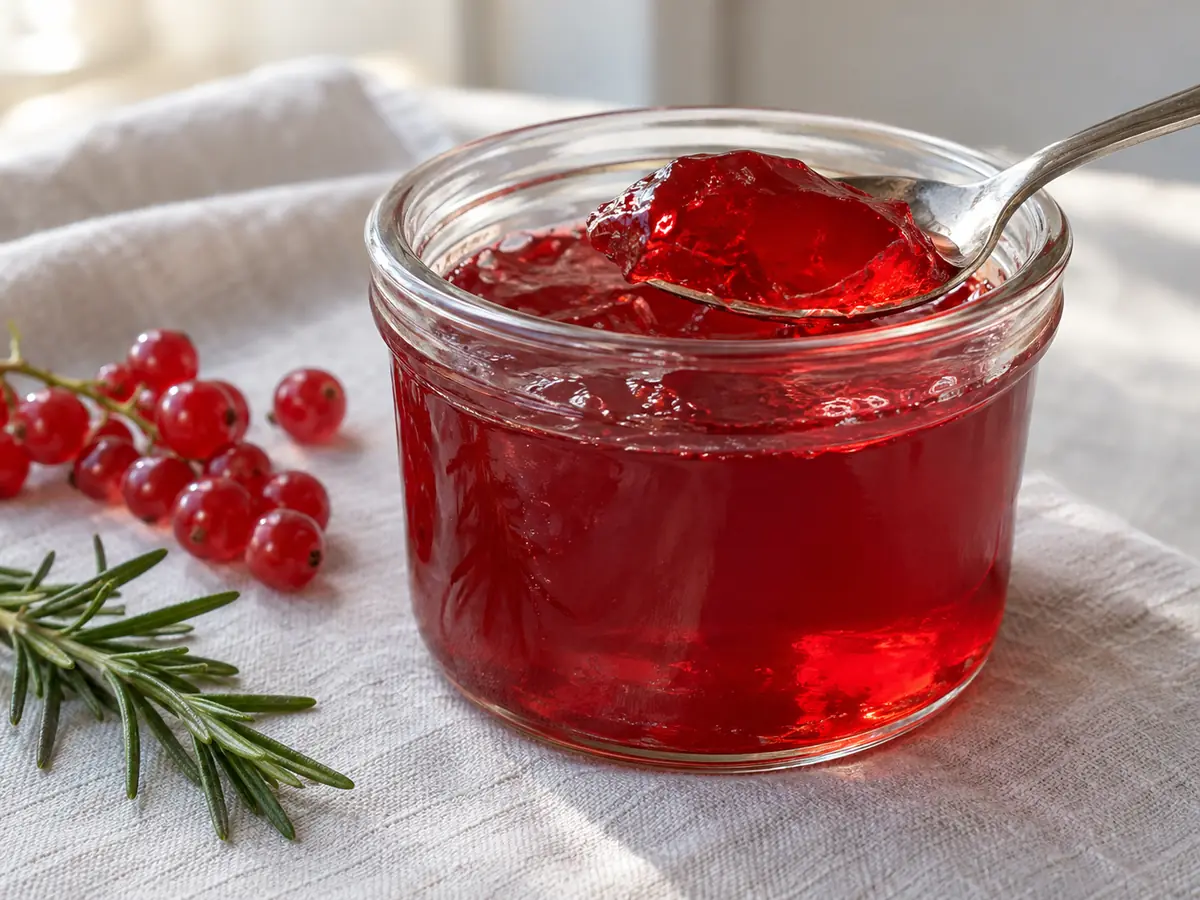
Redcurrant Jelly
General preservation or storage guidance
This tested redcurrant jelly uses extracted juice, liquid pectin and a measured sugar quantity; strain gently for a clear jelly and follow the stated canner process.
Method
- Extract juice from washed redcurrants: simmer about 14 US cups berries with 1 US cup water for 10 minutes, then strain through a jelly bag without pressing. Measure 5 US cups juice for one batch.
- Measure 7 US cups sugar and 3 oz (85 ml) liquid pectin. Put the juice and sugar in a saucepan and bring over high heat to a full rolling boil that cannot be stirred down.
- Quickly stir in the liquid pectin, bring the mixture back to a full rolling boil and boil for 1 minute. Remove from the heat and skim the foam.
- Pour immediately into hot, sterilised half-pint or pint jars, leaving ¼ inch (6 mm) headspace. Wipe rims and fit prepared two-piece lids.
- Process in a boiling-water canner for 5 minutes. Cool undisturbed, check each seal and refrigerate any jar that did not seal. Store sealed jars in a cool, dark place and refrigerate after opening.
Storage
Store sealed, correctly processed jars in a cool, dark place; refrigerate after opening · No exact storage period stated
Sources and scope
- Currants — University of Alaska Fairbanks Cooperative Extension
Method-specific source recorded in the prior content audit
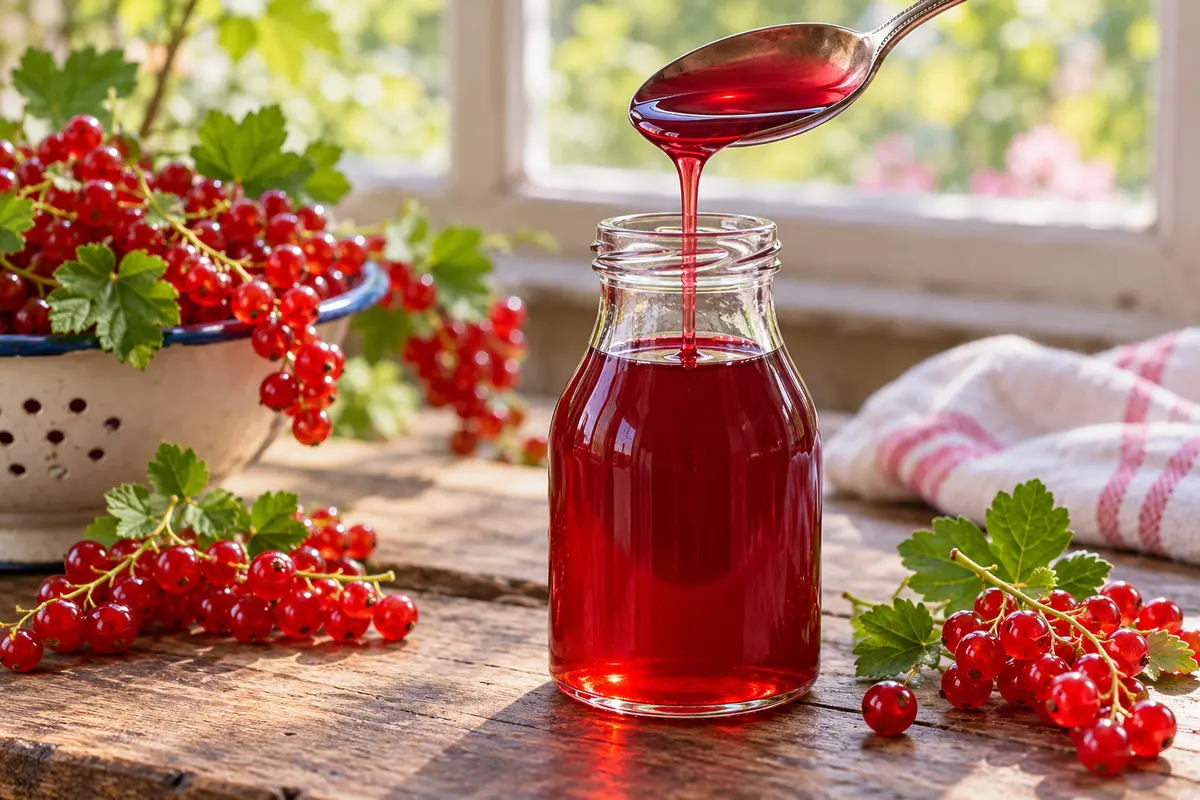
Syrup for Redcurrant
General preservation or storage guidance
This tested redcurrant syrup uses a measured one-to-two juice-to-sugar ratio and gentle heating; it can be kept refrigerated or processed in jars using the stated method.
Method
- Extract redcurrant juice from washed fruit, straining through a jelly bag if you want a clear syrup. Measure 1 US cup juice and 2 US cups sugar for one tested batch, which yields about 2 cups.
- Combine the measured juice and sugar in a saucepan. Heat while stirring until the syrup reaches 160°F (71°C); use a thermometer and do not boil it.
- For refrigerator use, pour into a clean covered container, cool promptly and refrigerate. The tested recipe gives up to 6 months refrigerated.
- For longer storage, pour the hot syrup into hot, sterilised half-pint or pint canning jars, leaving ¼ inch (6 mm) headspace. Wipe rims and fit prepared two-piece lids.
- Process the filled jars in a boiling-water canner for 5 minutes. Cool undisturbed, check the seals and refrigerate any jar that did not seal.
Storage
Refrigerate promptly; the tested recipe states up to 6 months refrigerated. For longer storage use its boiling-water canner process. · Up to 6 months refrigerated per the tested recipe; no additional duration stated
Sources and scope
- Currants — University of Alaska Fairbanks Cooperative Extension
Method-specific source recorded in the prior content audit