
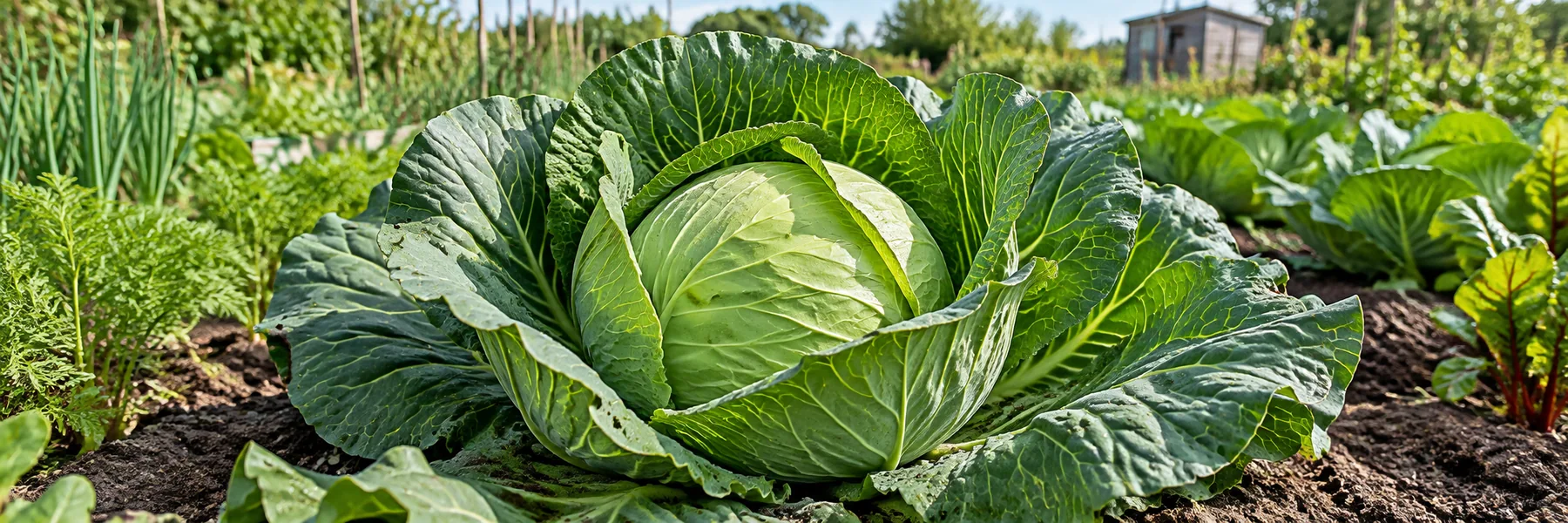
Freezing Summer Cabbage
General preservation or storage guidance
Summer cabbage freezes for cooked dishes after a brief blanch; cut the head into shreds, wedges or leaves so each piece heats evenly.
Method
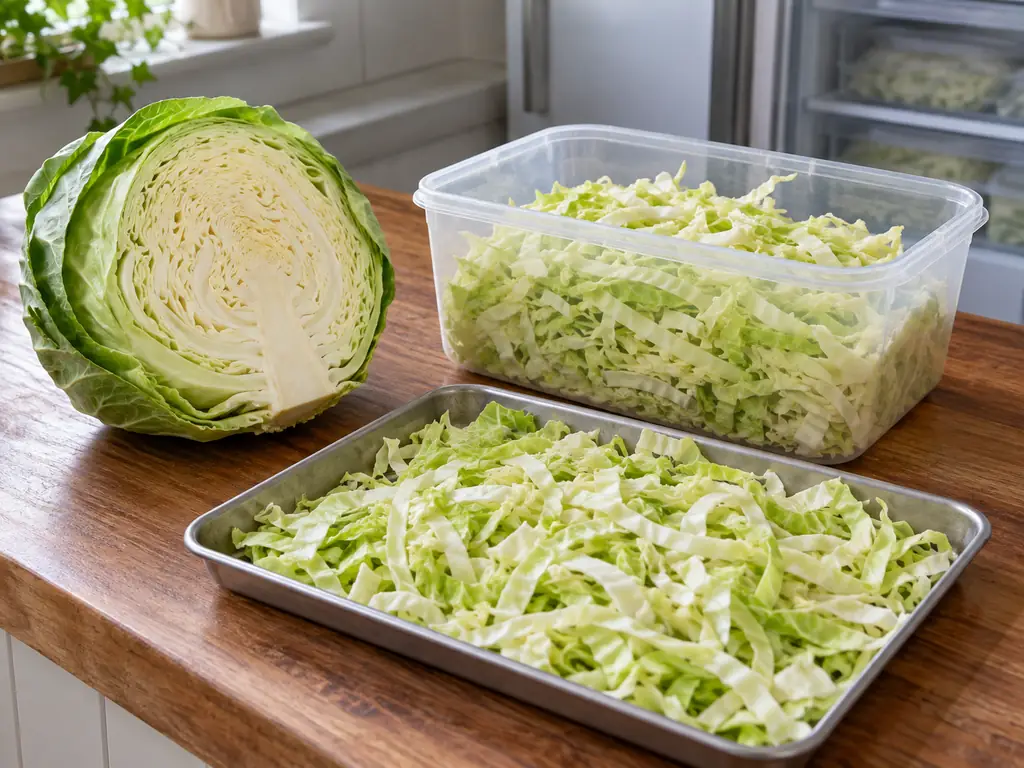
- Choose a freshly picked, solid summer-cabbage head. Remove coarse outer leaves, rinse the head and cut it into medium-to-coarse shreds, thin wedges or separated leaves.
- Bring a large pan of water to a boil and blanch the prepared cabbage for 1½ minutes. Work in small batches so the water stays boiling.
- Cool promptly in cold water and drain very well. Pat dry if needed to limit ice crystals.
- Pack in freezer-safe containers, leaving about 1 cm headspace in rigid containers, or seal flat in freezer bags with excess air pressed out.
- Label and freeze promptly. Frozen cabbage is for cooked dishes because thawed leaves become limp; keep continuously frozen.
Storage
Freezer at −18°C or colder · Keep continuously frozen; no exact quality period stated
Sources and scope
- Freezing Cabbage Or Chinese Cabbage — National Center for Home Food Preservation
Method-specific source recorded in the prior content audit
Fermenting Summer Cabbage
General preservation or storage guidance
Summer cabbage can be made into sauerkraut with a measured salt-to-cabbage ratio and controlled fermentation; keep the shreds submerged throughout.
Method
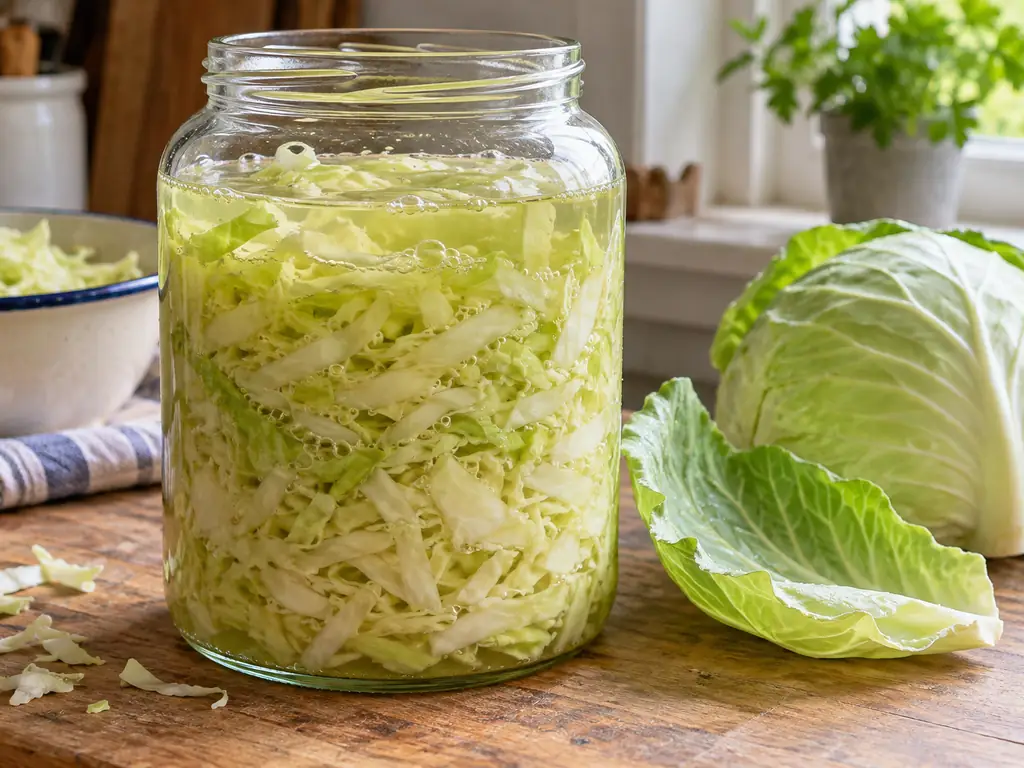
- Use fresh, firm summer cabbage. Remove damaged outer leaves, rinse and drain; quarter the heads, remove cores and shred the cabbage about 6 mm (¼ in) thick.
- Work in batches of 2.3 kg (5 lb) cabbage. Mix each batch thoroughly with 3 tbsp pickling salt, then pack firmly into a clean food-grade fermentation crock until the cabbage releases enough juice to cover itself.
- Repeat in the same measured batches. Keep the cabbage below the brine with a clean plate and fermentation weight. If the juice does not cover it, use only the source recipe’s boiled-and-cooled brine: 1½ tbsp salt per 1 US quart (about 950 ml) water.
- Cover the vessel with a clean cloth. Ferment around 21–24°C (70–75°F) for about 3–4 weeks, or around 16–18°C (60–65°F) for 5–6 weeks; below 16°C it may not ferment and above 24°C it may soften. Follow the tested recipe’s completion guidance.
- When fermentation is complete, transfer with its brine to covered containers and refrigerate. Do not treat unprocessed sauerkraut as a cupboard-stable product; use the separate tested canning process if shelf storage is intended.
Storage
Refrigerator, tightly covered and submerged in brine, once fully fermented · NCHFP states fully fermented kraut keeps refrigerated for several months
Sources and scope
- Sauerkraut — National Center for Home Food Preservation
Method-specific source recorded in the prior content audit