
Fermenting Winter Cabbage
General preservation or storage guidance
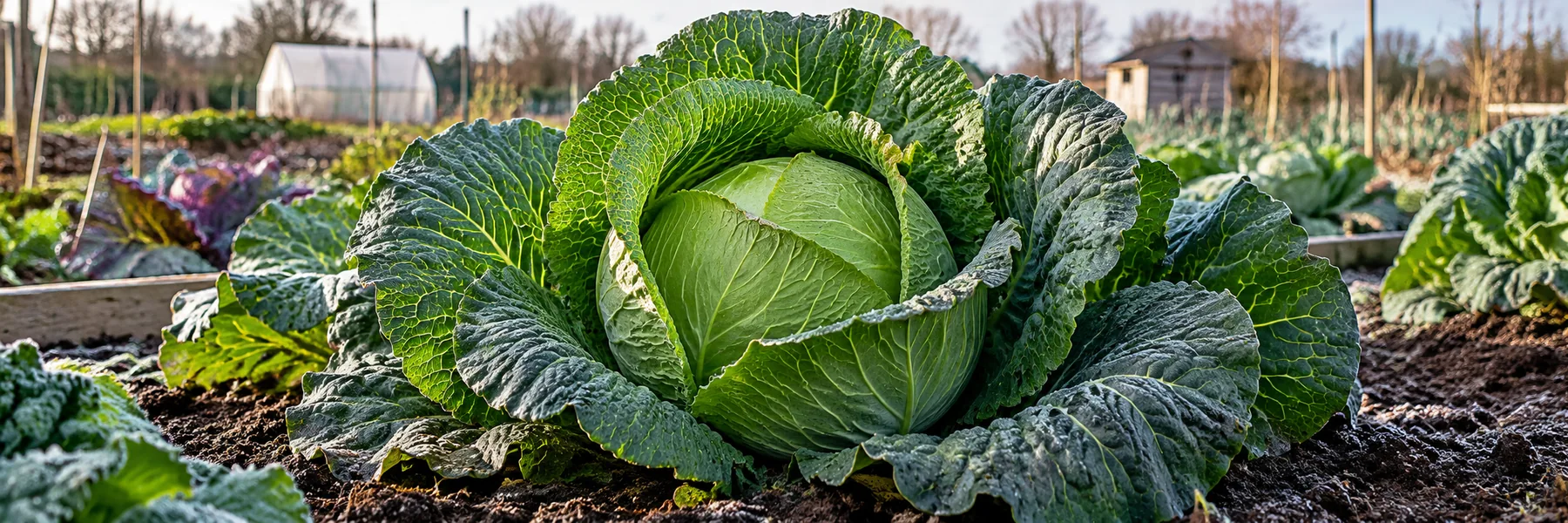
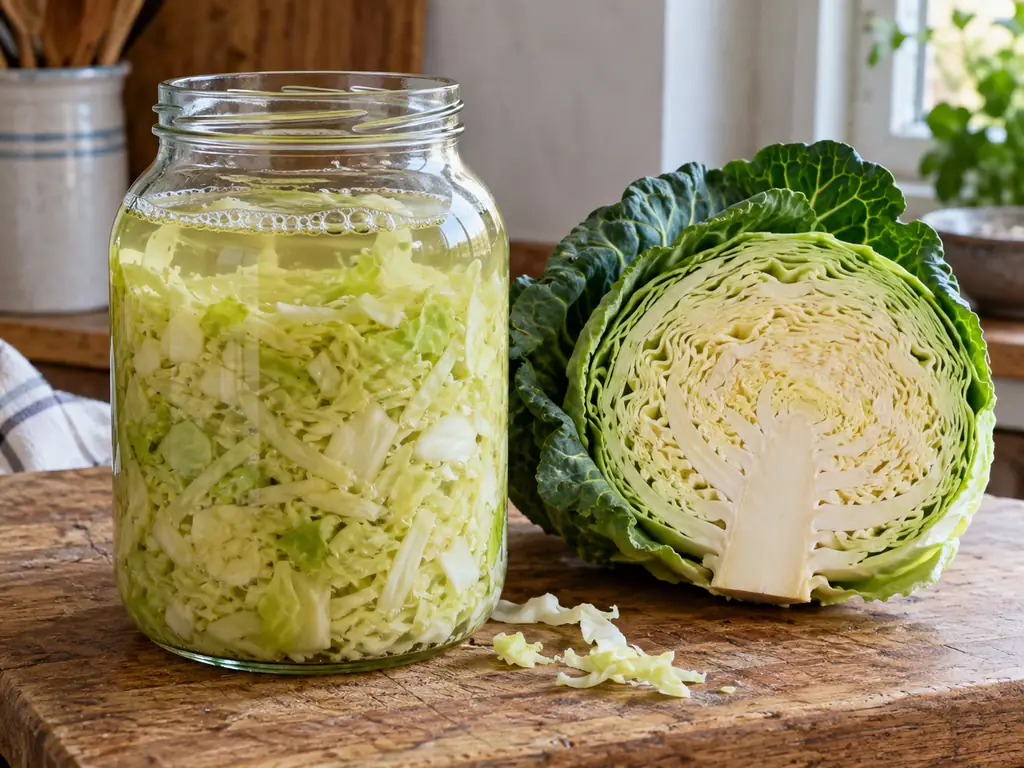
Firm winter-cabbage heads make sauerkraut by the same measured cabbage-and-salt process; shred evenly and keep the crop below brine as it ferments.
Method
- Choose fresh, solid winter-cabbage heads. Remove damaged outer leaves, rinse and drain; quarter, remove the tough cores and shred to about 6 mm (¼ in).
- Measure 2.3 kg (5 lb) shredded cabbage and mix with exactly 3 tbsp pickling salt. Pack firmly in a clean food-grade crock until juice rises over the shreds. Repeat in measured batches rather than estimating the salt.
- Keep the cabbage submerged under its own brine using a clean plate and weight. If liquid is insufficient, add only the tested brine of 1½ tbsp salt per 1 US quart (about 950 ml) boiled-and-cooled water.
- Cover with a clean cloth. Ferment around 21–24°C for about 3–4 weeks, or around 16–18°C for 5–6 weeks. Cooler conditions below 16°C may stall fermentation; above 24°C the cabbage may soften. Follow the tested recipe’s completion guidance.
- Once fully fermented, keep covered and refrigerated in its brine. Do not store an unprocessed batch at room temperature; use a separate validated canning process only if shelf storage is wanted.
Storage
Refrigerator, tightly covered and submerged in brine, once fully fermented · NCHFP states fully fermented kraut keeps refrigerated for several months
Sources and scope
- Sauerkraut — National Center for Home Food Preservation
Method-specific source recorded in the prior content audit
Freezing Winter Cabbage
General preservation or storage guidance
A firm winter-cabbage head freezes for cooked dishes after a short blanch; thawed cabbage is soft, so prepare portions for soups and other cooked recipes.
Method
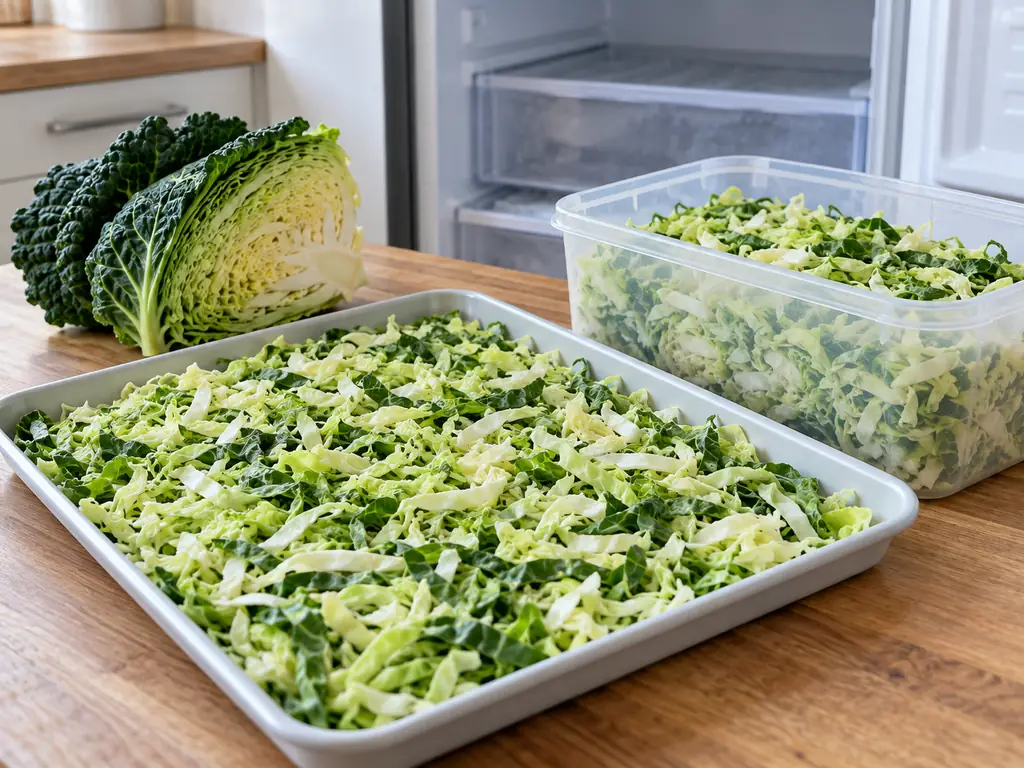
- Select a freshly picked, solid winter-cabbage head. Remove coarse outer leaves, rinse, quarter and remove the core. Cut into medium-to-coarse shreds, thin wedges or separate leaves.
- Blanch the prepared cabbage in boiling water for 1½ minutes. Keep batches small enough for the water to return quickly to a boil.
- Cool promptly in cold water and drain thoroughly. Remove as much surface water as practical before packing.
- Pack into freezer-safe containers with about 1 cm headspace, or use sealed freezer bags and press out excess air.
- Label and freeze promptly. Use thawed cabbage in cooked dishes only, because freezing softens its texture. Keep continuously frozen.
Storage
Freezer at −18°C or colder · Keep continuously frozen; no exact quality period stated
Sources and scope
- Freezing Cabbage Or Chinese Cabbage — National Center for Home Food Preservation
Method-specific source recorded in the prior content audit
Cool Storage for Winter Cabbage
General preservation or storage guidance
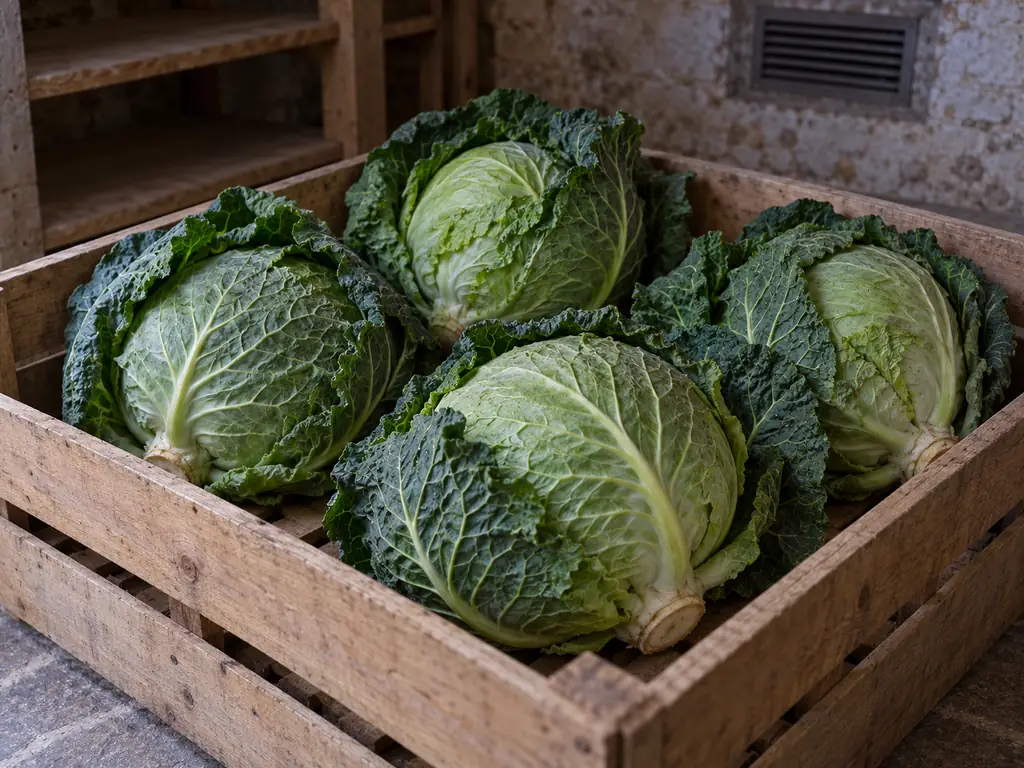
Whole winter-cabbage heads store better than cut leaves; keep them cold, humid and ventilated, then remove outer leaves as needed.
Method
- Choose dense, firm winter-cabbage heads with no splits, soft patches or signs of rot. Use damaged heads first.
- Remove only loose or damaged outer leaves. Keep the remaining head whole and unwashed to reduce drying and handling damage.
- Place heads in a cool, humid, ventilated store or refrigerator. Keep them separate from damp debris and do not allow them to freeze.
- Check the heads regularly and remove any that become soft, slimy or mouldy before spoilage spreads.
- Peel off only the outer leaves needed and rinse the head just before cutting for use.
Storage
Cold, humid refrigerator or frost-free ventilated store · Inspect regularly; no exact household storage period stated
Sources and scope
- Harvesting And Storing Home Garden Vegetables — University of Minnesota Extension
Method-specific source recorded in the prior content audit