
Curing Winter Squash
General preservation or storage guidance
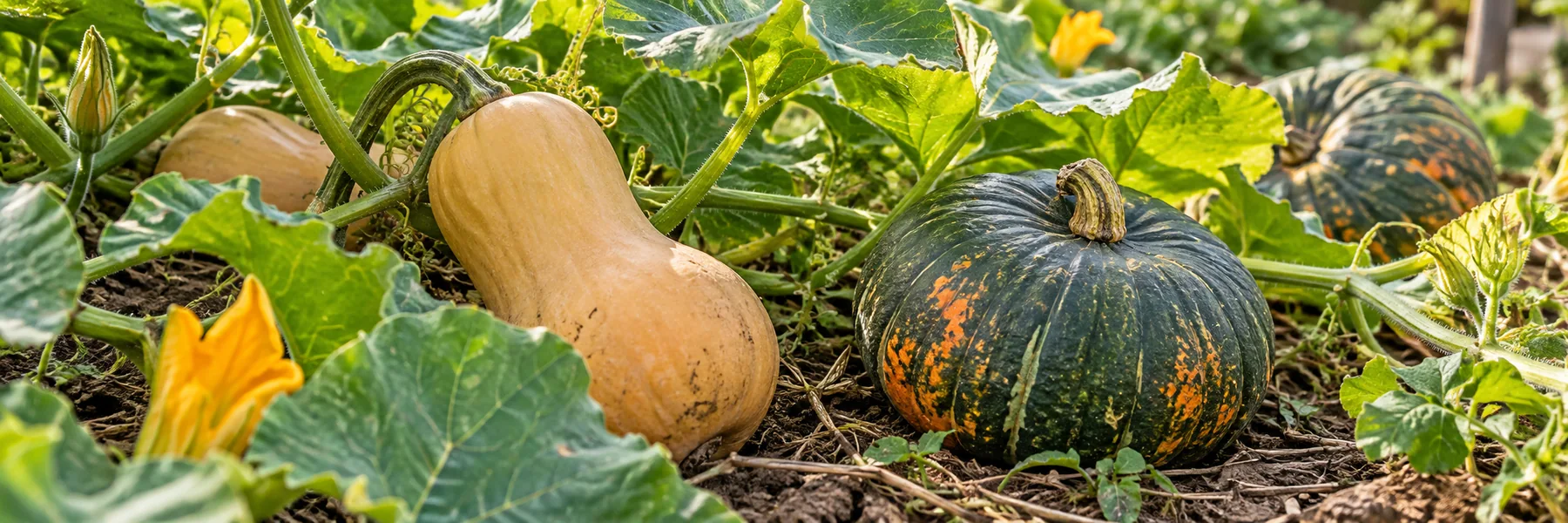
Curing mature winter squash hardens its rind and dries small surface wounds, improving its keeping quality before cool storage.
Method
- Harvest fully mature squash before a hard frost; the rind should resist a fingernail and the stem should be hard. Cut the stem cleanly, leaving it attached.
- Handle each fruit gently and set aside any with deep cuts, bruising or soft rot for prompt use.
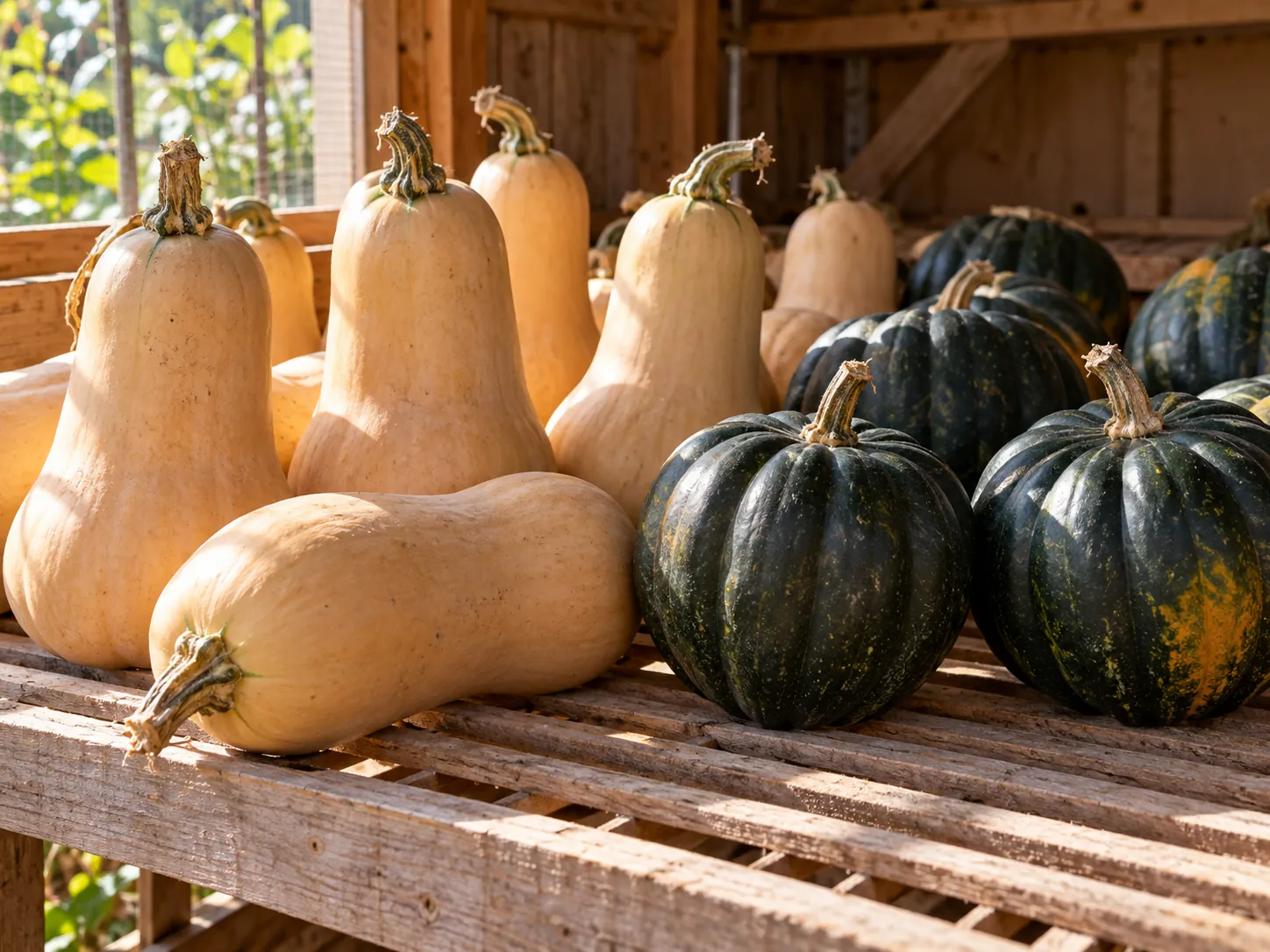
- In warm, rain-free conditions, leave squash in a dry spot for 7–10 days so the rind hardens and minor nicks scab over.
- If weather is cool or wet, cure under cover in a ventilated shed or greenhouse and circulate air around the fruit; do not leave it damp.
- Move cured squash to a dry, ventilated store near 10–13°C, keeping fruit separated and protected from frost.
Storage
Warm, dry and well ventilated during curing; protect from rain and frost · Cure until the rind is firm and small cuts have dried
Sources and scope
- Harvesting And Storing Melons Squash And Pumpkins — University of Minnesota Extension
Method-specific source recorded in the prior content audit
- Sp 50 767 Preserving Pumpkins Winter Squash — Oregon State University Extension
Method-specific source recorded in the prior content audit
Cool Storage for Winter Squash
General preservation or storage guidance
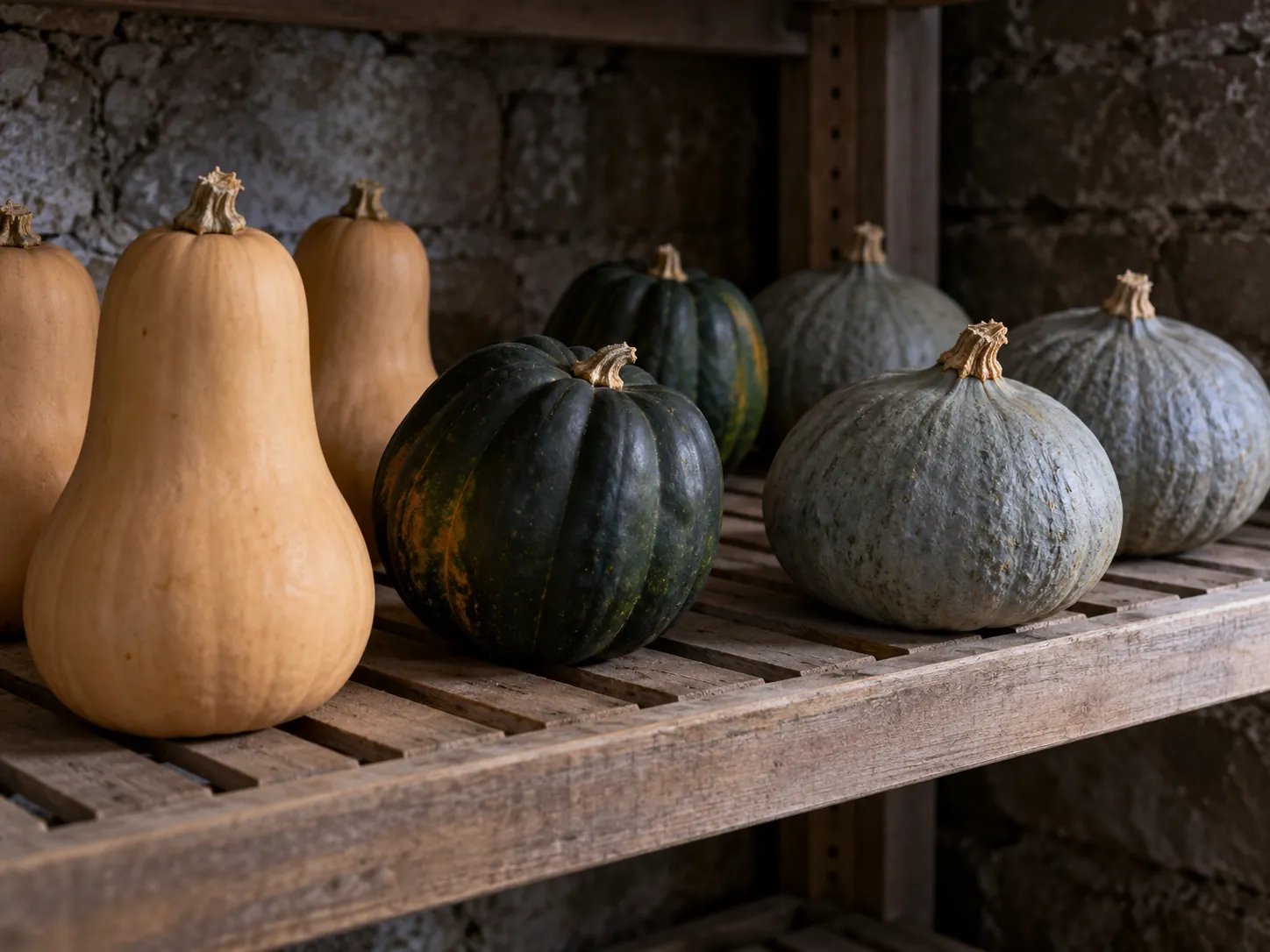
Mature, cured winter squash stores for longer in a dry, ventilated place around 10–13°C; keeping time varies by variety.
Method
- Choose fully mature squash with a hard, undented rind and an intact stem; set damaged or immature fruit aside for prompt cooking.
- Do not wash fruit intended for storage. Brush off loose dry soil and let the rind dry fully.
- Place squash in a single layer on a shelf or slatted tray, leaving airflow around the fruit and avoiding pressure on the stems.
- Maintain a dry, ventilated store around 10–13°C; prevent frost and condensation, and keep the squash away from damp floors.
- Inspect weekly and remove any fruit that softens, leaks or develops mould before rot spreads.
Storage
Dry, ventilated store around 10–13°C; protect from frost · Variety-dependent, commonly 1–6 months under suitable conditions
Sources and scope
- Sp 50 767 Preserving Pumpkins Winter Squash — Oregon State University Extension
Method-specific source recorded in the prior content audit
- Harvesting And Storing Melons Squash And Pumpkins — University of Minnesota Extension
Method-specific source recorded in the prior content audit
Freezing Puree for Winter Squash
General preservation or storage guidance
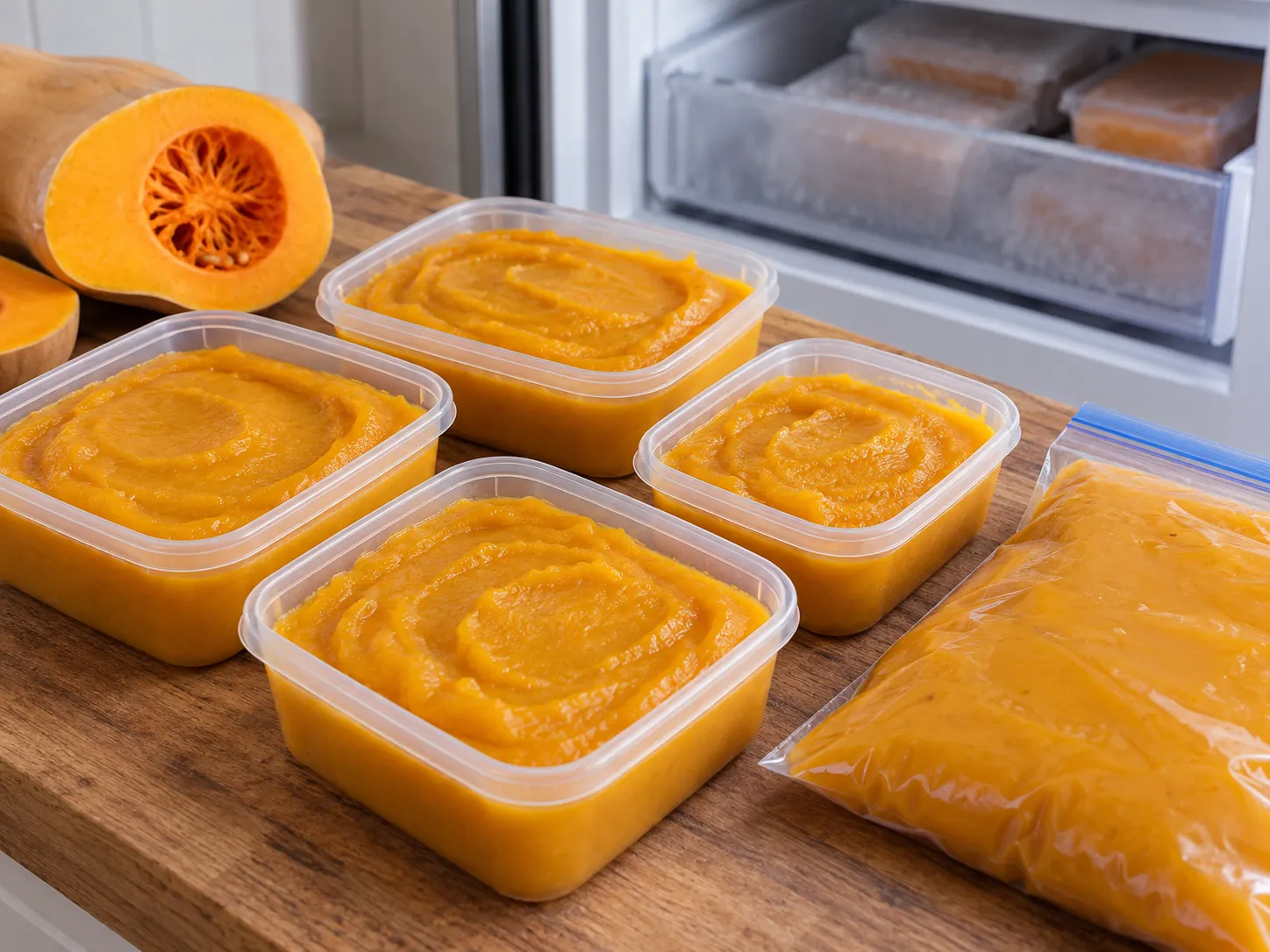
Cooked winter-squash flesh freezes well as purée or mash for soups and baking; keep it frozen rather than attempting to can it as a purée.
Method
- Choose firm, mature squash with a hard rind. Wash the outside, cut into cooking-size sections and remove seeds and fibres.
- Cook the pieces by roasting, steaming or boiling until the flesh is soft all the way through.
- Scoop out the flesh and mash it; spaghetti squash may instead be frozen as strands if preferred. Cool promptly in shallow portions.
- Pack into freezer-safe containers, leaving about 1 cm headspace, or use measured freezer bags. Seal and label with the crop and date.
- Freeze promptly and thaw in the refrigerator. Use in cooked dishes; do not home-can mashed or puréed squash.
Storage
Freezer at −18°C or colder · Keep continuously frozen; no exact quality period stated
Sources and scope
- Freezing Winter Squash — National Center for Home Food Preservation
Method-specific source recorded in the prior content audit
- Sp 50 767 Preserving Pumpkins Winter Squash — Oregon State University Extension
Method-specific source recorded in the prior content audit
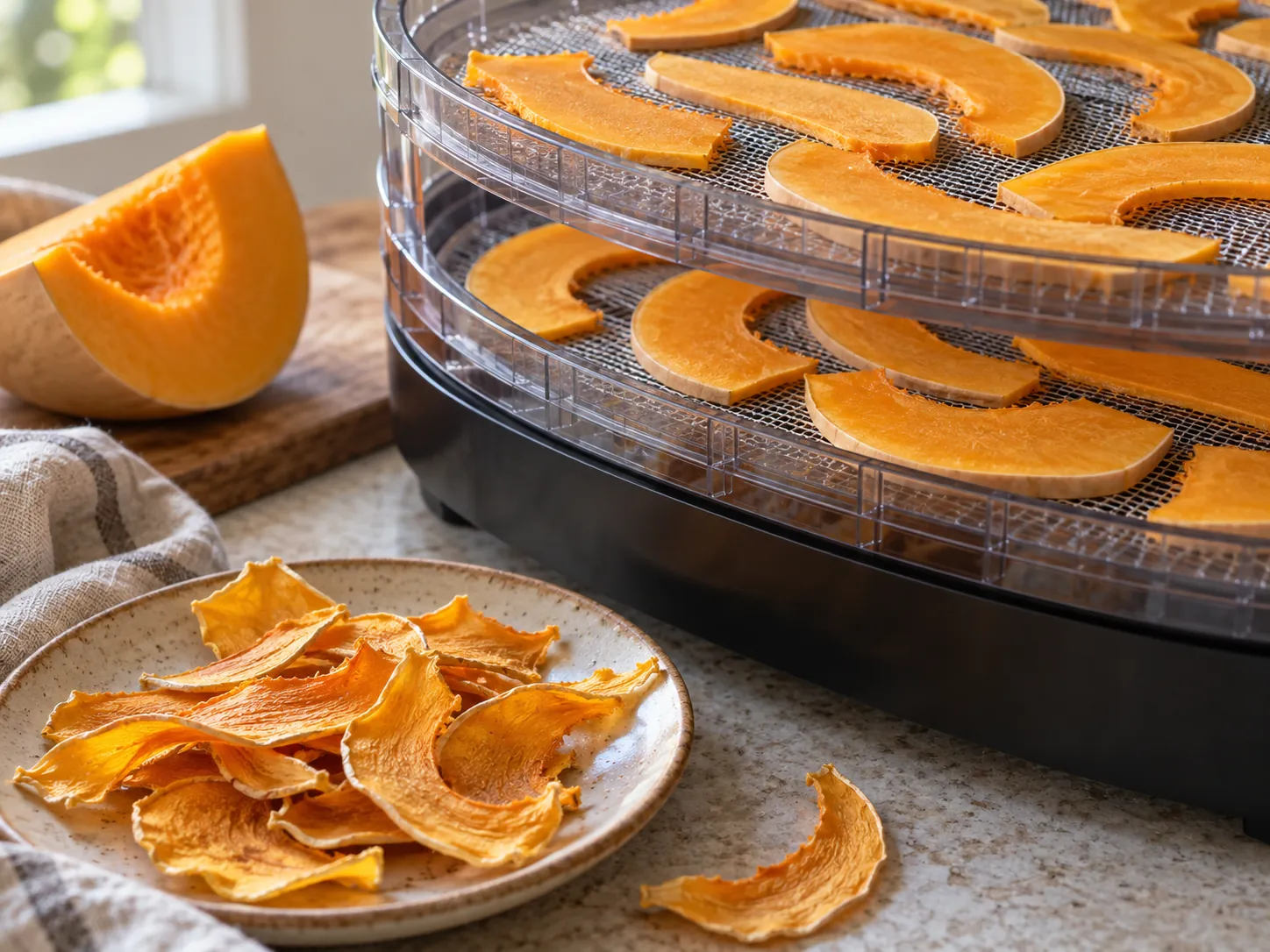
Drying Winter Squash
General preservation or storage guidance
Peeled, steam-blanched winter-squash strips dry into a compact ingredient; a staged temperature and brittle finish help remove moisture throughout.
Method
- Choose mature, sound winter squash with a hard rind. Wash, cut in half and remove seeds and stringy pulp; peel the outer skin.
- Cut the flesh into even strips about 6 mm (¼ in) thick.
- Steam the strips for 2–3 minutes, until almost tender, then spread in a single layer on dehydrator trays.
- Dry at about 60°C (140°F) for 2–3 hours, then reduce to about 54°C (130°F) and continue until tough and brittle; allow roughly 10–16 hours total, depending on the cut and appliance.
- Condition in a large airtight container for 1 week, shaking daily. If moisture appears, finish drying the strips and repeat conditioning. Store airtight in a cool, dry place and use within 1–2 months at room temperature for best flavour.
Storage
Airtight container in a cool, dry place after conditioning · Oregon State advises using dried squash within 1–2 months at room temperature for best flavour
Sources and scope
- Sp 50 767 Preserving Pumpkins Winter Squash — Oregon State University Extension
Method-specific source recorded in the prior content audit
- Drying — University of Minnesota Extension
Method-specific source recorded in the prior content audit