
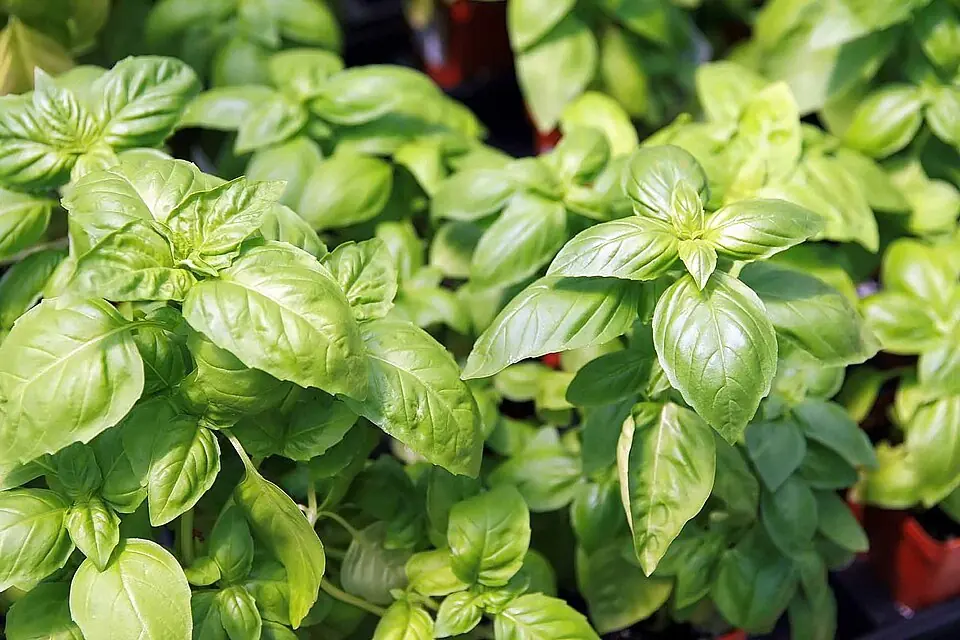
Start basil in warmth
Basil is a tender, warmth-loving herb rather than a hardy outdoor perennial in the UK. It is easy to grow in a pot, greenhouse or bright indoor spot, but cold compost and draughts can check it quickly. Sow small batches from March to May for plants to use through summer; later sowings can replace tired plants.
Sow seeds on the surface of moist seed compost and cover only very lightly, as they need light to germinate. Keep them at about 18–22°C and ventilate any covered tray once shoots appear. Give seedlings plenty of light. Pot them on gently when they are large enough to handle, keeping the root ball intact.
Move outside only when it is reliably mild
Harden plants off gradually and move them outdoors only after cold nights and frost risk have passed, usually in late May or June. A sheltered, sunny position beside a wall or on a patio is more dependable than an exposed allotment bed. Basil also grows well on a warm windowsill or in a greenhouse with ventilation.
Use free-draining compost in a pot with drainage holes. Water when the surface begins to dry, aiming at the compost rather than soaking leaves. Plants in small pots may need frequent checks during warm spells. Avoid leaving the pot standing in water, and do not let it dry until the leaves collapse.
Pick shoots to keep plants productive
Once a plant has several pairs of leaves, pinch or snip the growing tip just above a pair of leaves. Two side shoots should then grow from that point. Repeat this as the stems lengthen, taking whole tender shoots for cooking rather than stripping every leaf from one stem. Regular picking delays flowering and gives a bushier plant.
If flower spikes appear, pinch them out when your priority is leaf harvest. Basil flowers are useful to insects, so you can leave a few plants to flower if you have enough leaves. They may become less productive after flowering, so sowing a second small batch is often easier than trying to keep one plant indefinitely.
Keep it healthy and use it fresh
Cold, persistently wet compost can cause yellowing or root problems, while crowded, humid growth encourages grey mould. Space plants, provide light and airflow, remove damaged leaves and water early enough for foliage to dry. Slugs may attack young plants outside; pots on a clean bench can reduce access.
Use leaves soon after picking for the best aroma. To keep a surplus, chop and freeze leaves in small portions or make a fresh sauce and freeze it. Basil is sensitive to cold storage, so a warm kitchen counter is often kinder than the refrigerator. Bring outdoor pots in before nights turn cold.