
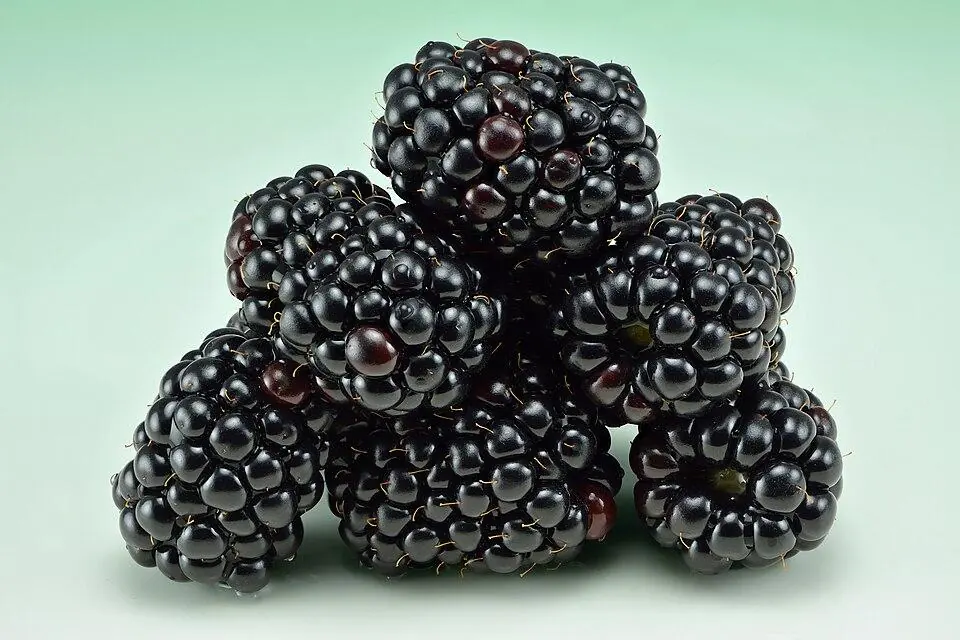
Choose a blackberry or hybrid berry
Blackberries and hybrid berries such as tayberries and loganberries are vigorous cane fruit. Traditional floricane cultivars produce fruit on second-year canes; each cane grows one season, fruits the next and is then removed. Some modern primocane cultivars can fruit on first-year growth, so follow the specific label rather than applying the same pruning to all. Thornless and compact cultivars can be easier to manage on a small allotment.
Choose full sun for sweeter, more reliable fruit, though light shade is tolerated. The soil should be fertile and reasonably well drained. Provide sturdy posts and horizontal wires before planting; mature canes can be heavy, and the support must withstand wind and the weight of fruit.
Plant and train the canes
Plant bare-root stock during dormancy, usually late autumn to early spring, or plant container stock when soil is workable and water is available. Space plants according to vigour, often around 2–3 m for vigorous blackberries and closer for compact hybrids; use the supplier’s spacing advice. Water in well, mulch with mature compost and keep a clear strip around the base.
Tie new canes in loosely as they grow so they do not cross paths or become a tangled mass. A simple system is to train this year’s fruiting canes on one side of the wires and new canes on the other. Wear gloves and long sleeves when handling thorny cultivars. Avoid tight ties that cut into the stems.
Pruning and seasonal care
For ordinary floricane blackberries and most hybrids, remove the old canes that have fruited at ground level after harvest in summer or autumn. Keep the strongest new canes for the following year and tie them onto the support. In spring, shorten side shoots as recommended for the cultivar and remove damaged, weak or crossing growth. If a primocane cultivar fruits on first-year canes, prune it according to its specific instructions, often in late winter.
Water during prolonged dry weather, especially from flowering through fruit swelling, and renew a compost mulch in spring. Do not feed heavily late in the season; lush growth may be more vulnerable and can make management harder. Remove weeds and unwanted suckers before they become established outside the row.
Protect, harvest and store fruit
Watch for aphids, cane spot, grey mould and fruit rots. Keep rows open for airflow, remove diseased material and avoid wetting foliage late in the day. Bird netting should be taut over a frame and checked frequently; never leave loose netting where birds or small mammals can become trapped. Pick and remove mouldy fruit promptly.
Harvest when berries are fully black, plump and come away easily; some cultivars turn black before they are fully sweet. Pick in dry weather and chill quickly. Fresh blackberries keep only briefly. Freeze surplus in a single layer, then transfer to a container. A heavy crop can be preserved or cooked, but use sound fruit and follow tested food-safety instructions.
Common mistakes
- Growing vigorous plants without a support or enough room to reach the fruit.
- Removing new canes with the fruited canes and losing next season’s crop.
- Assuming every blackberry and hybrid has the same fruiting and pruning habit.
- Allowing a dense tangle to persist, which reduces airflow and makes disease and harvest harder to manage.