
Read the growing year, not just the calendar
The UK growing year is shaped by light, temperature, rainfall and frost, and each plot has its own microclimate. Sheltered southern gardens can warm earlier than northern, upland, coastal or exposed sites. A calendar gives useful planning windows, not a guarantee that soil or weather is ready. Keep local notes and adjust from year to year.
Soil temperature matters for germination and establishment. Cold, wet soil can delay seeds and damage roots even when the air feels mild. Check the seed packet, the crop guide and the forecast, and wait until soil is workable before sowing or planting.
Spring: prepare and start selectively
As days lengthen, prepare beds when soil crumbles rather than smears. Under cover, sow crops that need a longer season or warmth, but provide bright light after germination. Direct sow hardy crops only when conditions suit them; cloches or fleece may warm the soil or provide short-term protection, but must be secured and ventilated as conditions change.
Do not move tender seedlings outside because of one sunny day. Harden them off gradually and keep protection ready for cold nights. An unheated greenhouse or polytunnel can still become cold enough to check tender growth.
Summer: maintain, water and sow successions
Longer days and warmer soil support rapid growth, but dry spells, heat and wind can stress crops. Check soil moisture, water thoroughly when needed and mulch moist beds. Sow smaller follow-on batches of suitable crops at intervals where the crop and season allow, leaving enough time for them to mature before light and temperatures decline.
Ventilate glasshouses and tunnels on warm days, monitor covered crops for pests and avoid letting plants become crowded. The calendar can help you identify late sowings, but use the variety’s maturity time and your local season to decide.
Autumn: harvest and prepare for cooler weather
As growth slows, harvest mature crops before severe frost where relevant, clear healthy spent plants for compost and remove diseased material through an appropriate route. Some hardy crops can be sown or planted for autumn and winter use, but timing depends on variety and region. Protect beds with suitable mulch or cover, and avoid digging saturated soil.
Winter: protect, observe and plan
Winter is useful for checking stored crops, repairing tools and supports, reviewing notes and ordering seed. Keep paths clear and avoid compacting wet beds. Hardy overwintering crops may continue slowly, while many beds can rest under suitable mulch or a secure cover. The right treatment depends on soil, crop and site rules.
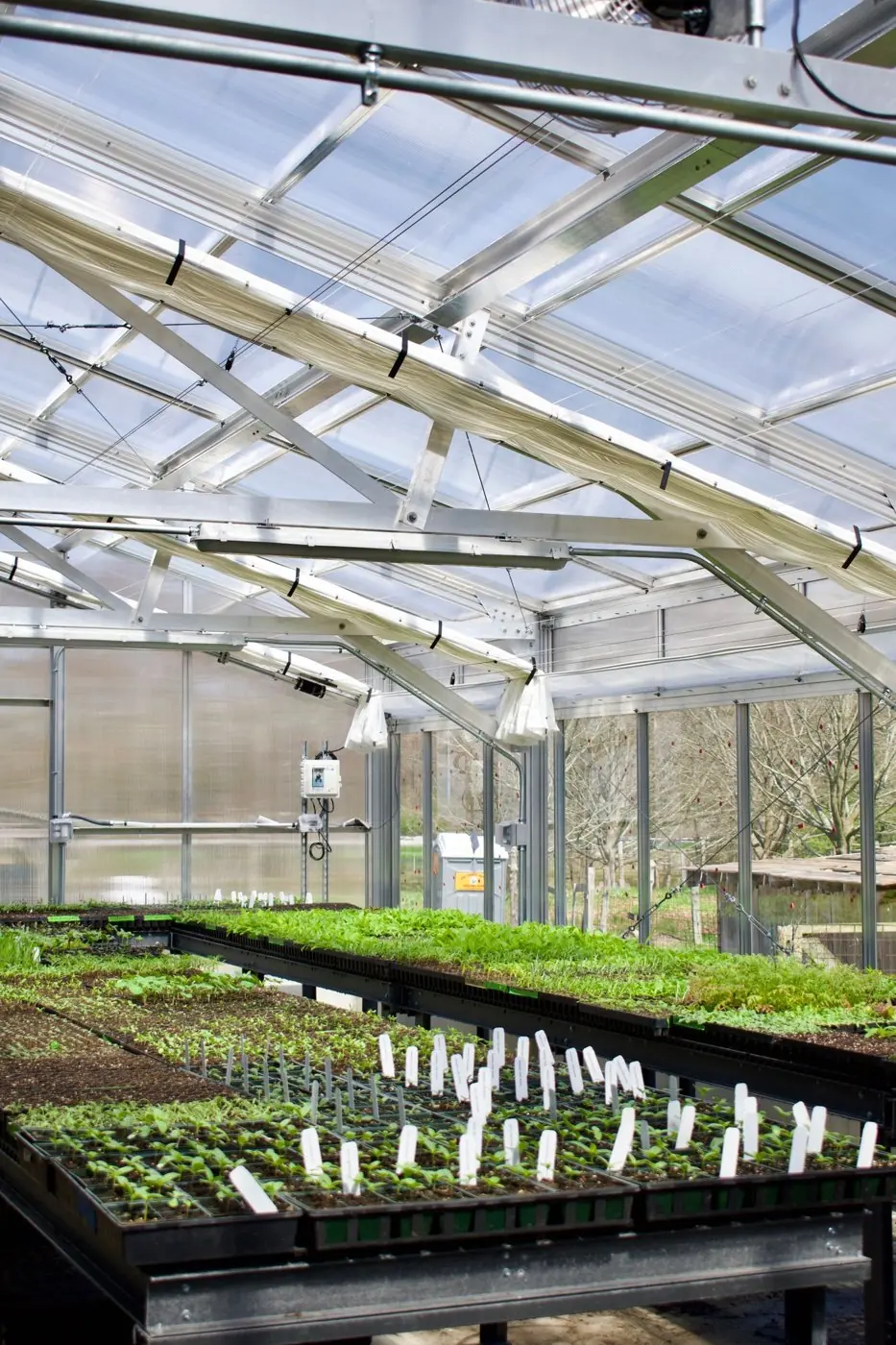
Greenhouses and polytunnels extend the season for some crops but do not create reliable warmth without heating. Ventilate on mild days, monitor condensation and temperature, and protect tender plants from frost.
Indoor sowing, direct sowing and protection
Indoor sowing can advance a crop, especially warmth-loving plants, but seedlings require enough light, space and gradual hardening off. Direct sowing avoids transplant shock for crops such as carrots and is often simpler for hardy crops when the bed is ready. Choose the method that matches the crop and your available space.
Use fleece, cloches and frames as temporary protection, securing them well and checking for overheating, trapped wildlife or damage. A cover moderates conditions but does not guarantee frost-free temperatures.
A practical seasonal routine
- Use the existing Planting Calendar to see a month-by-month starting point, then check crop-specific sowing windows.
- Check forecast minimum temperatures before moving tender plants or planting frost-sensitive crops outdoors.
- Use soil condition and, where helpful, a soil thermometer to guide outdoor sowing.
- Stagger sowings only when there is enough remaining season and space for the crop to mature.
- Record first and last frost observations, planting dates and what succeeded on your site.
Common seasonal mistakes
- Sowing outdoors because the calendar says so while the soil is cold or waterlogged.
- Assuming southern planting dates suit exposed or northern sites.
- Leaving tender plants outside after hardening off when frost is still forecast.
- Starting too many seedlings indoors before there is enough light or growing space.
- Expecting fleece, an unheated greenhouse or a polytunnel to provide complete frost protection.
- Sowing late crops without checking their time to maturity and local day length.