
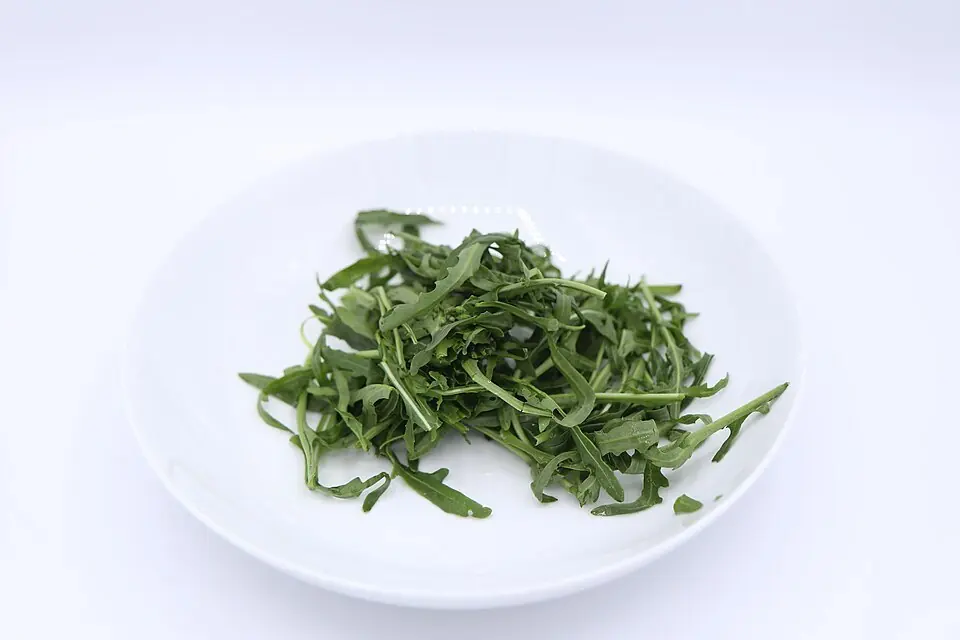
Choose salad rocket or wild rocket
Rocket is a quick-growing leafy brassica with a peppery flavour. Salad rocket is usually quicker and makes a flush of tender leaves; wild rocket is slower, more perennial and often gives a longer picking season once established. Check the seed packet because sowing and spacing differ by cultivar. Both can be grown in open ground, containers or a small bed.
Choose a sunny or lightly shaded position with fertile, moisture-retentive soil. In hot weather, some afternoon shade can delay bolting and keep leaves milder. A container is useful for small batches and can be moved away from excessive heat.
Sow little and often
Sow outdoors from early spring into early autumn when soil is workable, using the packet’s timing for the cultivar. Make a shallow drill around 1 cm deep, water if the soil is dry, sow thinly and cover lightly. Thin salad rocket plants to roughly 10–15 cm apart for larger leaves, or closer for baby-leaf picking. Wild rocket can need more space and time to develop.
Repeat a short row every two or three weeks while conditions suit the crop instead of sowing one large amount. In colder districts, spring and late summer sowings are often more reliable than midsummer; use fleece or a cloche for late-season growth, ventilating on mild days. Keep a record of which sowings stayed leafy on your site.
Keep leaves tender and manage pests
Water when the root zone is drying, especially in containers, during hot weather and after cutting. A thin mulch can reduce evaporation once seedlings are established. Do not keep soil saturated. Dry conditions and heat can make leaves stronger and encourage flowers; regular moisture and repeated picking help prolong the leafy stage, but cannot prevent bolting indefinitely.
Flea beetles make small round holes, especially in warm, dry weather. Fine insect mesh laid over hoops can protect seedlings; seal the edges and keep it off the leaves. Slugs may damage young plants. Remove flowering stems for continued leaf production, or let a few plants flower for pollinators and seed. Dispose of diseased foliage rather than leaving it crowded around the crop.
Harvest and use
Begin picking when leaves are young and tender. Take a few outer leaves from established plants or cut a whole small plant above the crown if you want regrowth. Salad rocket may give a short flush; wild rocket can continue producing for longer. Flowers and young seed pods are edible, but allowing plants to set seed shortens the leaf harvest.
Wash leaves and dry them well. Use promptly or refrigerate in a breathable container. If leaves are too peppery raw, older leaves can be cooked briefly. If a crop bolts early, the leaves remain edible but are often stronger; harvest what is usable and sow again in cooler conditions.
Common mistakes
- Sowing a large quantity at once, then having more leaves than can be used before they bolt.
- Leaving seedlings uncovered where flea beetles are active, or using loose mesh that can damage plants.
- Letting pots dry out in summer and expecting watering later to restore mild, tender growth.
- Assuming salad rocket and wild rocket grow at the same speed or have the same harvest length.