
Growing at a glance
- Sow indoors: mid- to late spring, singly in deep pots or modules; germination is reliable around 18–21°C.
- Plant outside: after hardening off and after frost risk has passed, often late May or June; wait longer on cold or exposed sites.
- Spacing: commonly 34–45 cm each way in a block; follow the variety label and use closer spacing for baby corn.
- Position and care: full sun, shelter, fertile soil and steady moisture, especially around silking and cob fill.
- Harvest: late summer onwards when silks brown and a test kernel releases a milky liquid.
Sow in warmth and prepare the bed
Sweetcorn is a tender, wind-pollinated grass. It needs a reasonably long, warm season, so early or mid-season cultivars are the safer choice in northern, upland and exposed gardens. Check packet guidance and use a sheltered, sunny bed. Work mature compost into poor soil before planting; avoid fresh manure against young roots.
Sow indoors in mid- to late spring, one seed about 2.5 cm deep in each deep pot or module of seed compost. Keep warm at roughly 18–21°C and give seedlings bright light as soon as they emerge. Keep compost slightly moist, not wet. Harden plants off gradually once they are established. Direct sowing outdoors is less reliable and should wait until soil is warm, above about 10°C, in a mild site; cold, wet soil encourages poor germination and seed loss.
Plant in a block for pollination
Plant after local frost risk has passed, commonly in late May or June, with the rootball intact. Set plants at the same depth they were growing and water them in. Use a square or rectangular block rather than a single long row: pollen falls from the tassels at the top onto silks lower down, and plants surrounded by neighbours pollinate more reliably. Leave enough room to move between rows without crushing stems.
Many cultivars are spaced around 34–45 cm apart in both directions, but use the variety instructions. Baby corn is harvested immature and may be planted more closely in rows. Some supersweet cultivars can lose sweetness if cross-pollinated by standard types; follow packet separation guidance where relevant. Protect newly sown seed and young plants from mice, birds, slugs and snails.
Water, feed and check the cobs
Keep weeds down while plants establish. Water deeply when the soil begins to dry, with particular care when tassels and silks appear and cobs are swelling. Drought at this stage can leave cobs poorly filled. Mulch once the soil is warm to conserve moisture. A balanced feed may help on poor ground, but follow the product rate; excessive nitrogen can produce leafy plants without correcting poor pollination or drought.
When tassels shed pollen, gently shaking plants in dry weather can help distribute it, especially in a small block. Do not remove tassels. If cobs have gaps in kernel rows, likely causes include poor pollination, a small planting block, hot dry wind or stress during silking.
Harvest at the right moment
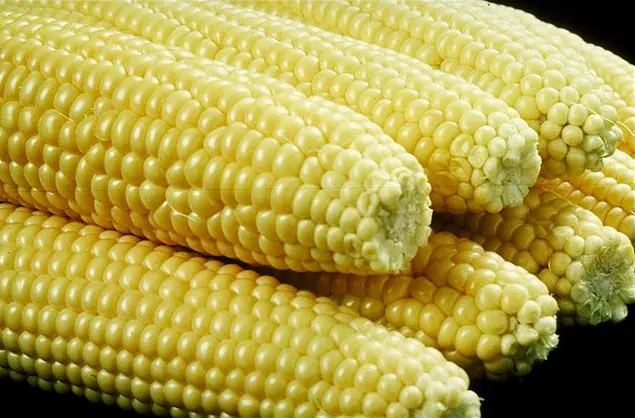
Cobs ripen at different times, usually from late summer into autumn depending on cultivar, sowing date and weather. When silks turn brown, peel back a small part of the husk and pierce a kernel. A milky liquid indicates good eating stage; watery liquid means it needs longer, while doughy kernels are past their best. Twist the cob sharply downwards to harvest.
Sweetness declines after picking as sugars convert to starch, so cook or chill the cobs promptly. Baby corn is picked while small and before kernels swell. Remove crop debris after harvest; healthy dry stems may be composted or chopped for a compost system, while diseased material should be handled according to site rules.
Common mistakes
- Sowing into cold soil or planting out tender seedlings before frost risk has passed.
- Planting one long row, which can reduce wind pollination and leave gaps in cobs.
- Allowing plants to dry out when silks are forming and cobs are filling.
- Waiting too long after silks brown instead of testing a kernel, or delaying use after harvest.