
Cold Storage for Apples
General preservation or storage guidance
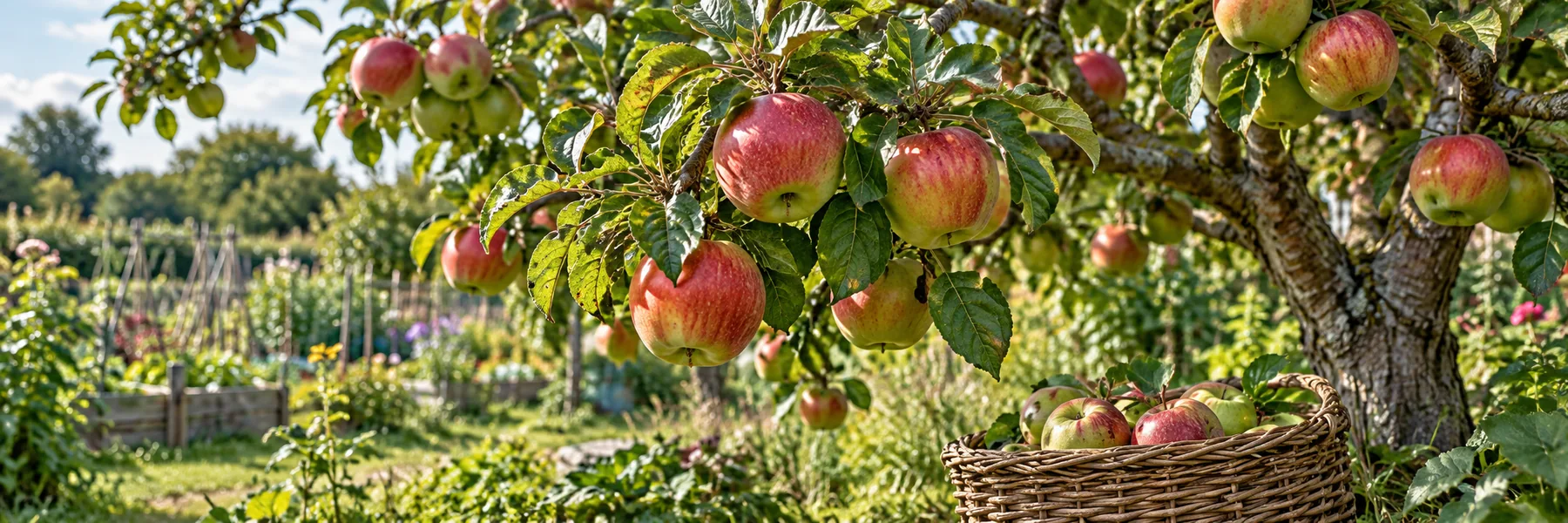
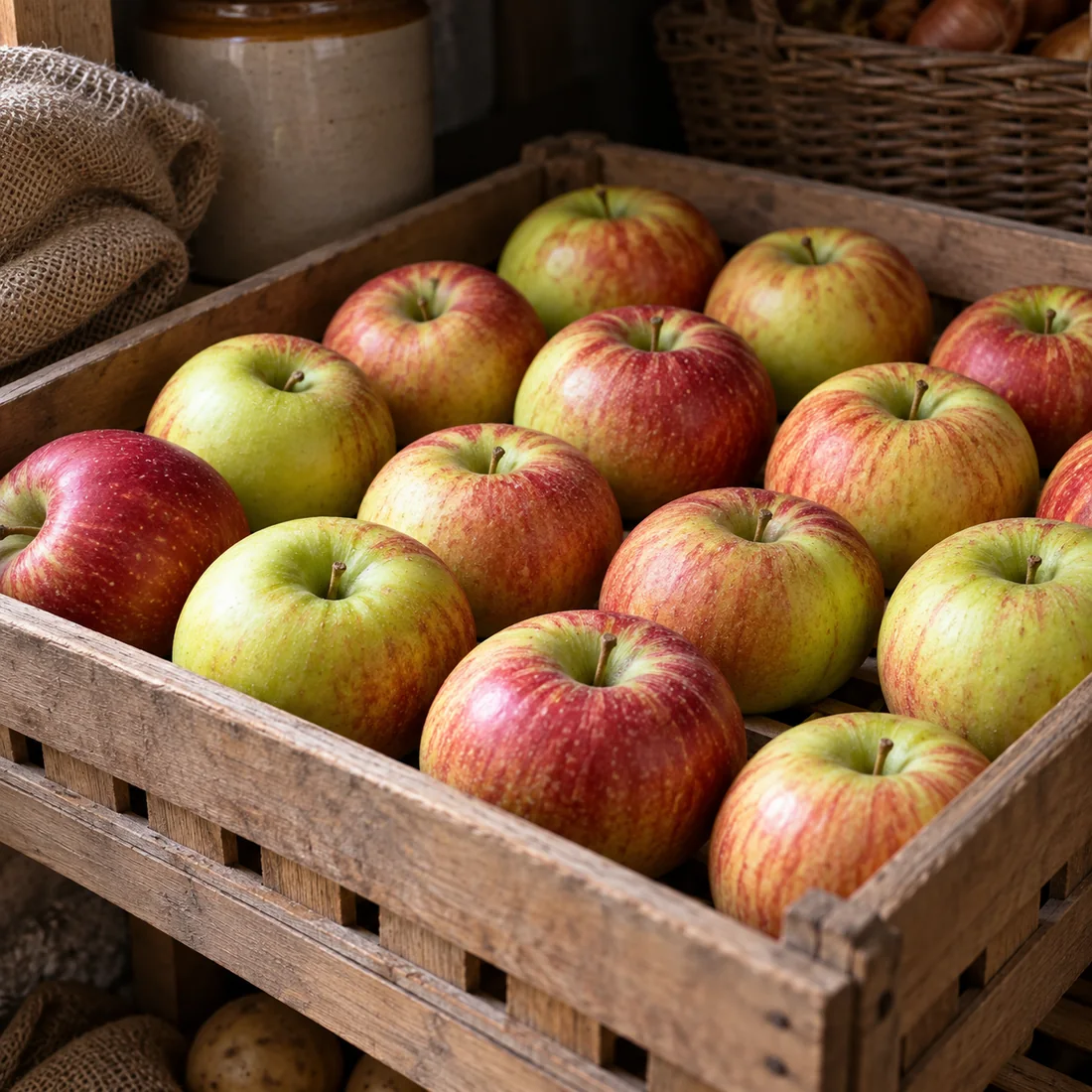
Late-season apples suited to storage keep best when picked carefully, separated and held cool with good airflow.
Method
- Choose a late-season cultivar known to store well. Pick mature fruit gently with the stalk attached; use windfalls, bruised or blemished apples for cooking instead.
- Do not wash apples for storage. Separate cultivars and remove fruit with cuts, bruises or signs of rot.
- Place apples in a single layer in clean, open-slatted trays so the fruit do not touch and air can circulate. Label each tray by cultivar and harvest date.
- Keep the trays cool, dark, frost-free and ventilated, away from onions, paint, fertilisers and other strong smells.
- Inspect at least weekly and remove any soft, leaking or rotting fruit. Bring apples indoors as they reach eating ripeness.
Storage
Cool, dark, frost-free, well-ventilated store · Depends on cultivar and condition; inspect weekly
Sources and scope
- Storing — Royal Horticultural Society
Method-specific source recorded in the prior content audit
- Harvesting — Royal Horticultural Society
Method-specific source recorded in the prior content audit
Apple Compote
General preservation or storage guidance
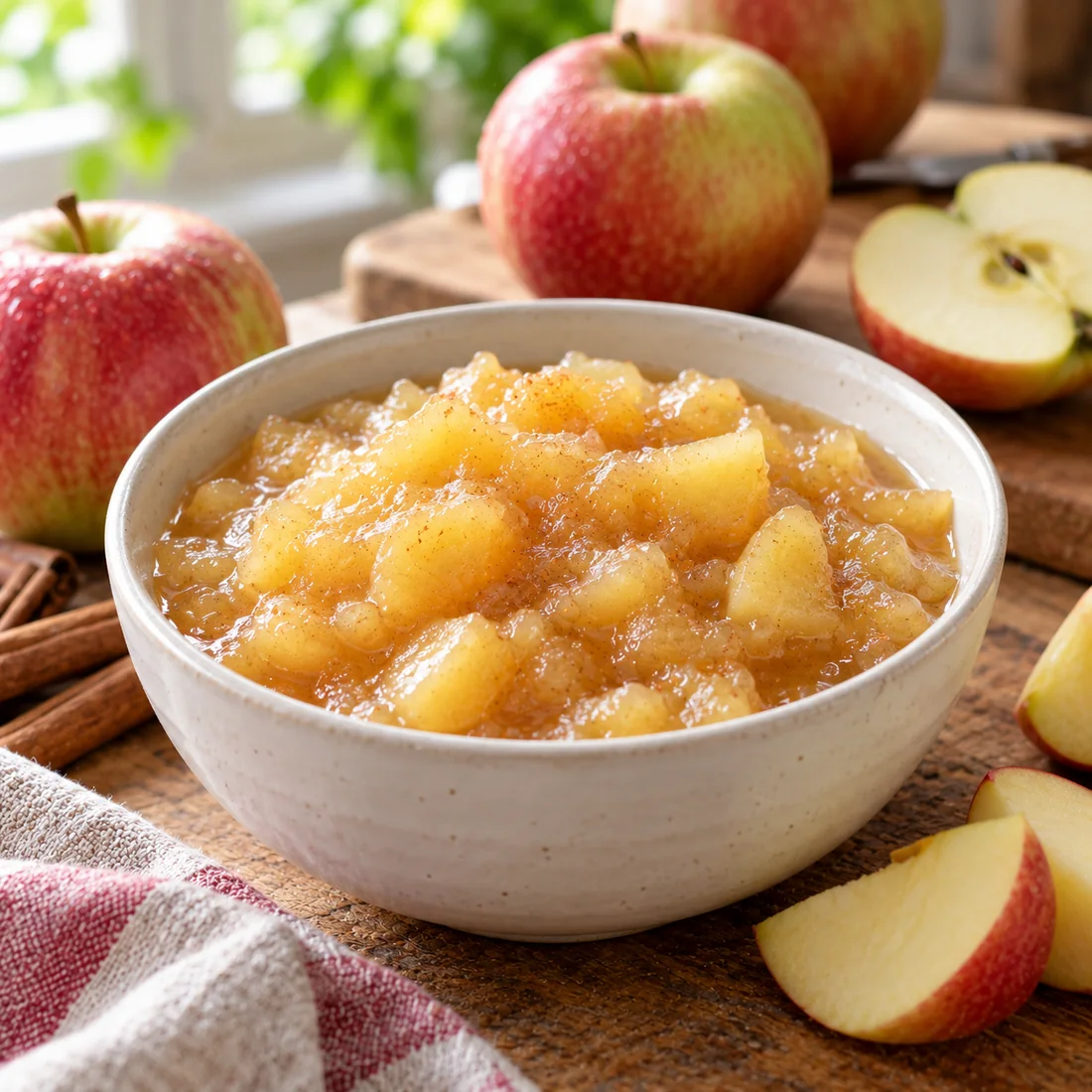
Gently cooked apple pieces make a soft compote for porridge, crumbles and desserts; this is a chilled or frozen cooked food, not a cupboard preserve.
Method
- Wash apples, peel if desired, quarter and remove cores; cut into pieces of similar size. Use bruised areas only after cutting them away generously.
- Put the pieces in a saucepan with a small splash of water. Add sugar, cinnamon or lemon only to taste; these amounts are not a preserving formula.
- Cover and cook gently, stirring occasionally, until the apples are tender but still hold some shape. Add a little water if the pan begins to catch.
- Spoon into shallow covered containers and cool promptly; refrigerate within two hours or freeze in meal-sized portions with expansion space.
- Thaw in the refrigerator. Keep chilled and eat within 48 hours; do not store compote in a sealed jar at room temperature.
Storage
Covered portions in the refrigerator or freezer · Refrigerate and eat within 48 hours, or freeze
Sources and scope
- How To Chill Freeze And Defrost Food Safely — UK Food Standards Agency
Method-specific source recorded in the prior content audit
Freezing Apples
General preservation or storage guidance
Firm eating or cooking apples freeze well as slices for pies and cooked desserts when browning is limited before packing.
Method
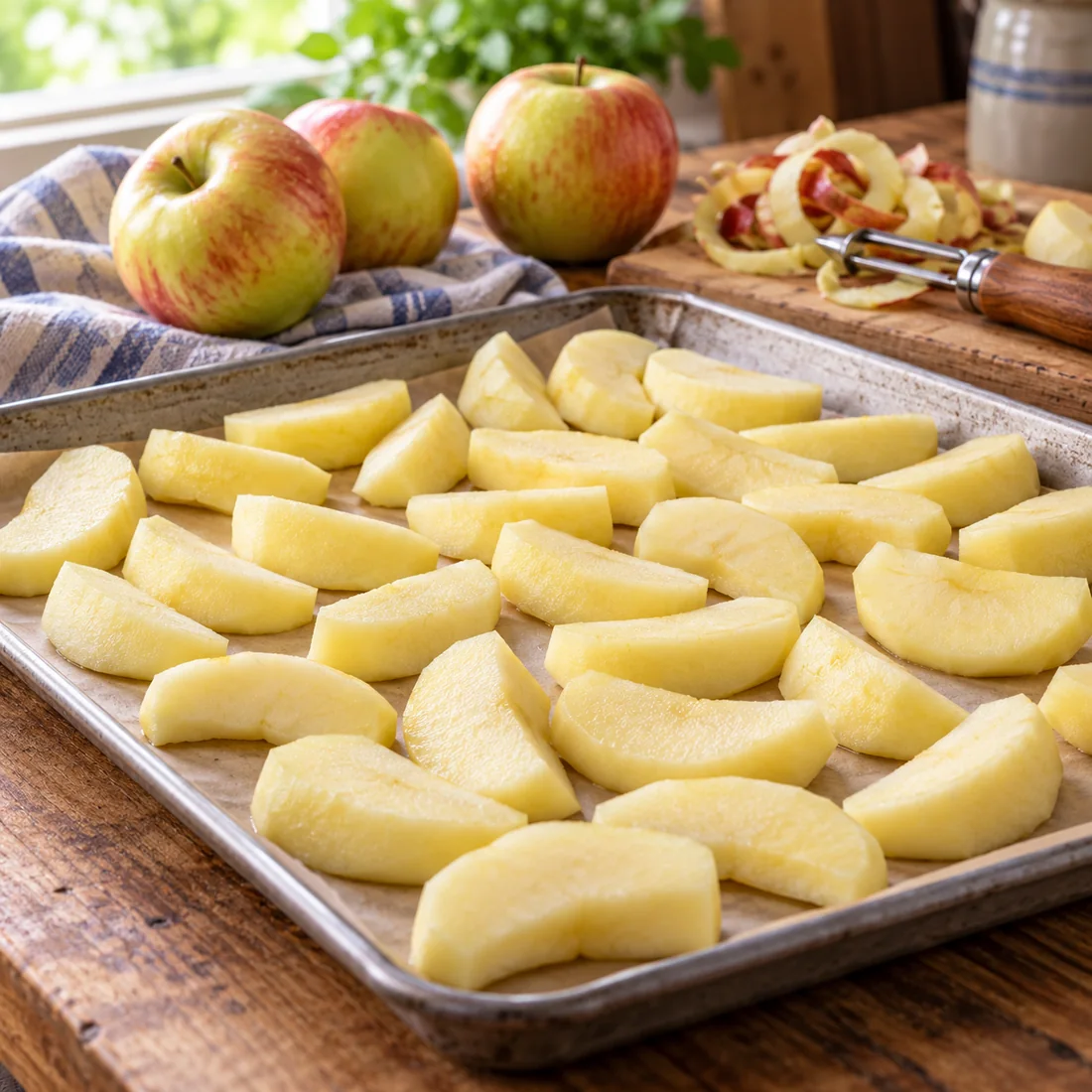
- Choose crisp, firm apples rather than mealy fruit. Wash, peel and core them, then cut medium apples into 12 wedges or large apples into 16.
- To prevent browning, dissolve ½ teaspoon (about 1.5 g) ascorbic acid in 3 tablespoons cold water and sprinkle it over 1 quart (about 1.1 kg) prepared apples. Alternatively, steam-blanch slices for 1½–2 minutes.
- For a dry pack, arrange treated slices in a single layer on a clean tray and freeze until firm. This keeps slices separate for baking.
- Transfer the frozen slices to labelled freezer-safe bags or containers, remove excess air and seal. If packing fresh treated slices directly, press them down and leave expansion space.
- Return promptly to the freezer and use from frozen in pies or other cooked dishes. Do not refreeze fruit once thawed.
Storage
Freezer at −18°C or colder · Keep continuously frozen; quality declines gradually
Sources and scope
- Freezing Apples — National Center for Home Food Preservation
Method-specific source recorded in the prior content audit
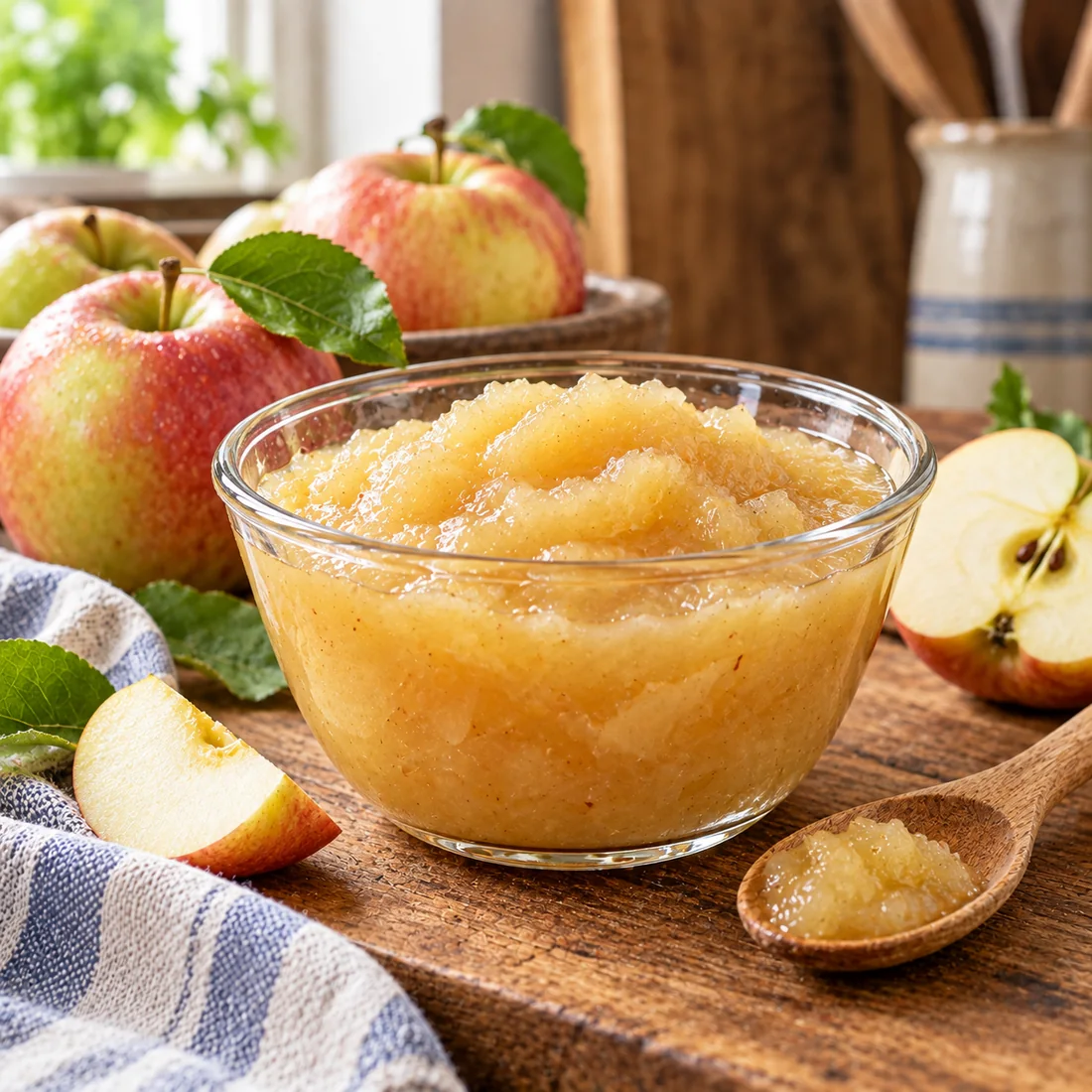
Apple Sauce
General preservation or storage guidance
Cooked apple sauce is a smooth meal accompaniment that should be chilled promptly or frozen; the method does not make it shelf-stable.
Method
- Wash apples, peel if desired, quarter and remove cores. Cut into small, even pieces so they soften at a similar rate.
- Put the apples in a saucepan with a small splash of water; add lemon, sugar or spices to taste, not as a preservation ratio.
- Cover and simmer gently, stirring occasionally, until the apples collapse and are completely soft. Add a little water if needed to prevent sticking.
- Mash or pass through a sieve for a smooth sauce. Divide into shallow covered portions and cool promptly.
- Refrigerate within two hours and eat within 48 hours, or freeze with space for expansion. Thaw in the refrigerator; do not store in a sealed jar at room temperature.
Storage
Covered portions in the refrigerator or freezer · Refrigerate and eat within 48 hours, or freeze
Sources and scope
- Applesauce — National Center for Home Food Preservation
Method-specific source recorded in the prior content audit
- How To Chill Freeze And Defrost Food Safely — UK Food Standards Agency
Method-specific source recorded in the prior content audit
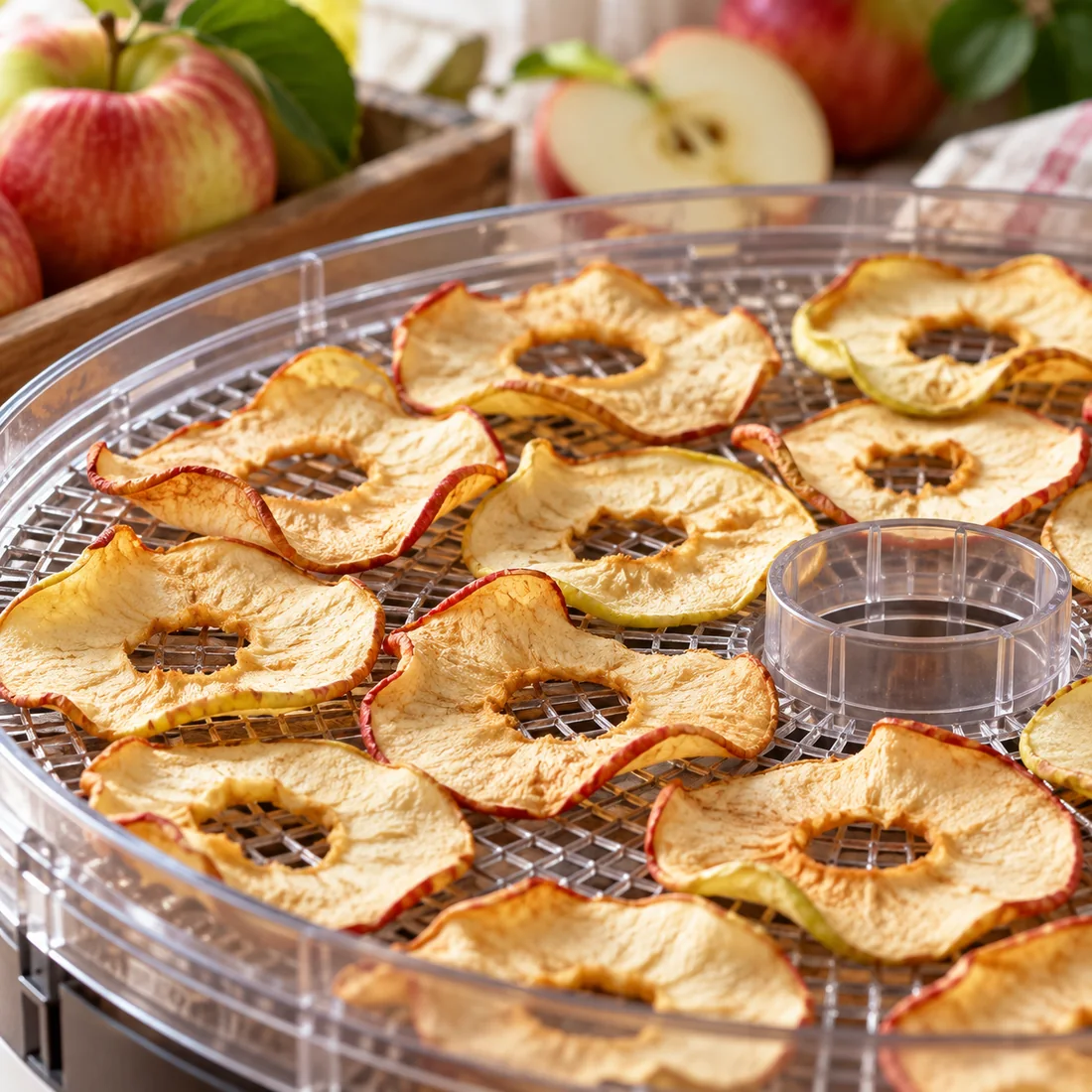
Drying Apples
General preservation or storage guidance
Thin apple slices dehydrate into pliable dried fruit for snacks or baking; a brief anti-browning treatment helps preserve their colour.
Method
- Wash, peel and core sound apples. Slice evenly about 3 mm thick so pieces dry at a similar rate.
- Dip or briefly hold slices in an ascorbic-acid anti-browning solution made to the product directions, then drain well.
- Arrange slices in one layer on dehydrator trays without overlap. Dry at the appliance’s fruit setting, around 54–57°C, rotating trays if drying is uneven.
- Check the thickest slices: they should be pliable and leathery with no wet centre or sticky patches. Dry longer if any remain damp; times vary with slice thickness and airflow.
- Cool completely. Condition loosely packed in a clean jar for 7–10 days, shaking daily and checking for condensation; return damp slices to the dehydrator. Once stable and dry, pack airtight away from heat, light and moisture.
Storage
Airtight container in a cool, dry, dark place · Check stored fruit for moisture; no exact period stated
Sources and scope
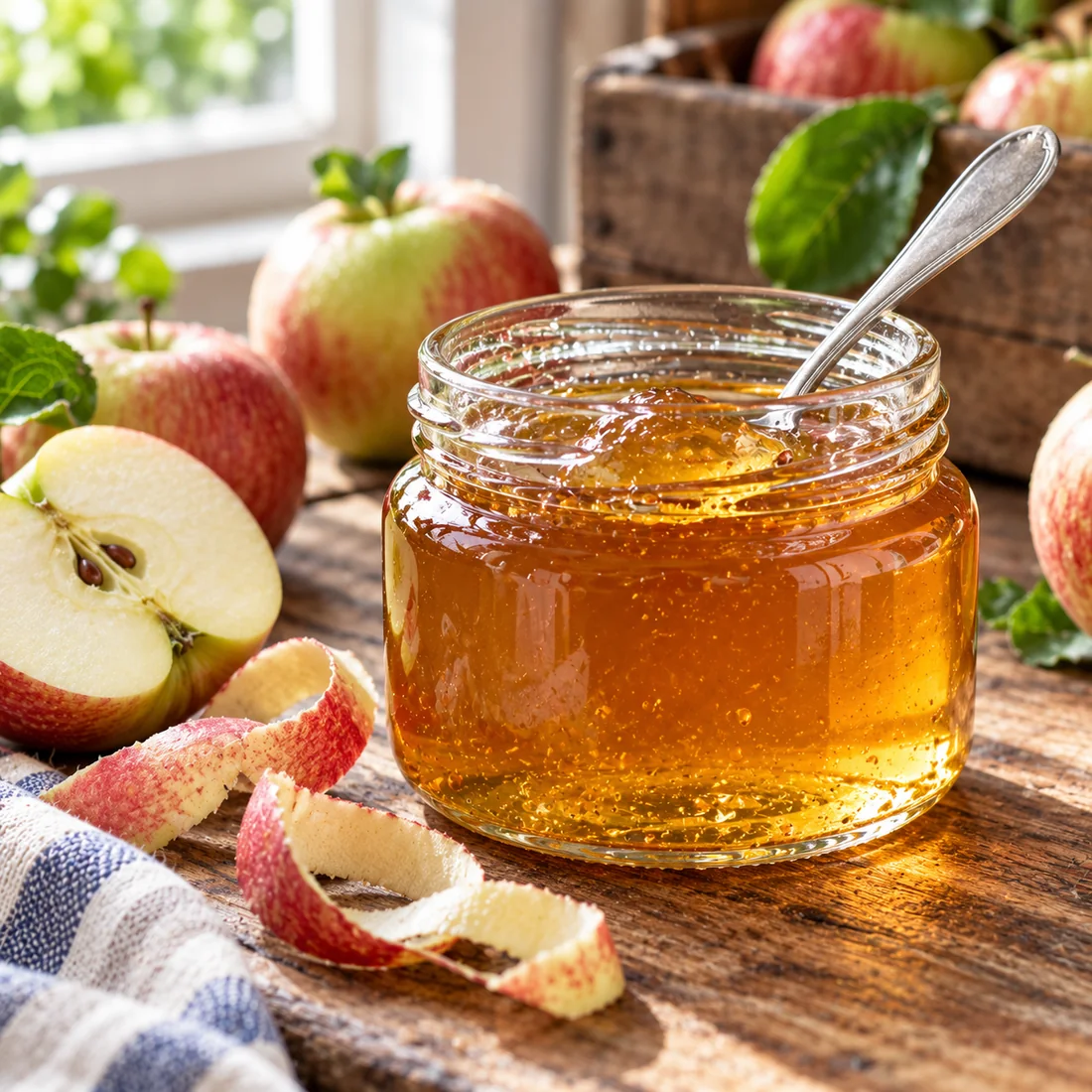
Apple Jelly
General preservation or storage guidance
Apple jelly uses the fruit’s natural pectin: cook tart apples to extract juice, strain it, then boil the measured juice with sugar to the setting point.
Method
- For about 4–5 half-pint jars, prepare 4 cups apple juice from about 3 lb (1.4 kg) tart apples and 3 cups water; measure 3 cups sugar and, if desired, 2 tablespoons strained lemon juice. Use roughly one-quarter underripe and three-quarters fully ripe apples.
- Wash apples, remove stems and blossom ends but do not peel or core. Chop, cover with the measured water, bring to the boil and simmer covered for 20–25 minutes until soft.
- Strain through a jelly bag or several layers of dampened muslin. Let the juice drip without squeezing for a clear jelly; measure 4 cups juice.
- Combine measured juice, optional lemon juice and sugar in a wide pan. Boil rapidly, watching closely, until it reaches 8°F (about 4.5°C) above the local boiling point of water or sheets from a spoon.
- Fill hot prepared half-pint or pint jars with hot jelly, leaving ¼ inch headspace. Wipe rims and fit lids. Use a proper boiling-water canner and the tested processing time: 5 minutes up to 1,000 ft (305 m), 10 minutes from 1,001–6,000 ft (306–1,829 m), or 15 minutes above 6,000 ft (1,829 m).
- Cool jars undisturbed for 12–24 hours and check seals. Refrigerate unsealed jars. Store sealed jars cool and dark; refrigerate after opening. Do not substitute an ordinary hot-fill or oven process for the tested canning process.
Storage
Sealed, properly processed jars in a cool, dark place; refrigerate after opening · Follow the tested formula and processing directions; refrigerate unsealed jars
Sources and scope
- Apple Jelly Illustrated — National Center for Home Food Preservation
Method-specific source recorded in the prior content audit
- Selecting The Correct Processing Time — National Center for Home Food Preservation
Method-specific source recorded in the prior content audit
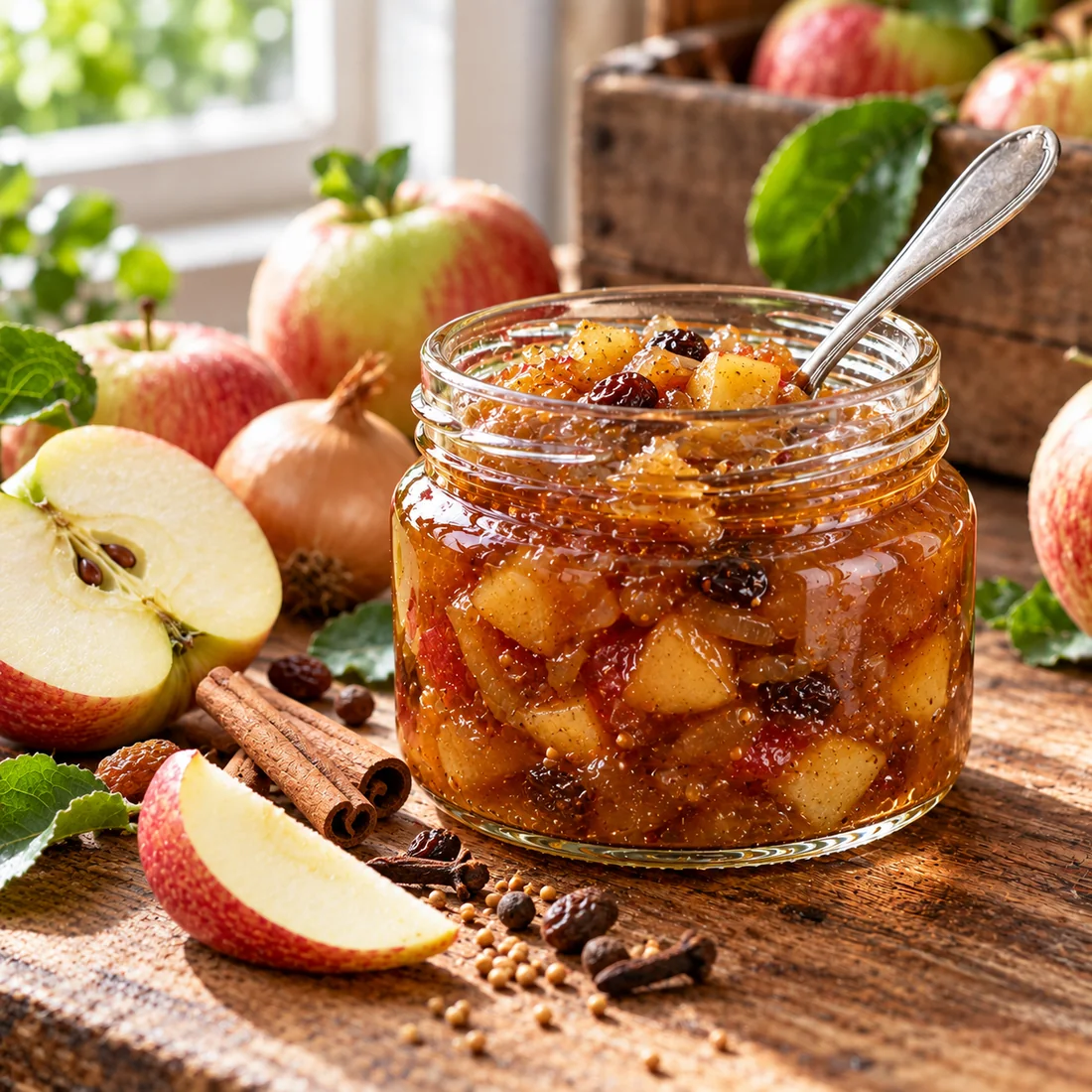
Apple Chutney
General preservation or storage guidance
This tested apple chutney combines tart apples, peppers, raisins, spices and 5% cider vinegar, then is processed in a boiling-water canner.
Method
- For about 6 pints, measure 4 quarts (16 cups) pared, cored, chopped tart apples; 1 cup chopped onion; 1 cup chopped sweet red pepper; 2 teaspoons seeded, finely chopped red serrano pepper (optional); 12 oz (340 g) seedless golden raisins; 4 cups light brown sugar; 3 tablespoons mustard seed; 2 tablespoons ground ginger; 2 teaspoons allspice; 2 teaspoons canning salt; 1 crushed garlic clove; and 4 cups apple cider vinegar labelled 5% acidity.
- Wash and prepare the produce; peel, core and chop the apples, chop onion and pepper, seed and finely chop any optional chilli, and measure every ingredient accurately. Wear gloves when handling hot peppers.
- Combine all prepared ingredients in a large stockpot. Bring to a boil, then simmer until thickened, about 45 minutes, stirring frequently as it thickens to prevent sticking. Do not change the vinegar amount or substitute a different acidity.
- Fill hot half-pint or pint canning jars with hot chutney, leaving ½ inch headspace. Remove air bubbles, wipe rims and fit lids prepared according to their maker’s directions.
- Process pints in a proper boiling-water canner for 10 minutes up to 1,000 ft (305 m), 15 minutes from 1,001–6,000 ft (306–1,829 m), or 20 minutes above 6,000 ft (1,829 m). Keep jars covered by boiling water throughout.
- Cool undisturbed for 12–24 hours and check each seal. Refrigerate unsealed jars and leftover chutney. Store sealed jars cool and dark; refrigerate after opening. Do not replace the canner process with hot-filling alone.
Storage
Sealed, processed jars in a cool, dark place; refrigerate after opening · Use the tested formula; refrigerate unsealed jars and opened jars
Sources and scope
- Apple Chutney — National Center for Home Food Preservation
Method-specific source recorded in the prior content audit
- Selecting The Correct Processing Time — National Center for Home Food Preservation
Method-specific source recorded in the prior content audit