
Freezing Asparagus
General preservation or storage guidance
Blanch asparagus spears according to their thickness before freezing; thin tips and thick bases cook at different rates, so sort the spears first.
Method
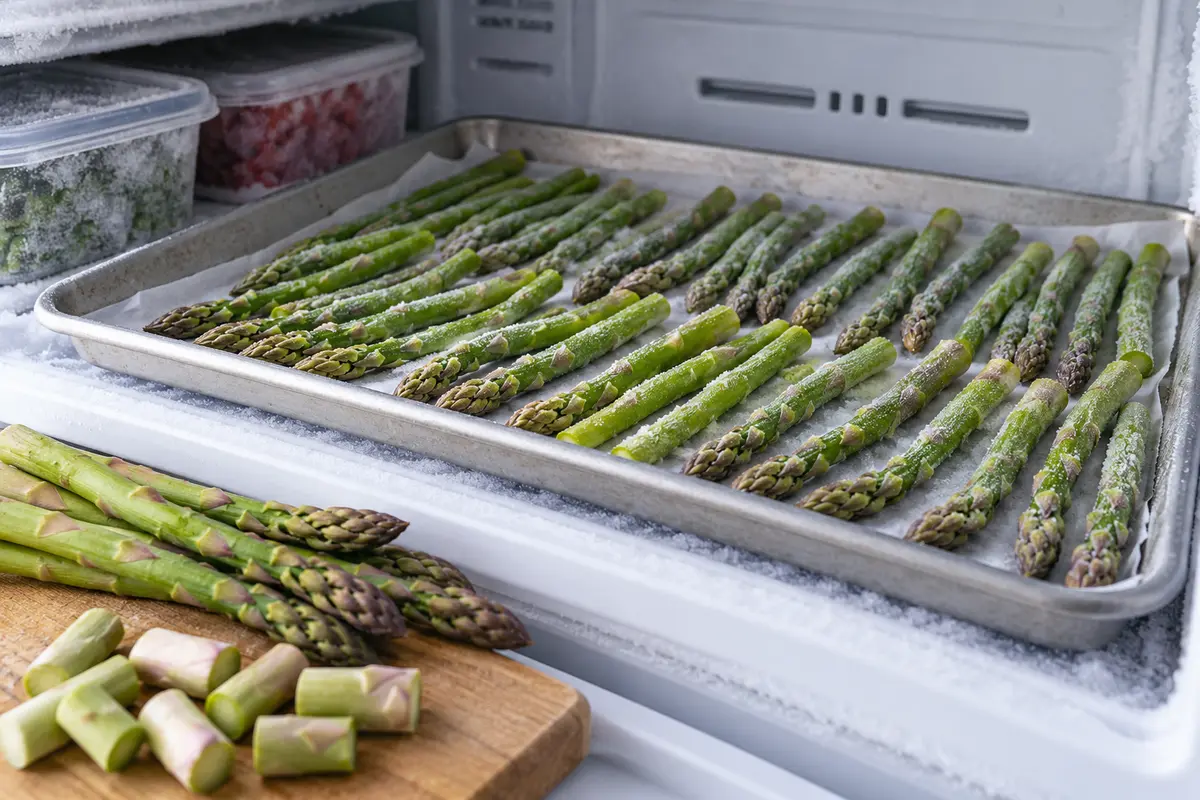
- Choose fresh, tender asparagus. Wash the spears and trim the woody ends; sort them into small, medium and large thickness groups.
- Blanch small spears in boiling water for 2 minutes, medium for 3 minutes and large for 4 minutes. Start timing when the water returns to the boil.
- Cool immediately in ice water for the same time as the blanch, then drain and pat dry thoroughly.
- Pack in meal-size freezer containers or bags, remove excess air and leave the headspace required by the container. Seal, label and freeze promptly.
- Cook from frozen or thaw in the refrigerator for cooked dishes. The texture softens, so use promptly after thawing and do not refreeze.
Storage
Freezer at −18°C or colder · Keep continuously frozen; no exact quality period stated
Sources and scope
- Blanching Vegetables — University of Minnesota Extension
Method-specific source recorded in the prior content audit
- Pnw 214 Freezing Fruits Vegetables — Oregon State University Extension
Method-specific source recorded in the prior content audit
Pickling Asparagus
General preservation or storage guidance
This tested pickled-asparagus recipe uses a measured 5% vinegar brine, garlic and dill; preserve spears only in the specified jar size and boiling-water process.
Method
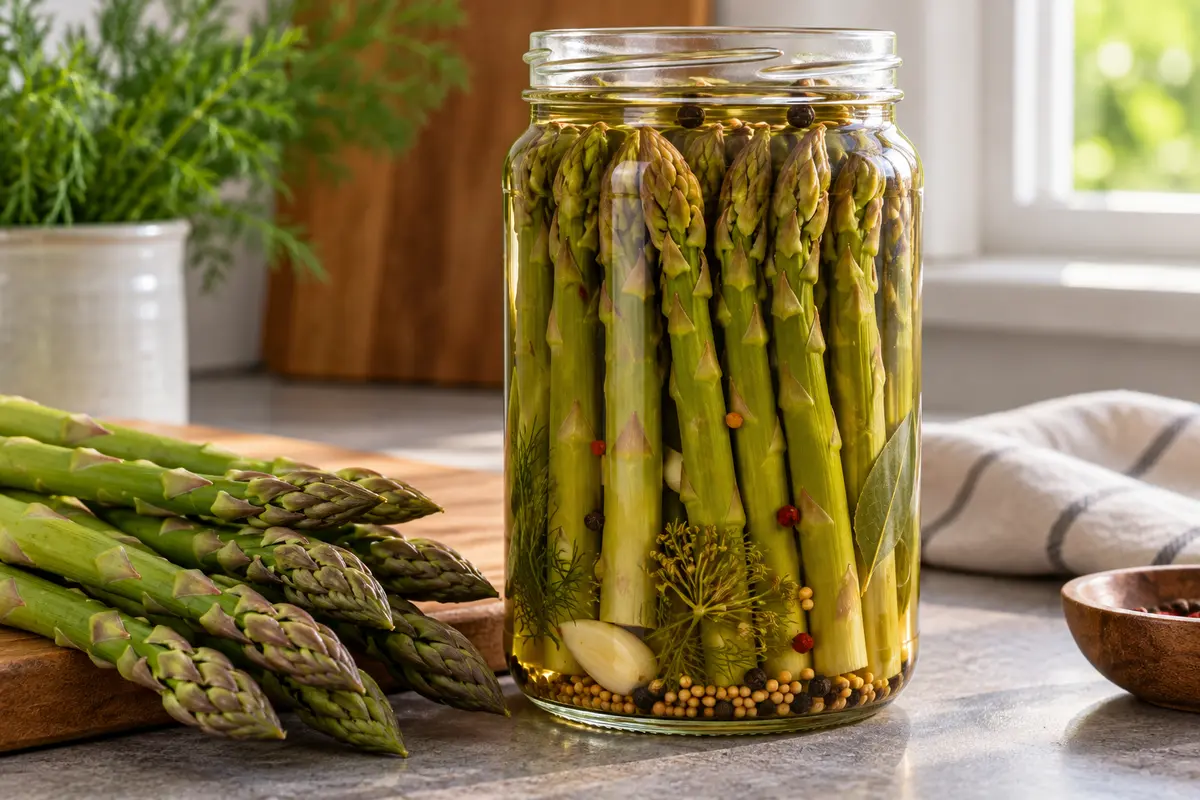
- For the tested batch, prepare 7 lb (about 3.2 kg) asparagus, 7 garlic cloves, 3 US cups water, 3 US cups distilled white vinegar labelled 5% acidity, 7 small hot peppers (optional), ⅓ US cup canning salt and 2 tsp dill seed. This fills about seven 12-ounce jars; do not change the proportions.
- Wash the asparagus gently and trim each spear to fit a hot jar, leaving just under ½ inch (about 1 cm) headspace. Peel and wash the garlic. Put one garlic clove in each jar and pack spears tightly with the blunt ends down.
- Combine the measured water, 5% vinegar, salt and dill seed in a large pan and bring to a boil. Place one optional hot pepper in each jar, then pour over boiling brine, leaving ½ inch (about 1.3 cm) headspace.
- Remove air bubbles, adjust headspace, wipe jar rims and fit prepared two-piece lids. Process the 12-ounce jars in a boiling-water canner for 10 minutes up to 1,000 ft (305 m), 15 minutes at 1,001–6,000 ft (306–1,829 m), or 20 minutes above 6,000 ft (1,829 m).
- Cool undisturbed for 12–24 hours and check each seal. Refrigerate any jar that did not seal. Allow sealed jars to stand for 3–5 days before eating for best flavour; refrigerate after opening.
Storage
Store sealed, correctly processed jars in a cool, dark place; refrigerate after opening · No exact storage period stated
Sources and scope
- Pickled Asparagus — National Center for Home Food Preservation
Method-specific source recorded in the prior content audit