
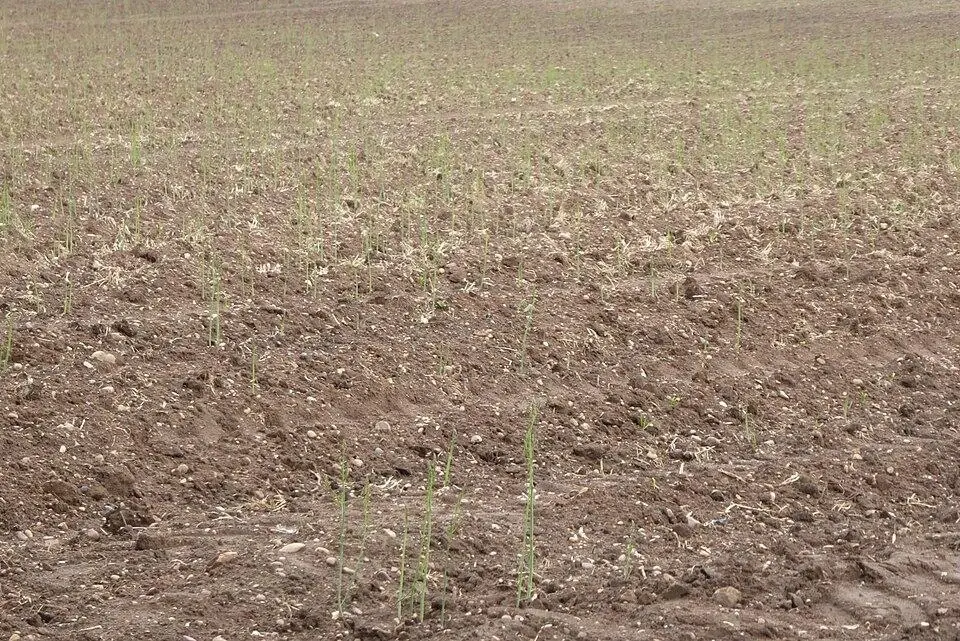
Choose a permanent, well-drained bed
Asparagus is a perennial crop: a well-prepared bed can crop for many years, but it occupies the same ground and needs patience at the start. Choose an open, sunny position where the soil drains freely in winter. Avoid frost pockets, waterlogged ground and places where tall crops or hedges will shade the spring spears. Keep the bed separate from the annual rotation because asparagus should not be moved each year.
Remove perennial weeds before planting; bindweed and couch grass are particularly awkward once crowns are established. Work in mature compost before planting rather than fresh manure. On heavy ground, improve drainage or build a raised bed rather than setting crowns into soil that stays saturated.
Plant crowns and help them establish
Buy healthy one-year crowns and plant them while dormant, usually in March or April when the soil is workable. Make a shallow trench and form a low ridge along its base. Set each crown on the ridge with the roots spread down either side, following the supplier’s depth guidance; leave about 30–45 cm between crowns and roughly 1.2 m between rows so the mature ferns have room.
Backfill gradually as shoots appear rather than burying emerging spears deeply all at once. Water crowns in, then keep the bed weed-free by hand and mulch with mature compost each spring. Water new plants during prolonged dry spells in their first seasons. Once established, asparagus is more tolerant, but drought during fern growth can reduce the following crop.
Do not rush the harvest
The crowns need to build roots and carbohydrate reserves before they can support cutting. Leave every spear uncut in the first year. In the second year, take only a light crop for a short period; wait until the third year for a fuller harvest. On a vigorous, established bed, cut spears for around six to eight weeks from spring, then stop and let the remaining shoots grow into tall ferns.
Harvest when spears are firm and still compact, cutting just below the soil surface with a clean knife and taking care not to damage neighbouring shoots. In warm weather they can grow quickly, so check the bed every day or two. Stop earlier if spears become thin or the plant looks weak.
Summer and winter care
The fern is not wasted growth: it feeds the crown for next year. Support tall stems in windy plots, keep the bed watered while foliage is green, and avoid cutting it down early. After the ferns have yellowed and died back naturally, remove them in winter and compost only healthy material. Clear diseased foliage from the plot.
Slugs can damage new spears and asparagus beetles may feed on stems and foliage. Inspect plants regularly and remove beetles or badly affected material by hand. Good drainage, clean tools and a weed-free bed help reduce problems; no single treatment replaces checking the crop. Keep a seasonal record in My Growing Year so you can compare harvest windows and bed performance.