
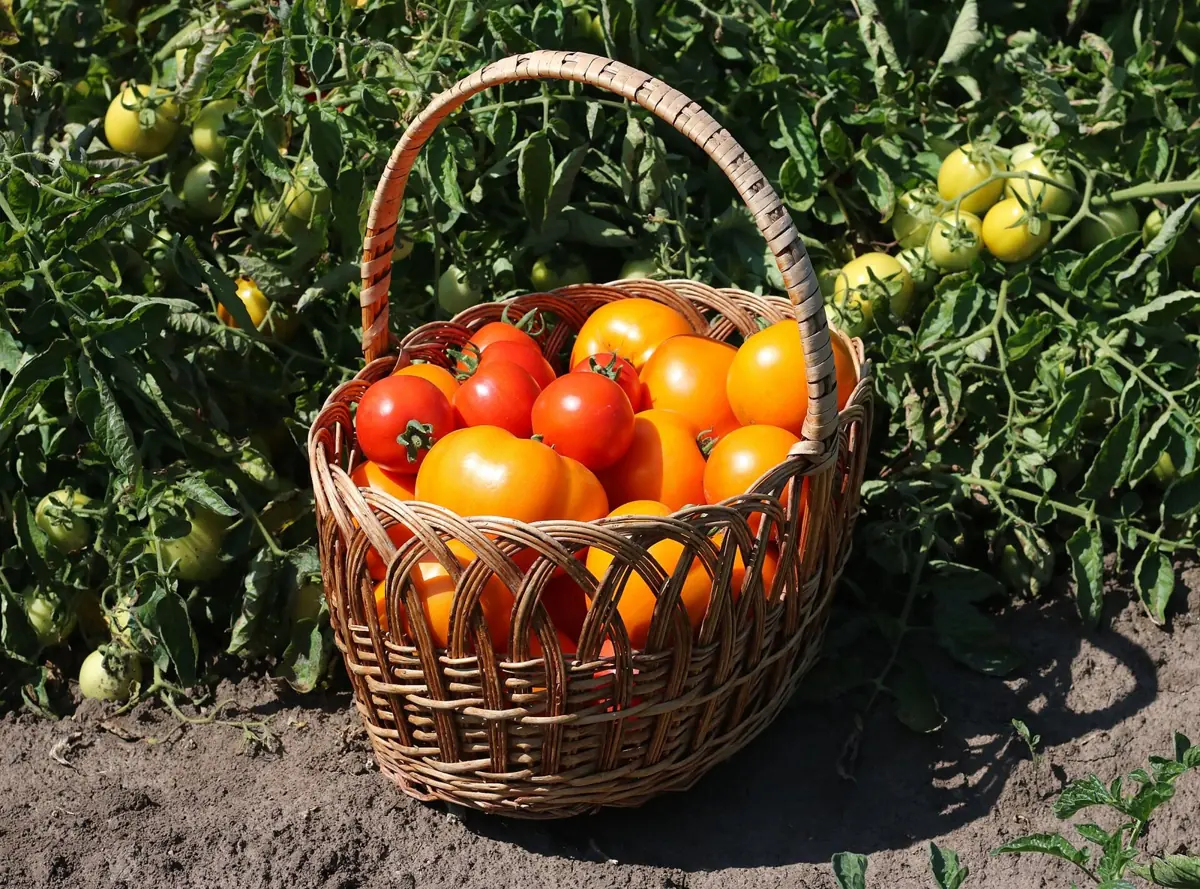
Harvest by the crop, not just the calendar
The best harvest stage depends on what you are growing. Pick runner and French beans while pods are young and tender; courgettes small and firm; salad leaves before they become coarse; and peas before pods turn dull. Root crops can often be lifted at several sizes. Taste a sample and check the seed packet or crop guide for the variety’s expected maturity.
For onions, wait until the foliage naturally yellows and falls over before lifting. Mature winter squash should have a firm skin and a drying stem, and should be cut before a hard frost. Harvest asparagus by the age and strength of the bed, not by the number of spears you want. In every case, avoid stripping a plant so heavily that it cannot continue healthy growth.
Pick cleanly and handle produce gently
Use clean hands and sharp scissors, secateurs or a knife where pulling could break a stem or uproot a plant. Pick in dry conditions where possible. Remove damaged or diseased produce promptly, but keep edible crops away from contaminated soil and wash them before eating. Carry produce in shallow containers rather than piling it high.
Cool leafy crops and berries soon after picking because they lose quality quickly. Keep them dry in the refrigerator and wash just before use. Beans and peas are sweetest soon after harvest; if you cannot cook them promptly, chill them. Check all stored crops regularly and use damaged pieces first.
Match storage to the crop
Different crops need different conditions. Cure sound onions and garlic under cover in a dry, airy place until skins and necks are dry, then store in nets or trays with good ventilation. Store potatoes in breathable containers in a cool, dark, frost-free space; light can turn tubers green, and green or rotten tubers should not be eaten.
Winter squash should be cured only when the variety and condition suit it, then kept frost-free with air around each fruit. Apples and other fruit can produce ethylene that affects nearby produce, so do not store everything together. Root vegetables can be left in well-drained ground for gradual use or lifted and stored in suitable cool conditions.
Plan for gluts without unsafe shortcuts
Freeze, cook, share or preserve surplus while it is fresh. Blanching is useful for many vegetables before freezing, but time and preparation vary by crop; follow a reliable crop-specific method. Drying and pickling also require suitable preparation and storage. For shelf-stable preserves, use a tested recipe and its exact acidity and processing directions rather than guessing or adjusting ingredients.
A simple harvest note helps you plan next season: record the date, crop, approximate amount, quality and what you did with the surplus. My Growing Year can hold seasonal notes, while the related crop guide explains its particular harvest cues.