
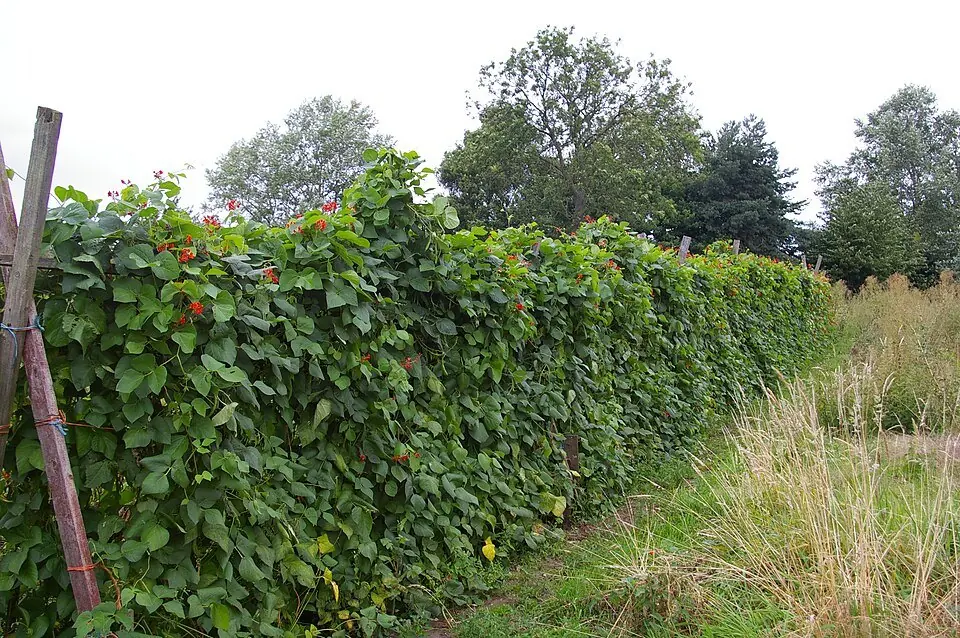
Choose the bean for your season and space
“Beans” covers crops with different habits. Broad beans are relatively hardy and can be sown earlier; French and runner beans are frost-tender and need warm soil. Decide whether you want early pods, a long picking season or a climber for a sunny support. Dwarf French beans are useful in small beds and containers, while climbing types need a firm frame.
Broad beans suit cool spring conditions but autumn sowings can be lost in waterlogged or severe winter weather. French and runner beans are safest under cover from late April or outdoors from late May or June, once the soil is warm and frost danger has passed. In northern or exposed plots, delay outdoor sowing rather than letting seed sit cold and wet.
Sow and plant each type carefully
Sow broad beans directly about 5 cm deep, or start them in deep modules where mice or wet ground are a problem. Set plants around 20 cm apart. For French beans, sow one seed per module or direct sow roughly 5 cm deep after the soil warms; allow about 15–20 cm between plants, following the variety packet.
Runner beans are usually sown individually in pots in late spring or directly beside their supports. Give them around 20–30 cm between plants. Install a sturdy A-frame, wigwam or net before sowing climbers; a mature crop catches wind and can pull weak canes over. Avoid fresh manure at planting, but improve poor soil with mature compost.
Water well while flowers and pods form
Keep the bed weed-free while seedlings are small. Water deeply during dry weather, particularly when runner beans are flowering and pods are swelling. A mulch over already moist soil helps conserve water. Beans generally make their own nitrogen with root bacteria, so heavy nitrogen feeding can produce lots of leaves and fewer pods.
Broad beans can benefit from pinching out the soft tops when the lowest pods have set, especially if blackfly is present; cook the tips if they are clean and healthy. Inspect the undersides of leaves for aphids and look out for slugs on young plants. Netting can protect seedlings from pigeons, but check it regularly for wildlife.
Pick frequently and avoid common disappointments
Pick broad beans while the pods are young for a tender crop, or wait until the beans inside have filled for shelling. French beans are best picked slim and crisp; runner beans should be gathered before they become stringy. Frequent picking encourages continued production. If pods fail to set, check whether plants experienced dry soil, cold conditions or very hot weather during flowering.
Handle plants when they are dry to reduce the spread of disease. Remove badly diseased material and rotate beans to a different bed next year where space allows. After cropping, cut plants at ground level and leave healthy roots in the soil; compost the tops only if they are free of serious disease. Freeze a glut promptly after blanching.