
PEST GUIDE
How to identify and manage black bean aphid
Curled shoots, sticky honeydew and weak flowering tips. Identify the cause, protect the listed crops and use proportionate control.
13 sections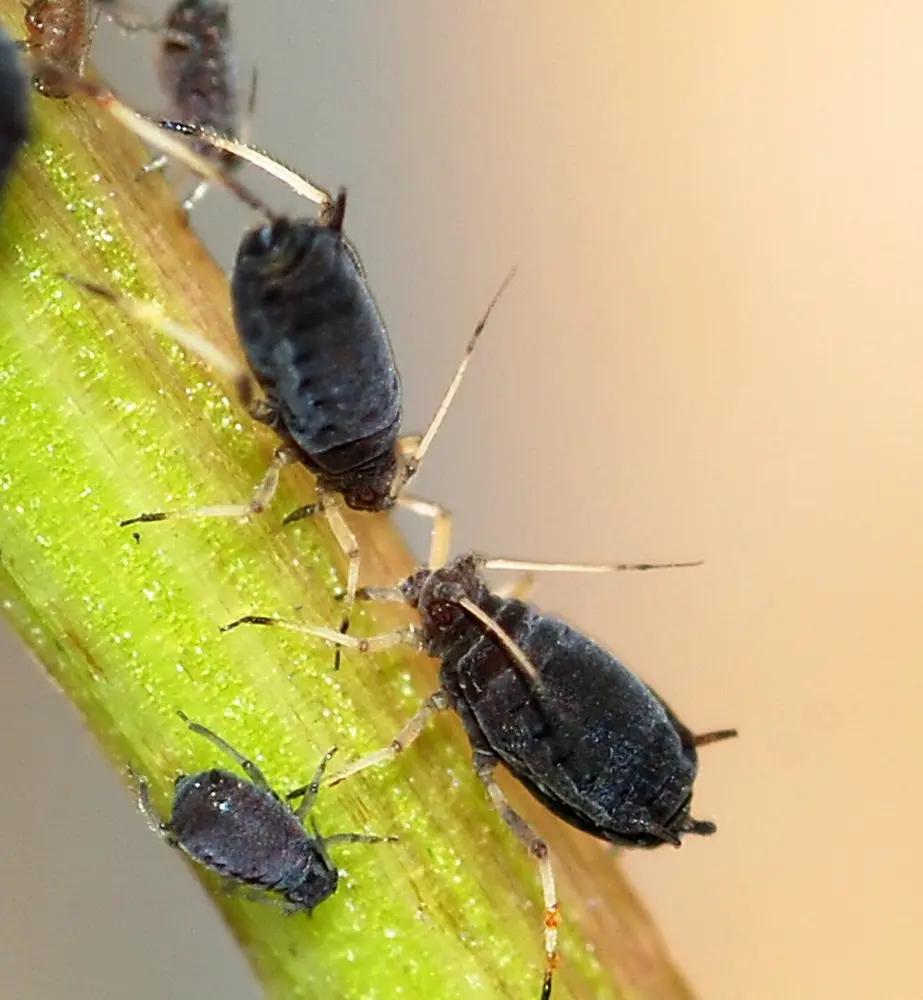
Identification
Dense, shiny black colonies cluster on broad bean, runner bean and French bean tips. Ants may attend the colonies for honeydew. The first small colonies are easier to manage than curled, hardened shoots.
Dark colonies cluster on soft bean shoots and flower stalks.
On beans, inspect flowers and shoot tips together: removing every colonised tip can also remove flowers and predators. Similar symptoms can come from weather, nutrient stress or another pest. Confirm fresh feeding or the relevant life stage before removing plants or taking control measures.
UK seasonality and monitoring
Black bean aphid colonies usually build from late spring into summer.
During this period inspect Runner beans, French beans and broad beans, concentrating on the crop stage and plant parts described above. Note when and where fresh injury appears; old feeding marks can remain after the pest has moved on.
Crops and plants affected
The recorded hosts are Runner beans, French beans and broad beans. This list identifies plants worth checking; it does not mean every crop is equally vulnerable. Start with the listed plants and inspect the tissue where this pest feeds.
Check affected crops for these signs: Curled shoots, sticky honeydew and weak flowering tips. Match the symptom to a live pest, larva, egg or characteristic feeding sign before deciding that treatment is needed.
Damage and likely consequences
Curled shoots, sticky honeydew and weak flowering tips. A small amount of old damage on a vigorous plant may be cosmetic. Continued feeding on roots, seedlings, growing points or edible parts can reduce establishment or yield.
On Runner beans, French beans and broad beans, judge severity by checking whether injury is fresh and spreading, whether the plant is still growing, and whether the edible part is affected. Avoid removing a crop based on one ambiguous mark.
Prevention
Inspect broad-bean and other bean shoot tips from late spring; avoid excess nitrogen and provide flowering habitat for predators.
Control and integrated management
Pinch out a heavily colonised tip only when healthy growth remains and predators are not already reducing the colony.
Natural predators and wildlife-conscious choices
Ladybirds, hoverflies and lacewings often control colonies naturally.
For black bean aphid on Runner beans, French beans and broad beans, use a barrier or hand removal only where it fits the crop and life stage. Keep any cover taut, inspect it for trapped wildlife, and remove it when protection is no longer needed.
Long-term management
Encourage ladybirds, hoverflies and lacewings, and check new tips again after warm weather.
For black bean aphid on Runner beans, French beans and broad beans, record the bed, crop stage and date when fresh damage first appears. Those notes help time protection and monitoring before the same crop stage is vulnerable next season.
Common mistakes
A symptom alone is not a diagnosis. Dense, shiny black colonies cluster on broad bean, runner bean and French bean tips. Ants may attend the colonies for honeydew. The first small colonies are easier to manage than curled, hardened shoots. Look for a matching live pest or fresh feeding sign before intervening.
Removing every infested tip can remove flowers and beneficial insects as well as aphids.
If damage continues
Recheck Runner beans, French beans and broad beans where new injury is appearing, including the hidden feeding site: roots, folded leaves, leaf undersides, flowers or fruit as appropriate. If identification remains uncertain, photograph a live specimen alongside the damage and ask an allotment association or horticultural adviser.
If the recommended control (Squash small colonies, wash shoots and pinch out badly infested tips where practical.) has not helped, confirm that it was fitted or applied at the right crop stage and that fresh damage is still occurring. Old marks do not heal when the pest has gone.
Frequently asked questions
When should I pinch out a black bean aphid colony?
Dense, shiny black colonies cluster on broad bean, runner bean and French bean tips. Ants may attend the colonies for honeydew. The first small colonies are easier to manage than curled, hardened shoots. Check Runner beans, French beans and broad beans, especially at the feeding site described above. Squash small colonies, wash shoots and pinch out badly infested tips where practical.
When should I start checking for black bean aphid?
Black bean aphid colonies usually build from late spring into summer.
How can I tell whether black bean aphid is still active?
Look for fresh damage and the relevant life stage. Curled shoots, sticky honeydew and weak flowering tips. Old marks may remain after the pest has moved on.
What wildlife-conscious approach works for black bean aphid?
Ladybirds, hoverflies and lacewings often control colonies naturally. Check covers and traps frequently, and remove them when the vulnerable crop stage has passed.