
PEST GUIDE
How to identify and manage aphids
Sticky honeydew, curled growth and distorted young leaves. Identify the cause, protect the listed crops and use proportionate control.
13 sections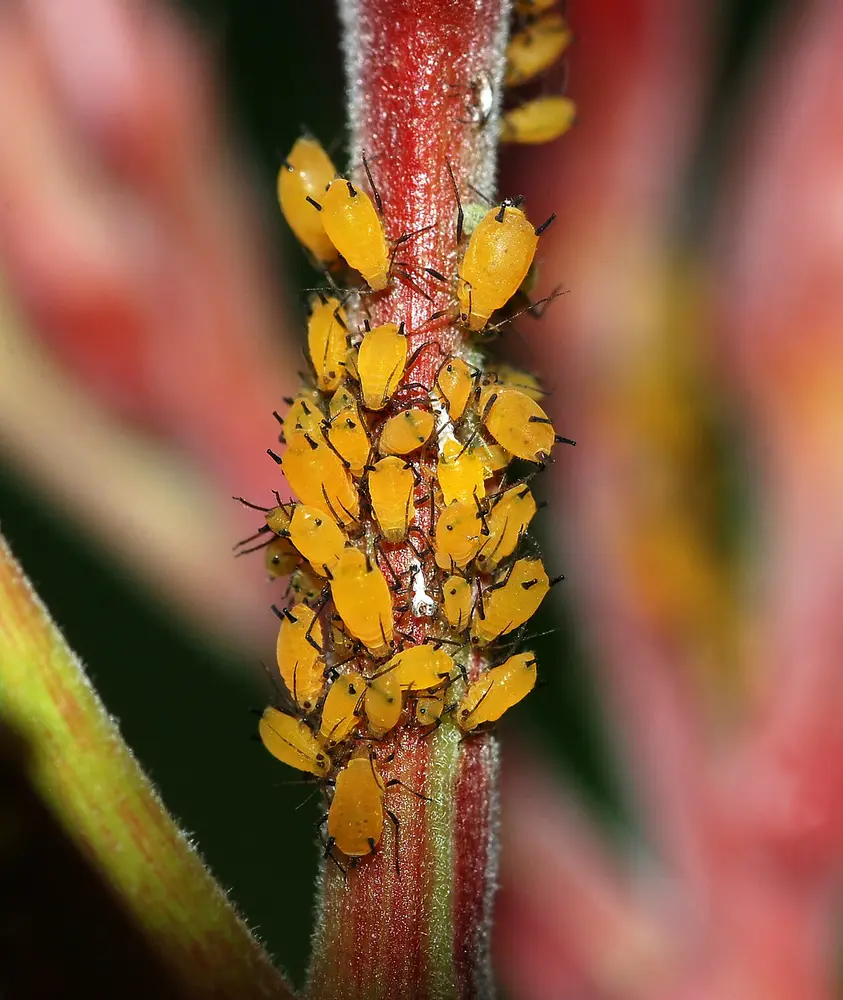
Identification
Aphids are soft-bodied, pear-shaped insects, often with two small tubes near the rear. They gather on new growth and leaf undersides. Winged adults can arrive after a colony is already established, so inspect the newest tips.
Small soft bodied insects clustered on shoots and leaf undersides.
On new growth, check for fresh curling and live insects, and leave a light colony where predators are already feeding. Similar symptoms can come from weather, nutrient stress or another pest. Confirm fresh feeding or the relevant life stage before removing plants or taking control measures.
UK seasonality and monitoring
Aphid colonies build in spring and summer, especially on soft new growth.
During this period inspect Tomatoes, chillies, beans, peas, apples and herbs, concentrating on the crop stage and plant parts described above. Note when and where fresh injury appears; old feeding marks can remain after the pest has moved on.
Crops and plants affected
The recorded hosts are Tomatoes, chillies, beans, peas, apples and herbs. This list identifies plants worth checking; it does not mean every crop is equally vulnerable. Start with the listed plants and inspect the tissue where this pest feeds.
Check affected crops for these signs: Sticky honeydew, curled growth and distorted young leaves. Match the symptom to a live pest, larva, egg or characteristic feeding sign before deciding that treatment is needed.
Damage and likely consequences
Sticky honeydew, curled growth and distorted young leaves. A small amount of old damage on a vigorous plant may be cosmetic. Continued feeding on roots, seedlings, growing points or edible parts can reduce establishment or yield.
On Tomatoes, chillies, beans, peas, apples and herbs, judge severity by checking whether injury is fresh and spreading, whether the plant is still growing, and whether the edible part is affected. Avoid removing a crop based on one ambiguous mark.
Prevention
Avoid excess nitrogen, which encourages soft growth. Inspect shoot tips and leaf undersides weekly while young plants are putting on new growth.
Control and integrated management
Wash off or squash a small colony, then allow several days for predators to respond before repeating control.
Natural predators and wildlife-conscious choices
Tolerate small colonies where plants are growing well; they support beneficial predators.
For aphids on Tomatoes, chillies, beans, peas, apples and herbs, use a barrier or hand removal only where it fits the crop and life stage. Keep any cover taut, inspect it for trapped wildlife, and remove it when protection is no longer needed.
Long-term management
Encourage hoverflies, ladybirds and lacewings with flowering plants and check new growth before removing a colony.
For aphids on Tomatoes, chillies, beans, peas, apples and herbs, record the bed, crop stage and date when fresh damage first appears. Those notes help time protection and monitoring before the same crop stage is vulnerable next season.
Common mistakes
A symptom alone is not a diagnosis. Aphids are soft-bodied, pear-shaped insects, often with two small tubes near the rear. They gather on new growth and leaf undersides. Winged adults can arrive after a colony is already established, so inspect the newest tips. Look for a matching live pest or fresh feeding sign before intervening.
Do not remove every aphid as soon as it appears; natural enemies may already be containing a light infestation.
If damage continues
Recheck Tomatoes, chillies, beans, peas, apples and herbs where new injury is appearing, including the hidden feeding site: roots, folded leaves, leaf undersides, flowers or fruit as appropriate. If identification remains uncertain, photograph a live specimen alongside the damage and ask an allotment association or horticultural adviser.
If the recommended control (Squash small colonies, wash with water and allow ladybirds, hoverfly larvae and lacewings to work.) has not helped, confirm that it was fitted or applied at the right crop stage and that fresh damage is still occurring. Old marks do not heal when the pest has gone.
Frequently asked questions
Should I remove a small aphid colony if ladybirds are feeding?
Aphids are soft-bodied, pear-shaped insects, often with two small tubes near the rear. They gather on new growth and leaf undersides. Winged adults can arrive after a colony is already established, so inspect the newest tips. Check Tomatoes, chillies, beans, peas, apples and herbs, especially at the feeding site described above. Squash small colonies, wash with water and allow ladybirds, hoverfly larvae and lacewings to work.
When should I start checking for aphids?
Aphid colonies build in spring and summer, especially on soft new growth.
How can I tell whether aphids are still active?
Look for fresh damage and the relevant life stage. Sticky honeydew, curled growth and distorted young leaves. Old marks may remain after the pest has moved on.
What wildlife-conscious approach works for aphids?
Tolerate small colonies where plants are growing well; they support beneficial predators. Check covers and traps frequently, and remove them when the vulnerable crop stage has passed.