
Freezing Aubergine
General preservation or storage guidance
Firm, dark aubergines freeze best when sliced and briefly blanched in lemon-acidified water; use the softened slices in cooked dishes.
Method
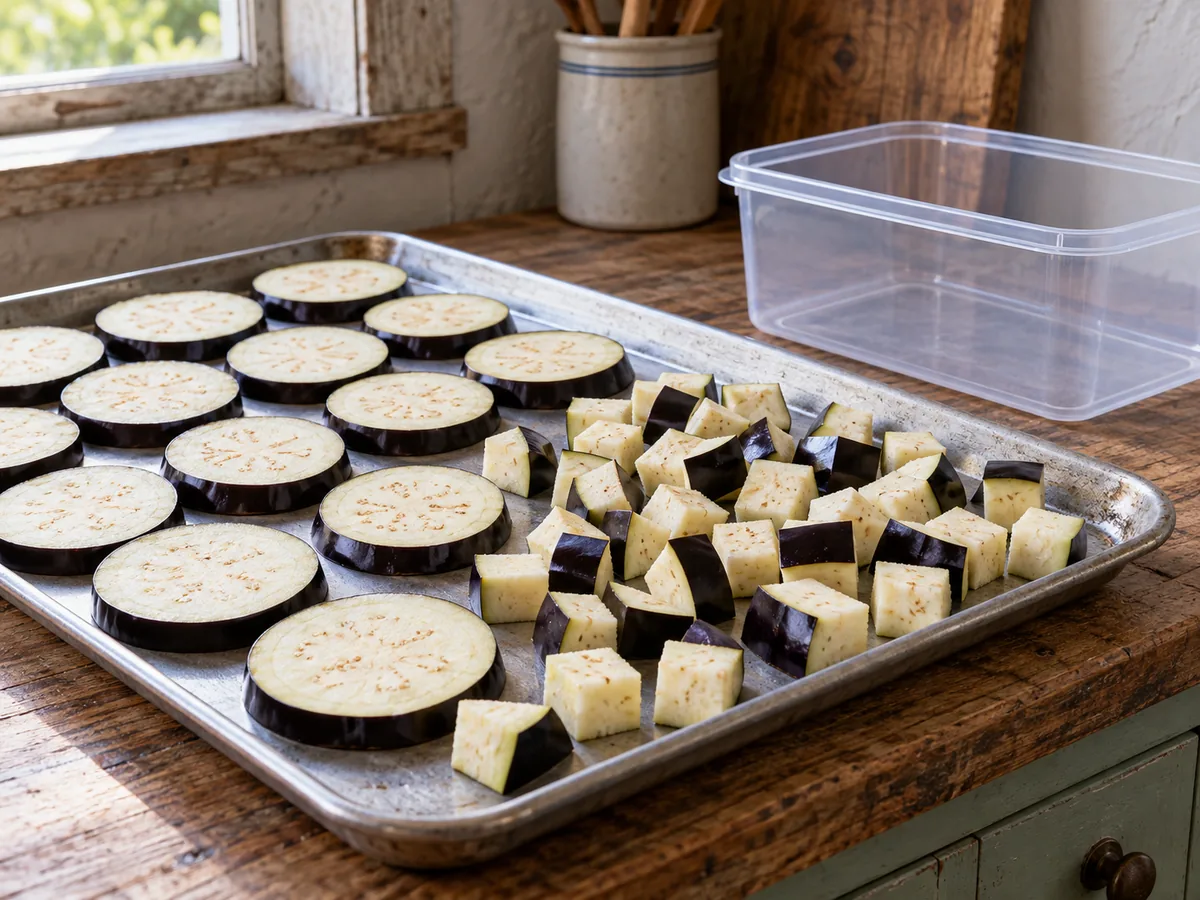
- Choose firm aubergines with uniformly dark skins before the seeds mature. Wash, peel and cut into 8 mm (⅓ in) slices. Prepare only enough for one blanching batch at a time.
- Bring 4 litres of water containing 120 ml (½ cup) bottled lemon juice to a full boil. Lower the slices into the water and blanch for 4 minutes.
- Cool promptly in cold water, then drain thoroughly. Work promptly with the next small batch so cut aubergine does not stand and discolour.
- Pack slices with freezer paper between them if you want to separate portions, or pack loosely in freezer-safe containers with about 1 cm headspace.
- Seal, label and freeze promptly. Use in cooked dishes; freezing softens aubergine, so it will not keep a firm fresh texture.
Storage
Freezer at −18°C or colder · Keep continuously frozen; no exact quality period stated
Sources and scope
- Freezing Eggplant — National Center for Home Food Preservation
Method-specific source recorded in the prior content audit
Pickling Aubergine
General preservation or storage guidance
Aubergine pieces soften in a hot herb, garlic and citrus brine to make a tangy refrigerator pickle; it is not a pantry preserve.
Method
- For about 1 quart, measure 2 lb (900 g) aubergine, 2 cups vinegar labelled 5% acidity, 1 cup water, 1 tbsp sugar, 1 tbsp pickling salt, 2 tbsp minced fresh oregano or basil, 2 tsp citrus zest, ¼ tsp crushed red chilli, 4 garlic cloves and 2 small bay leaves.
- Wash the aubergines, trim off the stems and cut into even pieces. Leave tender skins on; peel only if they are tough. Prepare the garlic, herbs and zest.
- Bring the vinegar, water, sugar, salt, herbs, zest, chilli, crushed garlic and bay leaves to a boil in a stainless-steel or enamel pan. Lower the heat and simmer for 3 minutes, stirring to dissolve the sugar and salt.
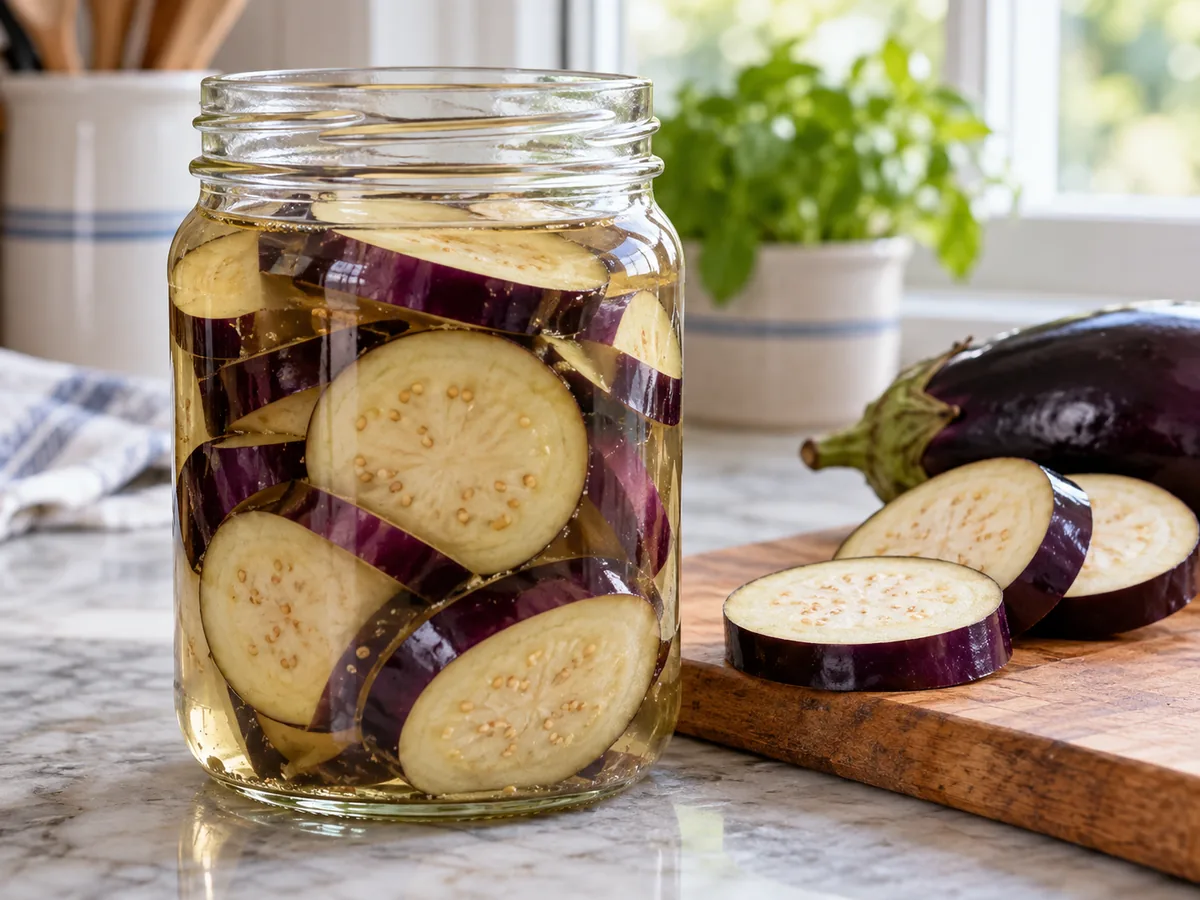
- Pack the aubergine pieces snugly into clean, heat-safe jars. Pour over the hot brine to cover the pieces and distribute the aromatics.
- Cover and leave for about 1 hour, until cooled to room temperature, then refrigerate promptly. Keep the aubergine submerged and maintain the refrigerator at or below 5°C.
- Allow about 3 weeks in the refrigerator for the flavour to develop and consume within 3 months. This is a refrigerated pickle, not a room-temperature preserve.
Storage
Refrigerator at or below 5°C; not shelf-stable · Consume within 3 months; best flavour after 3 weeks refrigerated
Sources and scope
- 97892025 Handouts106639 — vms-mfp.ucanr.edu
Method-specific source recorded in the prior content audit
Caponata for Aubergine
General preservation or storage guidance
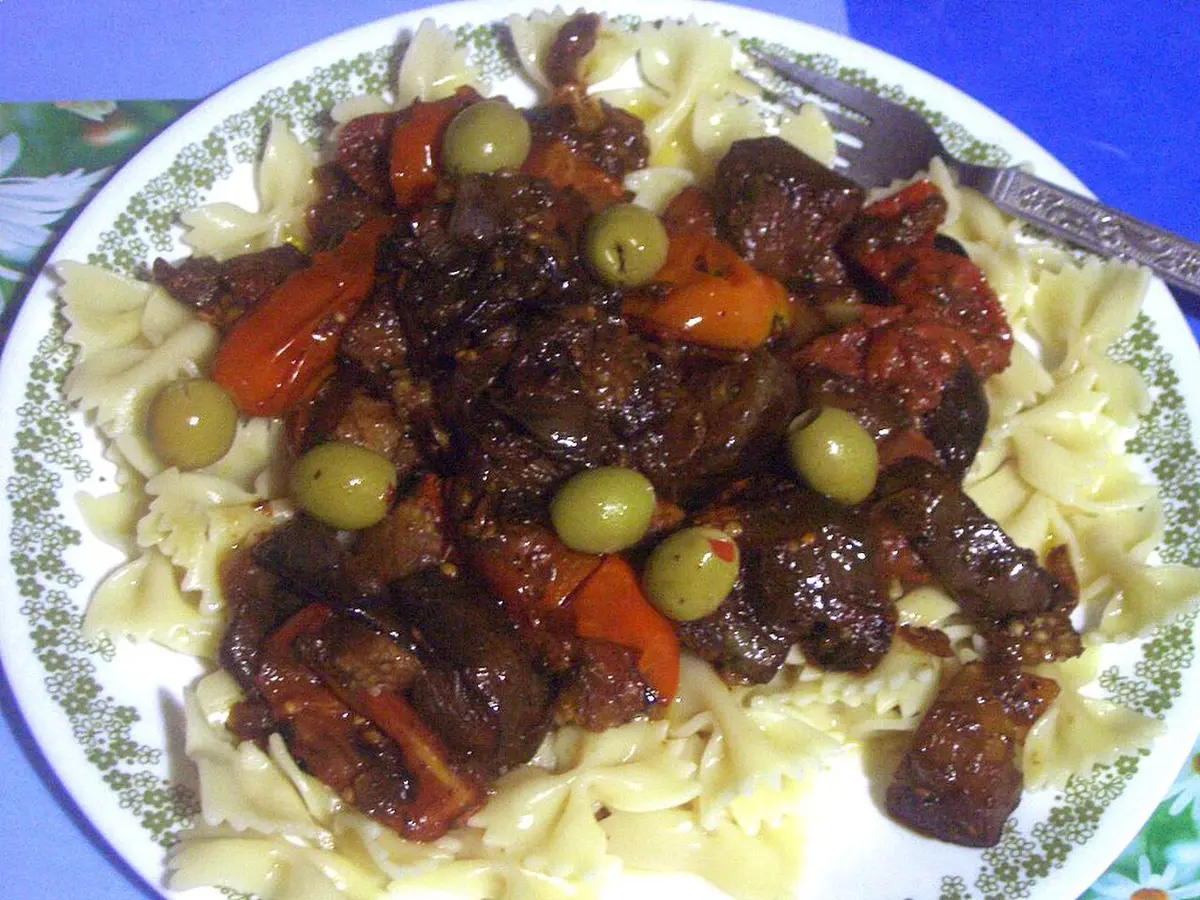
Caponata turns aubergine into a cooked sweet-and-sour dish with celery, tomato, olives and capers; chill or freeze it rather than treating it as a jarred preserve.
Method
- Wash aubergines, trim the stalks and cut the flesh into roughly 2 cm cubes. Cut celery and onion into small pieces; have chopped tomato, olives and capers ready.
- Cook aubergine in batches in a wide pan with a little oil until golden and tender; lift it out so the pan is not crowded.
- Soften the celery and onion in the same pan. Add the tomato and cook until pulpy, then stir in olives, capers and vinegar to make the characteristic tangy base.
- Return the aubergine and simmer gently until the pieces are tender and the liquid has reduced to a relish-like consistency. Season to taste; do not seal the hot mixture into jars for cupboard storage.
- Divide into shallow containers and cool quickly. Refrigerate within 2 hours and use within 48 hours, or freeze in meal-size portions; thaw in the refrigerator and reheat until piping hot.
Storage
Refrigerator at or below 5°C, or freezer in covered portions · Refrigerate within 2 hours and use within 48 hours, or freeze promptly
Sources and scope
- How To Chill Freeze And Defrost Food Safely — UK Food Standards Agency
Method-specific source recorded in the prior content audit