
Air Drying for Basil
General preservation or storage guidance
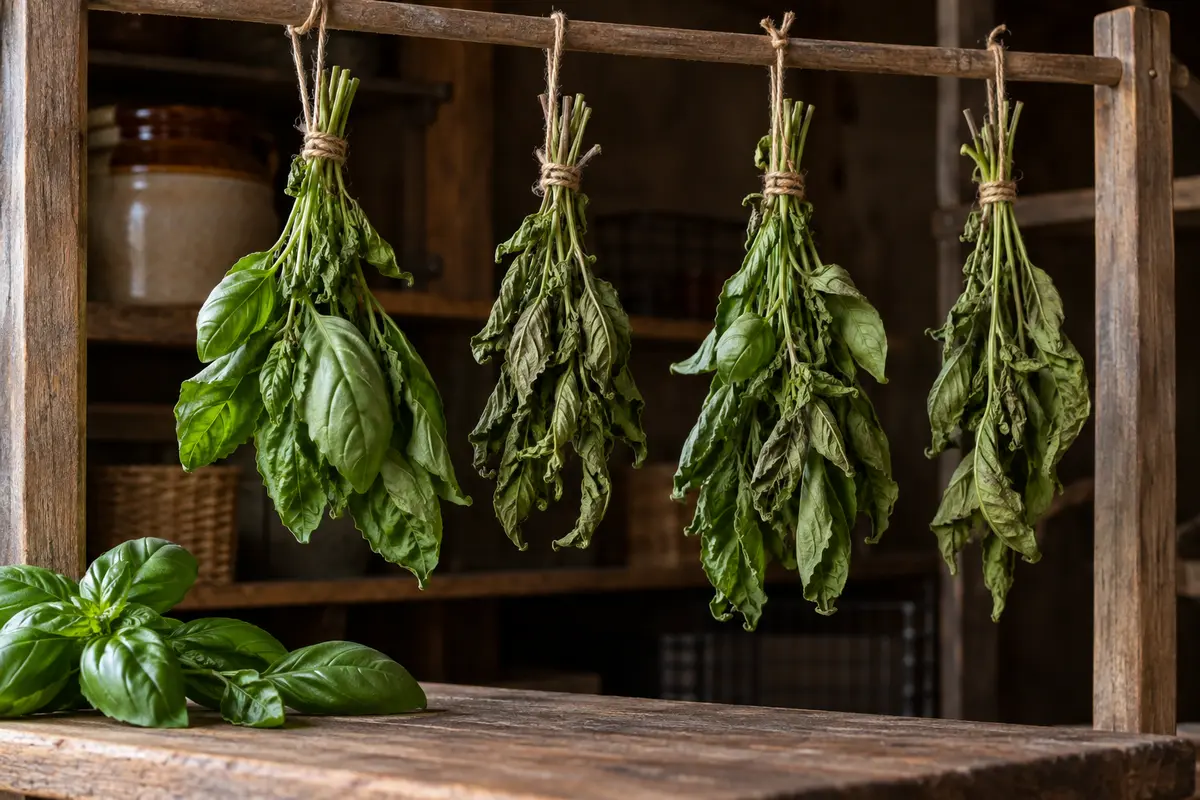
Basil dries best in small batches with moving air; tender leafy herbs need particularly quick drying.
Method
- Harvest sound basil after the dew has dried; discard yellow or damaged leaves.
- Rinse only if needed and dry the surface completely; strip leaves from thick woody stems.
- Spread leaves in one layer on a mesh rack or use a pierced paper bag in warm moving air; large bunches can mould.
- Check daily until leaves crumble readily and stems snap; continue drying any soft or damp pieces.
- Cool fully, strip leaves and pack airtight away from light and moisture; discard if condensation or mould appears.
Storage
Airtight container in a cool, dark, dry place · Use while aromatic; discard damp or mouldy herbs
Sources and scope
- Drying Herbs — Oregon State University Extension
Method-specific source recorded in the prior content audit
Freezing in Oil for Basil
General preservation or storage guidance
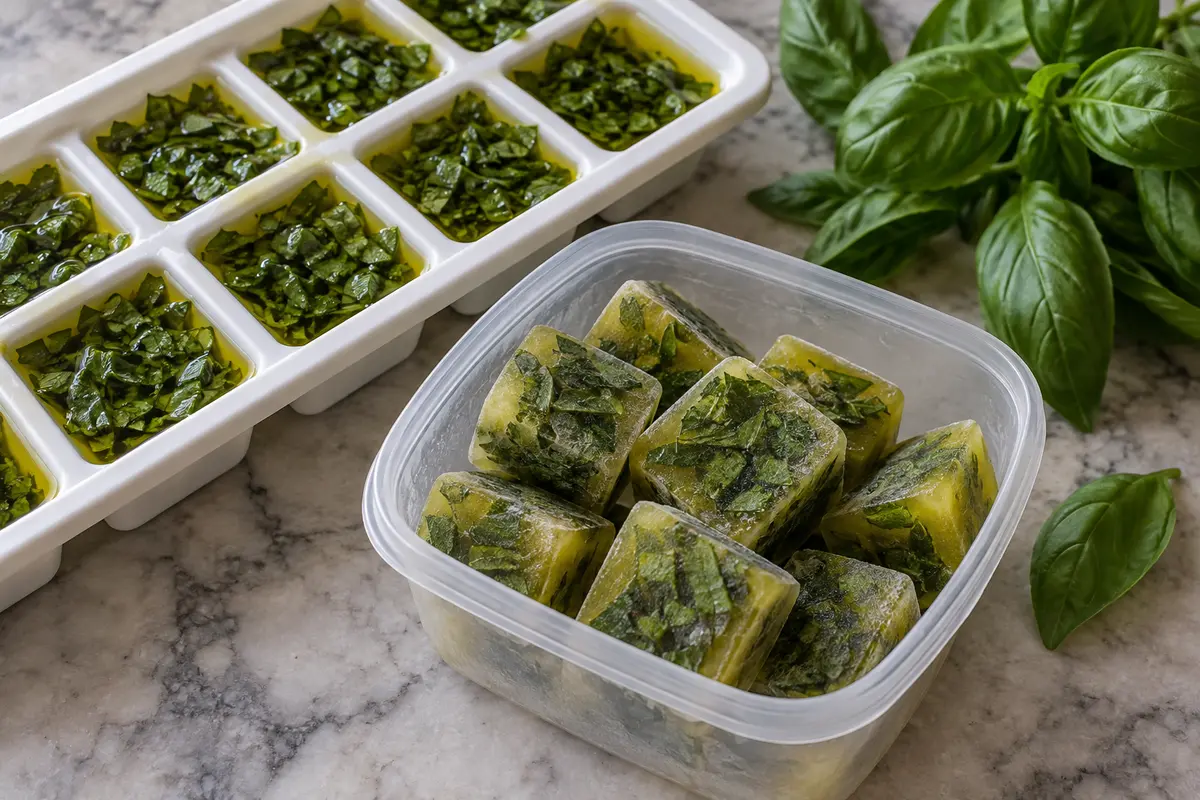
Chopped basil can be frozen in small oil portions for later cooked dishes; fresh herb oil must never stand at room temperature.
Method
- Pick healthy basil leaves, discard damaged parts, rinse if needed and dry completely.
- Chop finely and spoon into small freezer-safe moulds.
- Cover with enough oil for a cooking portion and freeze immediately; do not leave the mixture at room temperature.
- Transfer solid cubes to a labelled sealed freezer bag and return promptly to the freezer.
- Add from frozen to a hot cooked dish; thaw only in the refrigerator if necessary and use promptly.
Storage
Freezer at −18°C or colder · Keep frozen; no exact quality period stated
Sources and scope
- How To Chill Freeze And Defrost Food Safely — UK Food Standards Agency
Method-specific source recorded in the prior content audit