
Dill Pickles for Cucumbers
General preservation or storage guidance
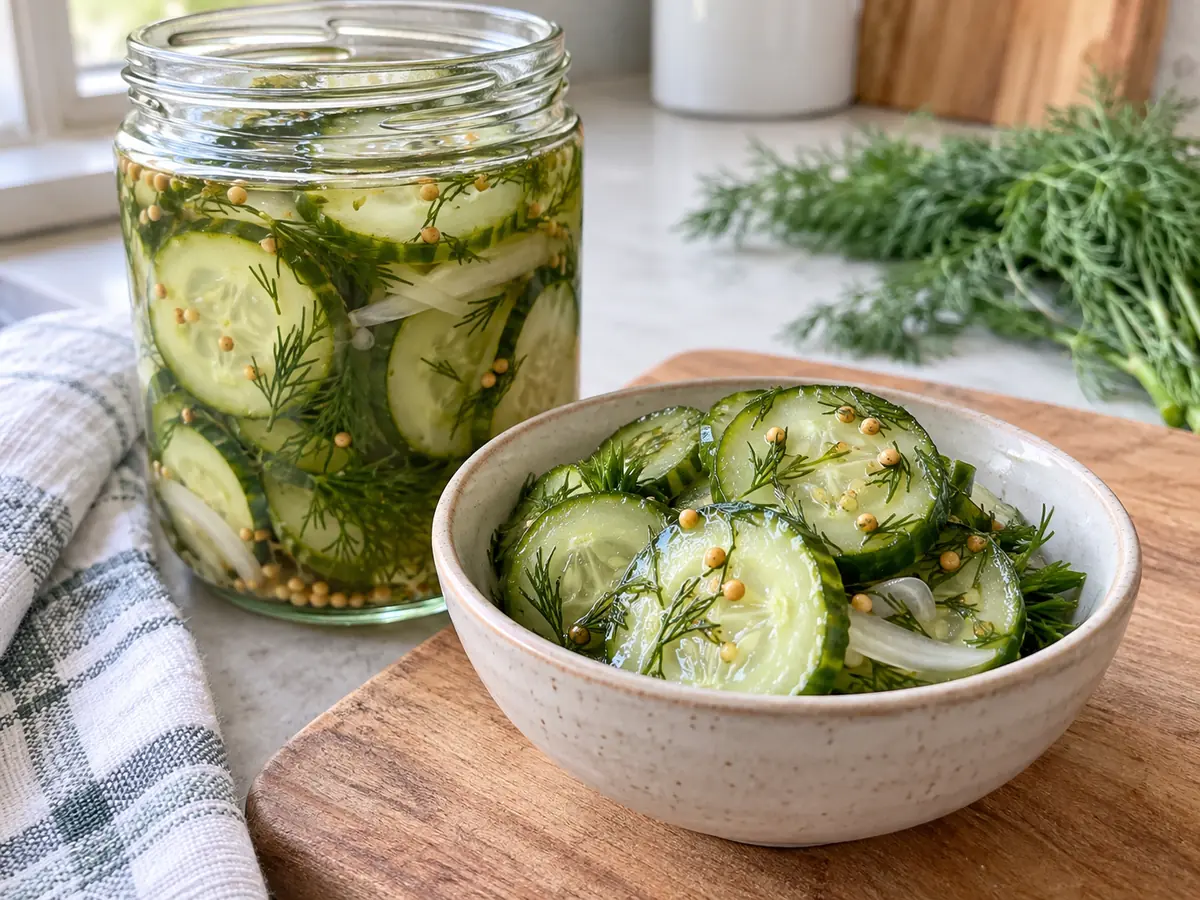
Whole small cucumbers are salted overnight, then packed with dill and covered in a measured 5% vinegar brine before water-bath processing.
Method
- This batch makes about 7–9 pints: weigh 8 lb (3.6 kg) of 3–5 inch pickling cucumbers; measure 2 gallons (7.6 L) water, 1¼ cups pickling salt, 1½ quarts (1.4 L) white vinegar labelled 5% acidity, ¼ cup sugar and 2 quarts (1.9 L) water. Also measure 2 tbsp mixed pickling spice, about 3 tbsp mustard seed, and either 14 dill heads or 4½ tbsp dill seed.
- Wash cucumbers, discard a thin slice from each blossom end and leave about ¼ inch stem attached. Dissolve ¾ cup of the pickling salt in the 2 gallons water, pour over cucumbers and soak 12 hours; drain well.
- Tie pickling spice in clean cloth. In a large pan combine the vinegar, remaining ½ cup salt, sugar and 2 quarts water; add the spice bag and heat to boiling.
- Pack cucumbers into hot pint jars with 1 tsp mustard seed and 1½ dill heads (or 1½ tsp dill seed) per jar. Cover with boiling brine, leaving ½ inch headspace; remove air bubbles, wipe rims and fit prepared lids.
- Process pint jars in a boiling-water canner for 10 minutes at elevations up to 1,000 ft (305 m), 15 minutes from 1,001–6,000 ft (306–1,829 m), or 20 minutes above 6,000 ft (1,829 m). Keep jars under boiling water throughout.
- Cool jars undisturbed for 12–24 hours and check seals. Refrigerate any unsealed jar. Keep sealed jars cool and dark; refrigerate after opening and keep cucumbers covered with brine.
Storage
Sealed, processed jars in a cool, dark cupboard; refrigerate after opening · Best flavour develops after several weeks; use sound sealed jars and refrigerate after opening
Sources and scope
- Quick Fresh Pack Dill Pickles — National Center for Home Food Preservation
Method-specific source recorded in the prior content audit
Fermented Cucumbers
General preservation or storage guidance
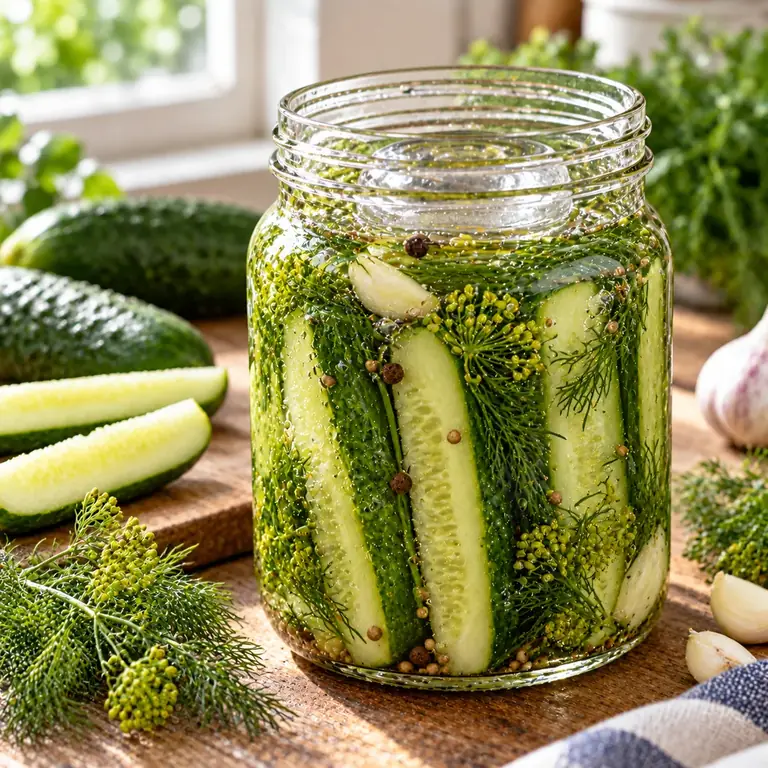
Whole small cucumbers ferment slowly under a measured salt brine, developing a sour dill flavour without relying on added vinegar.
Method
- For each clean 3.8 L (1 US gallon) food-grade fermentation crock, weigh 1.8 kg small pickling cucumbers and measure 120 ml pickling salt (½ US cup), 60 ml white vinegar labelled 5% acidity (¼ US cup) and 1.9 L water. Add 2 tbsp dill seed or 4–5 dill heads; garlic, dried red chilli and mixed pickling spice are optional.
- Wash cucumbers, discard a thin 1.5 mm slice from each blossom end and leave about 6 mm stem. Put half the dill and optional spices in the crock, add cucumbers, then the remaining herbs.
- Dissolve the measured salt in the vinegar and water and pour over the cucumbers. Fit a food-grade cover and weight so every cucumber stays submerged under brine.
- Ferment at 21–24°C for about 3–4 weeks; at 13–18°C allow about 5–6 weeks. Avoid temperatures above 27°C. Check several times each week and remove surface scum promptly.
- Discard the entire batch if cucumbers become soft or slimy or develop a disagreeable odour; do not taste suspect food. Fully fermented pickles may be kept in their brine in the refrigerator for about 4–6 months if checked regularly for scum or mould.
Storage
Refrigerator after fermentation · About 4–6 months refrigerated when fully fermented and maintained as directed
Sources and scope
- Dill Pickles — National Center for Home Food Preservation
Method-specific source recorded in the prior content audit
Relish for Cucumbers
General preservation or storage guidance
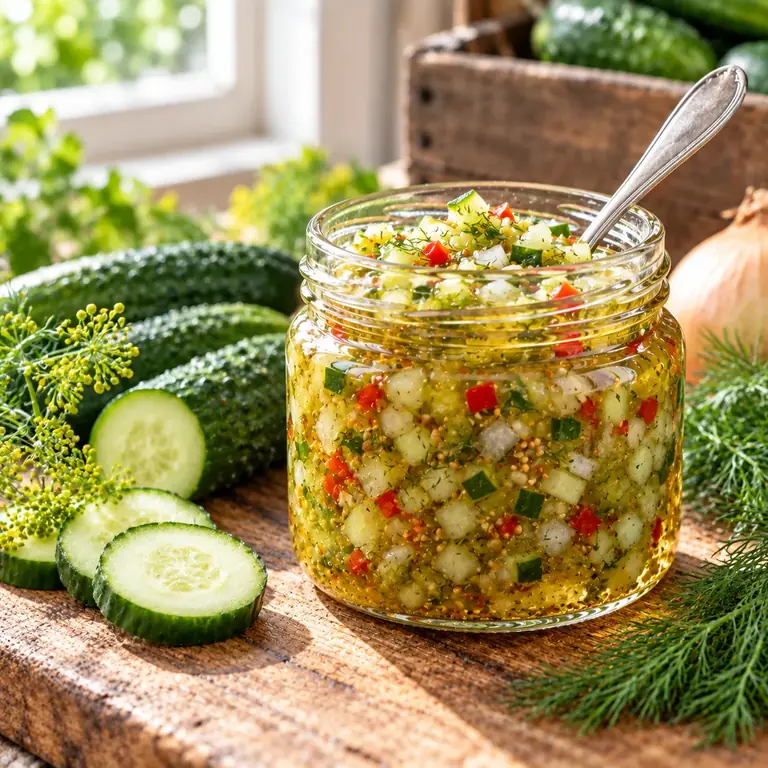
This measured sweet dill relish drains chopped cucumbers with peppers and onion, then cooks in 5% cider vinegar before pint-jar processing.
Method
- For about 6–7 US pints, measure 12 cups chopped pickling cucumber (about 4½ lb/2 kg before trimming), 3 cups chopped red pepper, 1 cup chopped onion, ¾ cup pickling salt, 4 cups ice, 8 cups water, 5 cups cider vinegar labelled 5%, 1 cup sugar, 1 cup water, 2 tbsp mustard seed, 1 cup chopped fresh dill and 1 tsp garlic powder.
- Wash the cucumbers; trim a thin slice from both ends and discard. Chop to pieces about 6 mm. Wash peppers, remove stems, seeds and membranes, then chop; peel and chop onion. Measure the prepared vegetables separately.
- Combine cucumber, pepper and onion with salt, ice and 8 cups water. Cover and chill in the refrigerator for 3–4 hours. Drain, rinse thoroughly in ice-cold water and drain again in a cloth-lined strainer for 15–20 minutes.
- Heat vinegar, sugar, the remaining 1 cup water, mustard seed, dill and garlic powder in a stockpot, stirring until sugar dissolves. Add drained vegetables, bring to a boil and simmer 10 minutes.
- Fill hot relish into clean, hot pint jars, leaving ½ inch headspace. Remove air bubbles, ensure liquid covers the pieces, wipe rims and fit prepared two-piece lids.
- Process pint jars in a boiling-water canner for 15 minutes at elevations up to 1,000 ft (305 m), 20 minutes from 1,001–6,000 ft (306–1,829 m), or 25 minutes above 6,000 ft (1,829 m). Cool undisturbed 12–24 hours, check seals, and refrigerate any unsealed jar.
Storage
Sealed, processed jars in a cool, dark cupboard; refrigerate after opening · Use sound sealed jars; refrigerate after opening
Sources and scope
- Fresh Dill Cucumber Relish — National Center for Home Food Preservation
Method-specific source recorded in the prior content audit
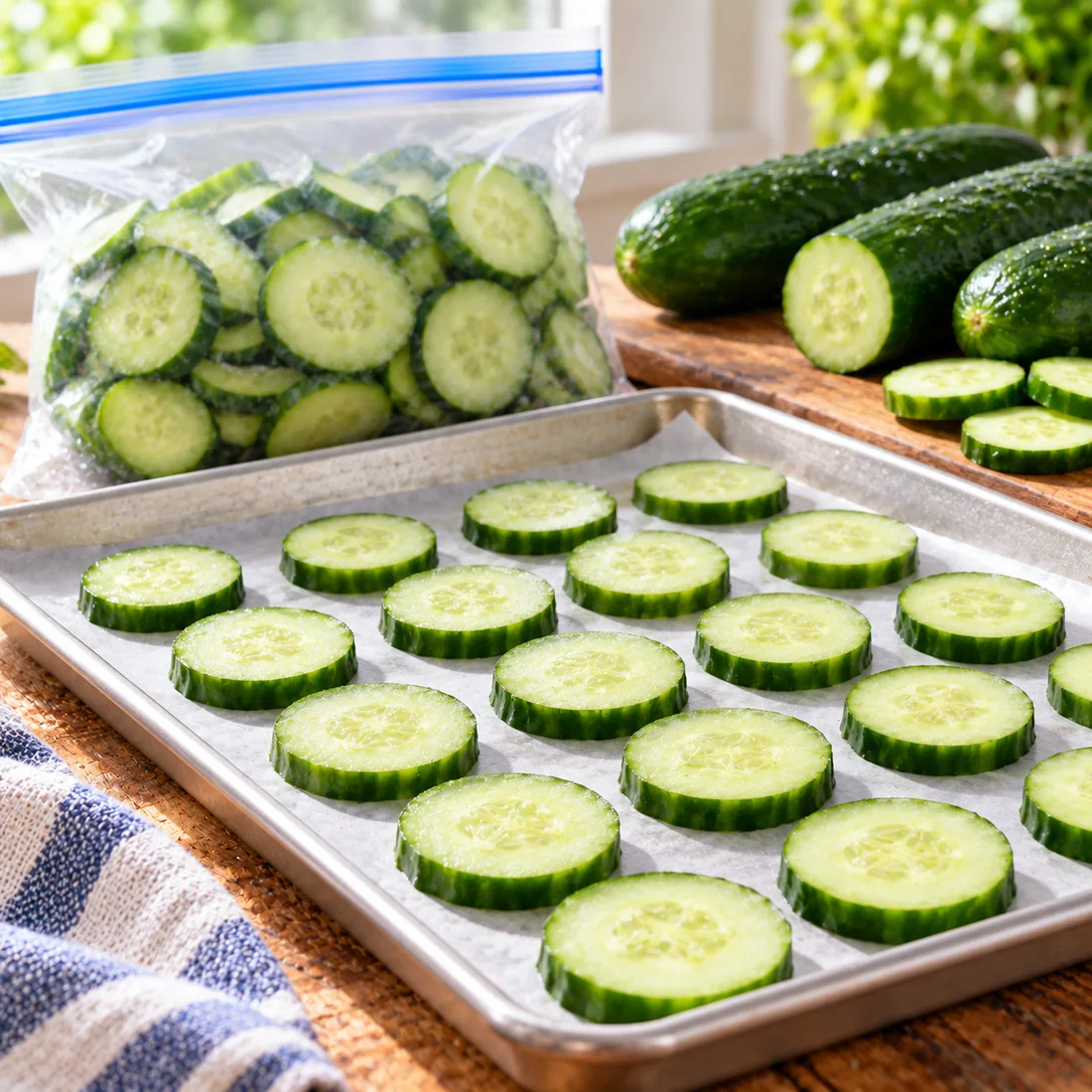
Freezing Cucumbers
General preservation or storage guidance
Freeze cucumber in measured portions for chilled soups, smoothies and blended sauces; the thawed texture is soft rather than crisp.
Method
- Choose fresh, firm cucumbers and wash under running water. Peel if the skin is tough or waxed, then trim the ends.
- For soup or smoothies, halve lengthwise and scrape out large watery seed pockets with a teaspoon; dice or grate the flesh.
- For cucumber-water cubes, leave the seeds in, dice finely and divide into ice-cube trays; top with a little cold water to bind each portion.
- Freeze the portions until solid. Transfer cubes or loose frozen pieces to labelled airtight freezer bags or containers, press out excess air and return promptly to the freezer.
- Keep at −18°C or colder. Use the portions from frozen in blended cold dishes; once thawed the cucumber will be soft and should not be served as crunchy salad. Do not refreeze thawed portions.
Storage
Freezer at −18°C or colder in airtight freezer containers · Use while continuously frozen for best quality; no method-specific quality period stated
Sources and scope
- Cooking Your Food — UK Food Standards Agency
Method-specific source recorded in the prior content audit