
Freezing Herbs
General preservation or storage guidance
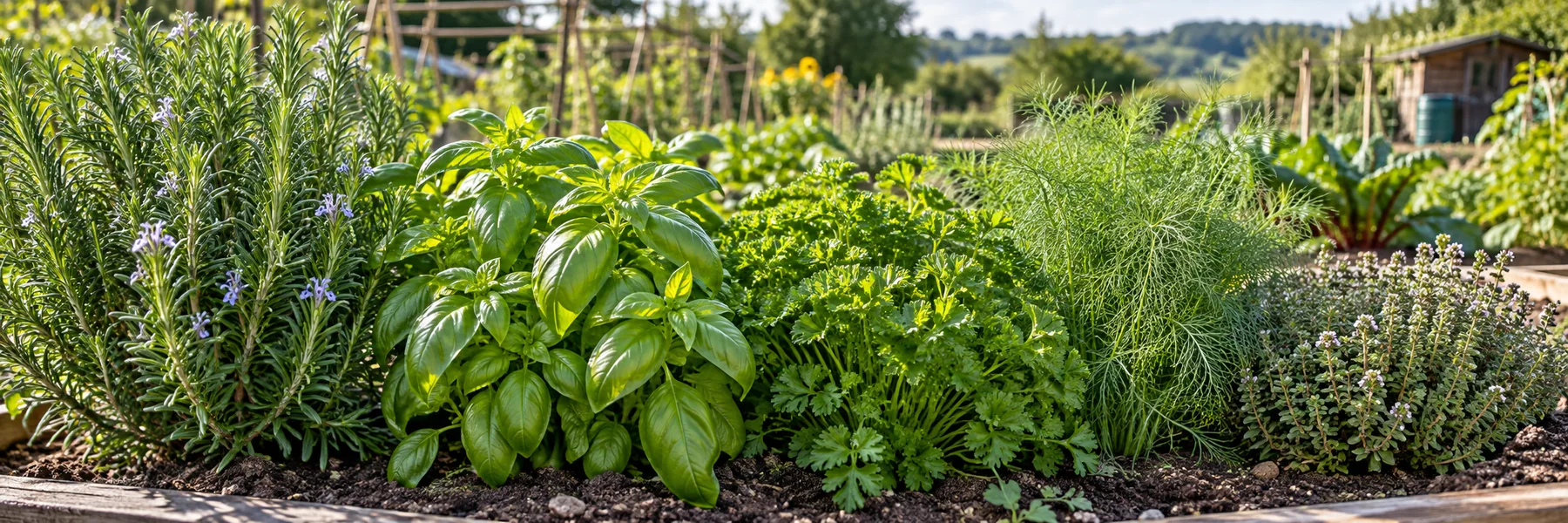
Tender culinary herbs such as parsley, coriander, dill and basil retain useful flavour when frozen in small water-based portions for cooked dishes.
Method
- Pick healthy leaves and tender stems. Rinse away grit, remove damaged leaves and dry thoroughly; remove tough woody stems from rosemary or oregano.
- Chop herbs to the size you use in cooking. Keep strong-flavoured herbs in separate batches so portions are easy to measure.
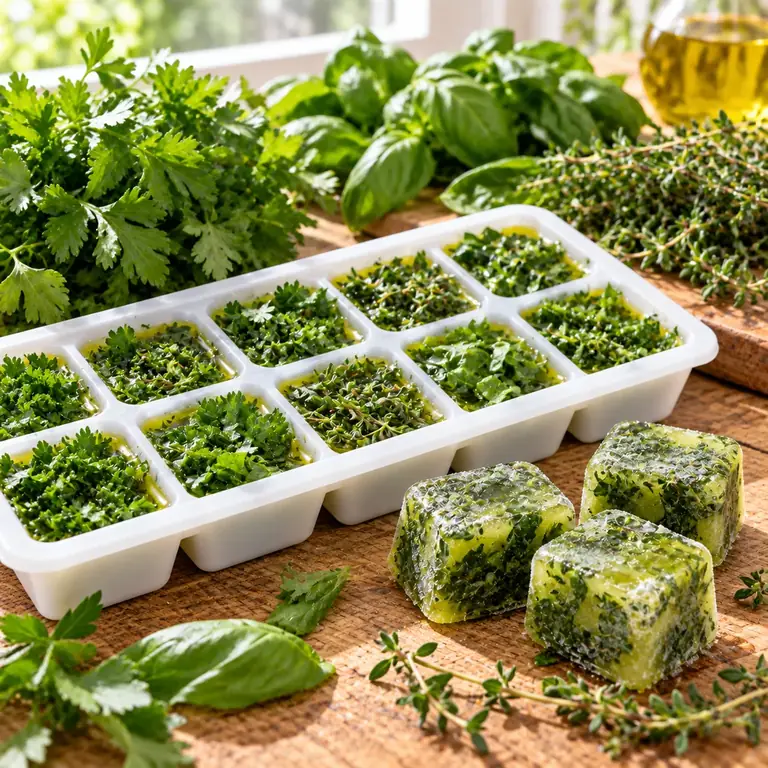
- Pack loosely into ice-cube moulds and add cold water to cover, or spread chopped herbs in a thin layer in a freezer-safe container. Do not preserve fresh herbs under oil at room temperature.
- Freeze promptly until solid, then transfer cubes or portions to a labelled airtight freezer bag and return them to the freezer.
- Add frozen portions directly to soups, sauces or stews. Leaves soften after thawing and are not suitable as a crisp fresh garnish; do not refreeze thawed portions.
Storage
Freezer at −18°C or colder · Keep continuously frozen; no exact quality period stated
Sources and scope
- Freezing Fresh Herbs — National Center for Home Food Preservation
Method-specific source recorded in the prior content audit
Drying Herbs
General preservation or storage guidance
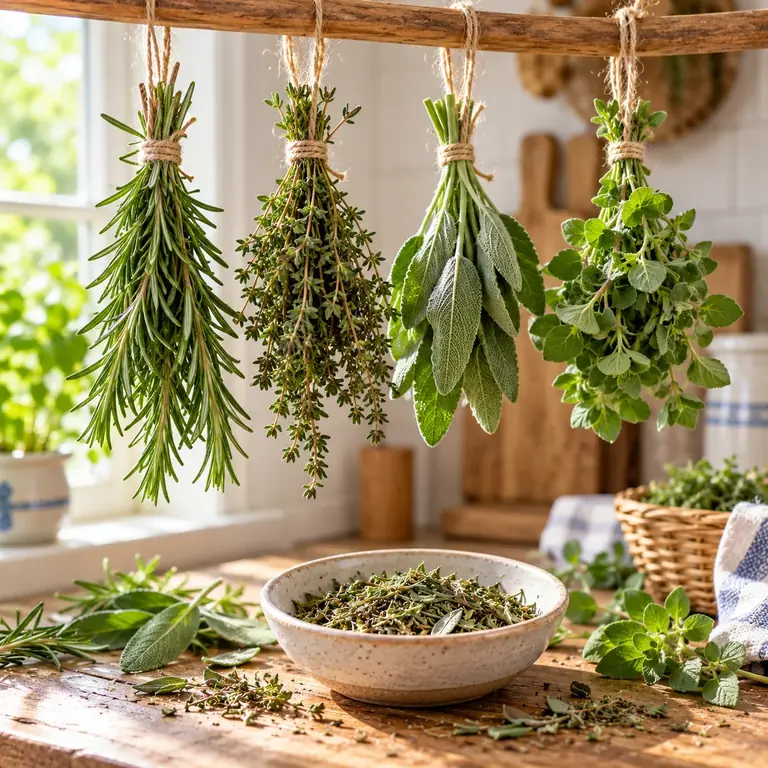
Dry robust herbs such as rosemary, thyme, sage and oregano in small bunches or on a rack until the leaves crumble; tender leafy herbs dry better in a thin layer.
Method
- Harvest sound herbs after surface dew has dried. Remove yellow or damaged leaves and shake off insects. Rinse only if needed, then dry the foliage thoroughly.
- For rosemary, thyme, sage and oregano, tie four or five stems into a loose bunch. For fine-leaved herbs such as parsley or coriander, strip leaves and spread them in a thin layer on a clean mesh rack.
- Hang bunches upside down or place the rack in a warm, dry, dark, well-ventilated area away from direct sunlight. Keep bunches small so air can move through them.
- Check daily. The leaves should crumble readily and stems should snap; continue drying any soft or damp leaves. Discard material that develops mould.
- Cool fully, strip leaves from stems and store whole or crumbled in clean airtight jars away from heat, light and moisture. Check for condensation after packing.
Storage
Airtight container in a cool, dark, dry place · Use while aromatic; no fixed period stated
Sources and scope
- Growing Herbs — University of Minnesota Extension
Method-specific source recorded in the prior content audit
- Drying — University of Minnesota Extension
Method-specific source recorded in the prior content audit