
Freezing Kale
General preservation or storage guidance
Tender kale leaves freeze for cooked dishes after a short blanch; remove the coarse midribs and cool the leaves promptly.
Method
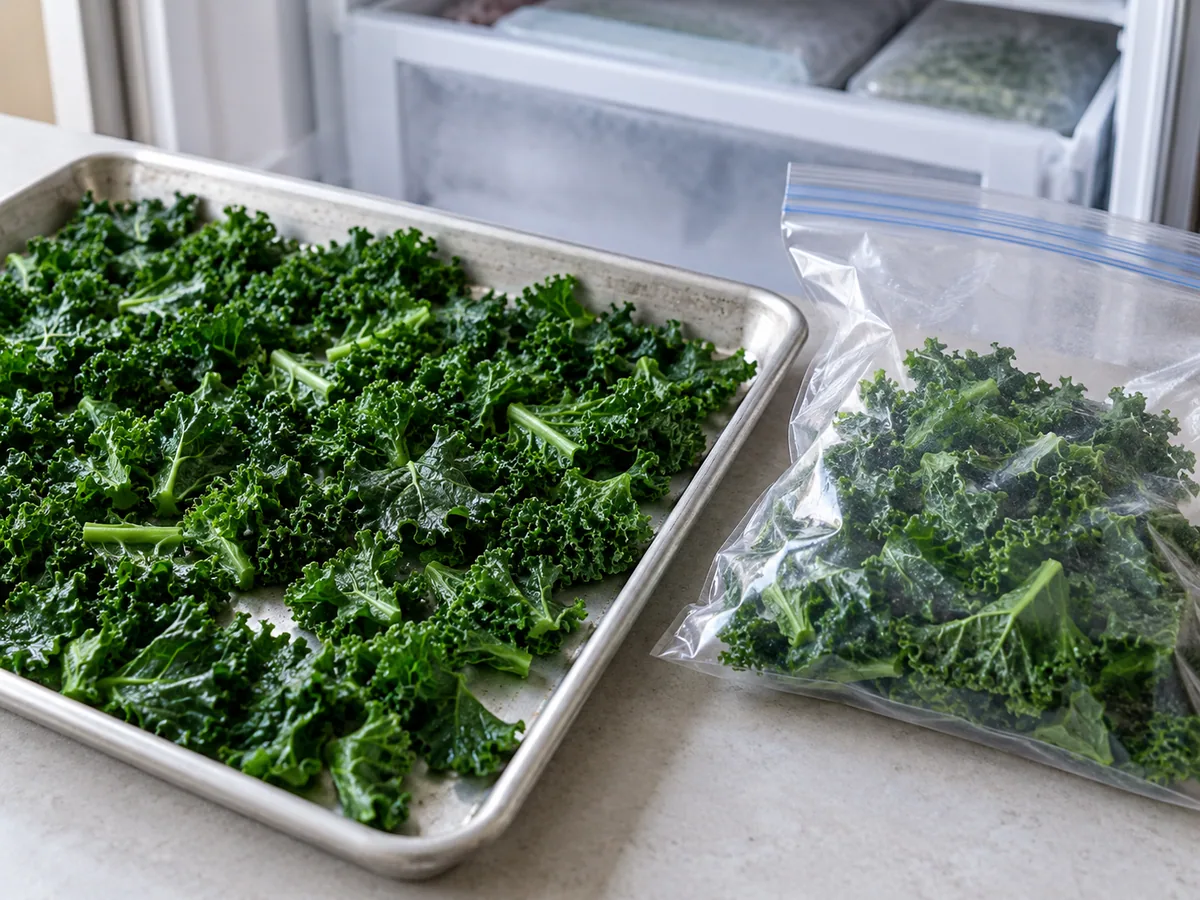
- Choose young, tender kale leaves. Rinse thoroughly in several changes of water to remove grit, then strip away tough central ribs and cut large leaves into broad strips.
- Bring a large pan of water to a rolling boil. Blanch the leaves for 2 minutes, timing once the water returns to the boil.
- Cool immediately in cold water for about as long as the blanch, then drain and squeeze gently to remove excess water.
- Pack the kale in meal-size freezer-safe bags or containers, press out excess air and seal. Label and freeze promptly.
- Use thawed kale only in cooked dishes such as soups or casseroles; freezing makes the leaves limp, not suitable for fresh salads. Keep continuously frozen.
Storage
Freezer at −18°C or colder · Keep continuously frozen; no exact quality period stated
Sources and scope
- Got The Wintertime Greens — National Center for Home Food Preservation
Method-specific source recorded in the prior content audit
Drying Kale
General preservation or storage guidance
Young kale leaves can be dried as a brittle, lightweight ingredient for soups and cooked dishes; blanching and an even tray layer help produce a dry result.
Method
- Select young, tender kale. Wash the leaves very thoroughly, remove thick midribs and cut large leaves into pieces that will lie flat on the trays.
- Blanch the leaves in boiling water for 1½ minutes, or steam-blanch for 2–2½ minutes, until wilted. Drain and shake off surface water.
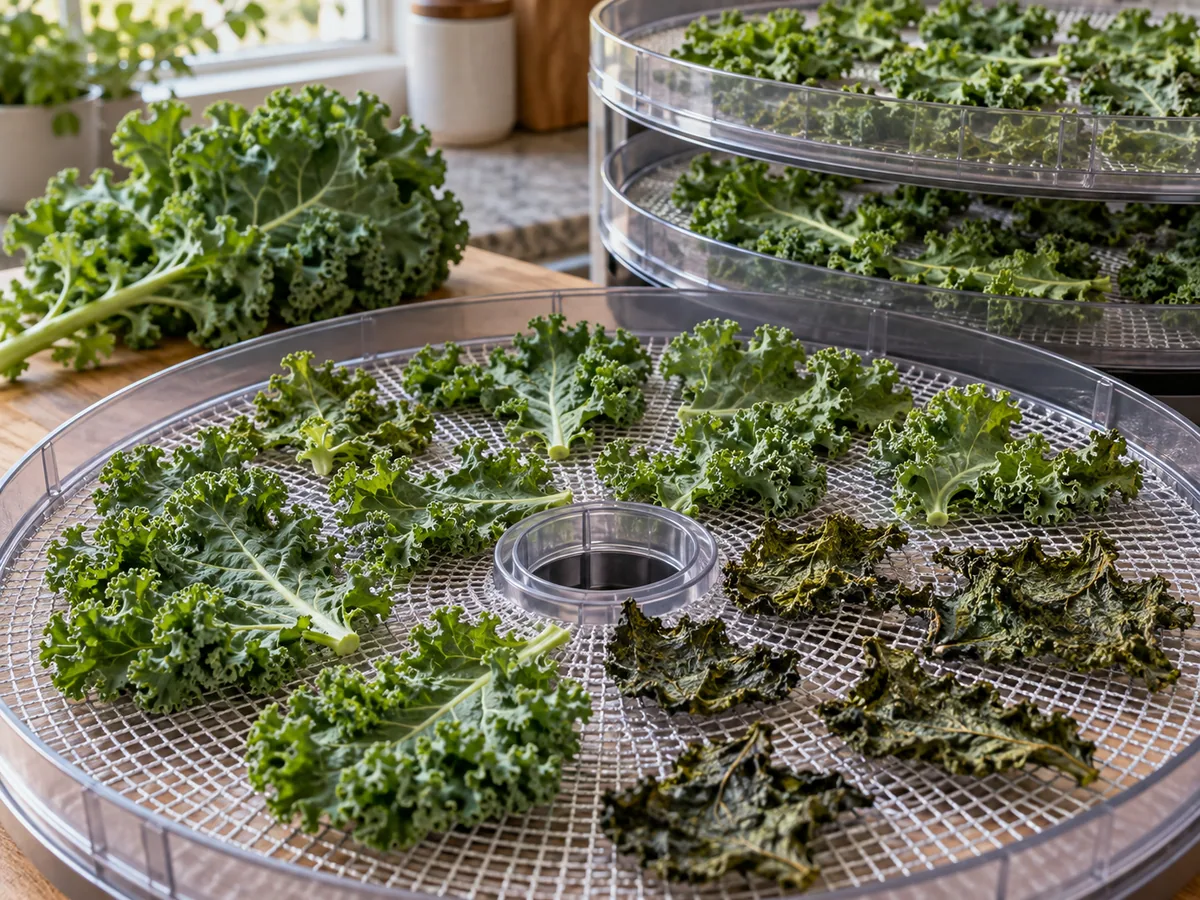
- Spread the leaves loosely in a single layer on dehydrator trays; do not leave them in wads, where damp patches can remain.
- Dry with warm moving air using the dehydrator’s vegetable guidance, rotating trays if needed, until the leaves are crisp and brittle throughout. Drying time varies with leaf thickness and the appliance.
- Cool for 30–60 minutes, then pack airtight away from heat, light and moisture. If condensation appears during storage, return the leaves to the dehydrator; discard any mouldy product.
Storage
Airtight moisture-proof container in a cool, dry, dark place · No exact period stated; inspect for moisture or mould
Sources and scope
- Got The Wintertime Greens — National Center for Home Food Preservation
Method-specific source recorded in the prior content audit
- Drying — University of Minnesota Extension
Method-specific source recorded in the prior content audit