
Freezing Melon
General preservation or storage guidance
Melon cubes can be tray-frozen for smoothies, cold drinks or purée; the thawed flesh loses its crisp fresh texture.
Method
- Wash the whole melon rind before cutting. Remove the rind and seeds, then cut the flesh into even cubes.
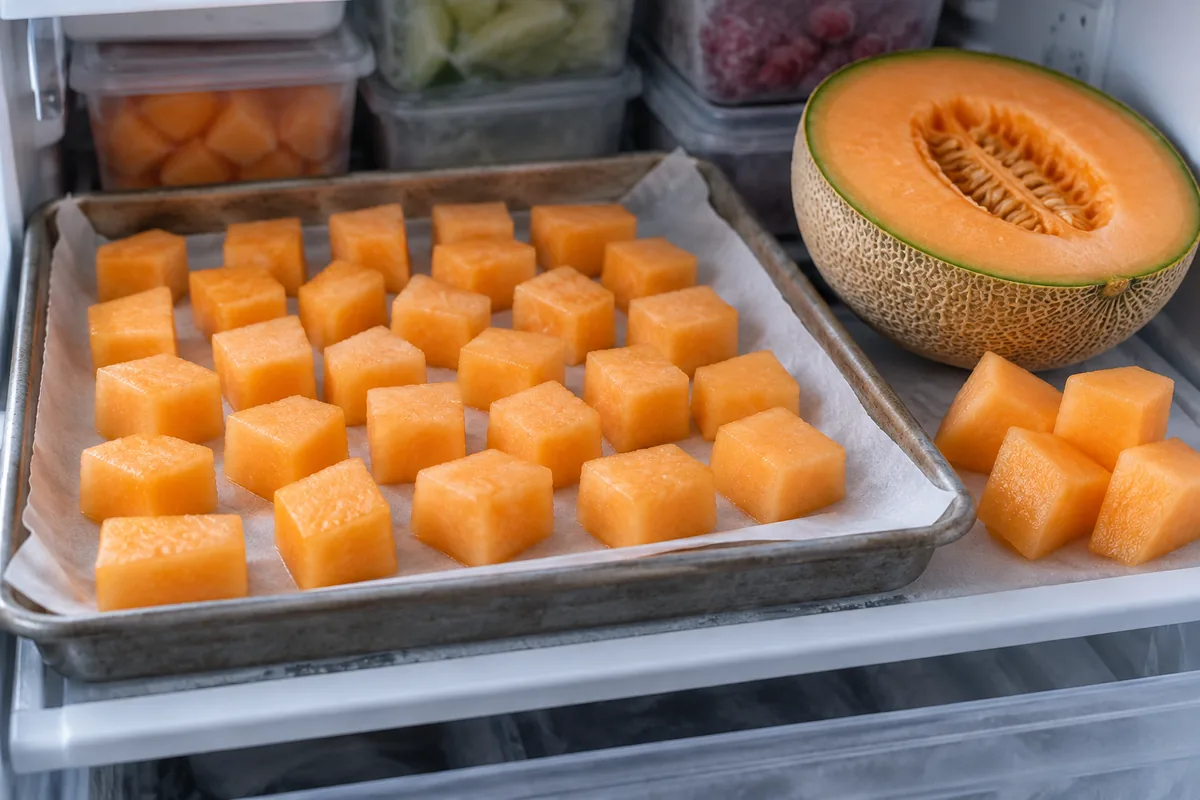
- Spread the cubes in one layer on a lined tray, leaving space between pieces so they freeze separately.
- Freeze until firm, then transfer quickly to freezer-safe bags or containers and remove excess air.
- Seal, label and return promptly to the freezer. Keep the melon continuously frozen.
- Use frozen cubes in smoothies or thaw in the refrigerator for purée or cold dishes; expect a softer texture and do not refreeze thawed pieces.
Storage
Freezer at −18°C or colder · Keep continuously frozen; no exact quality period stated
Sources and scope
- Fruits — National Center for Home Food Preservation
Method-specific source recorded in the prior content audit
Melon Leather
General preservation or storage guidance
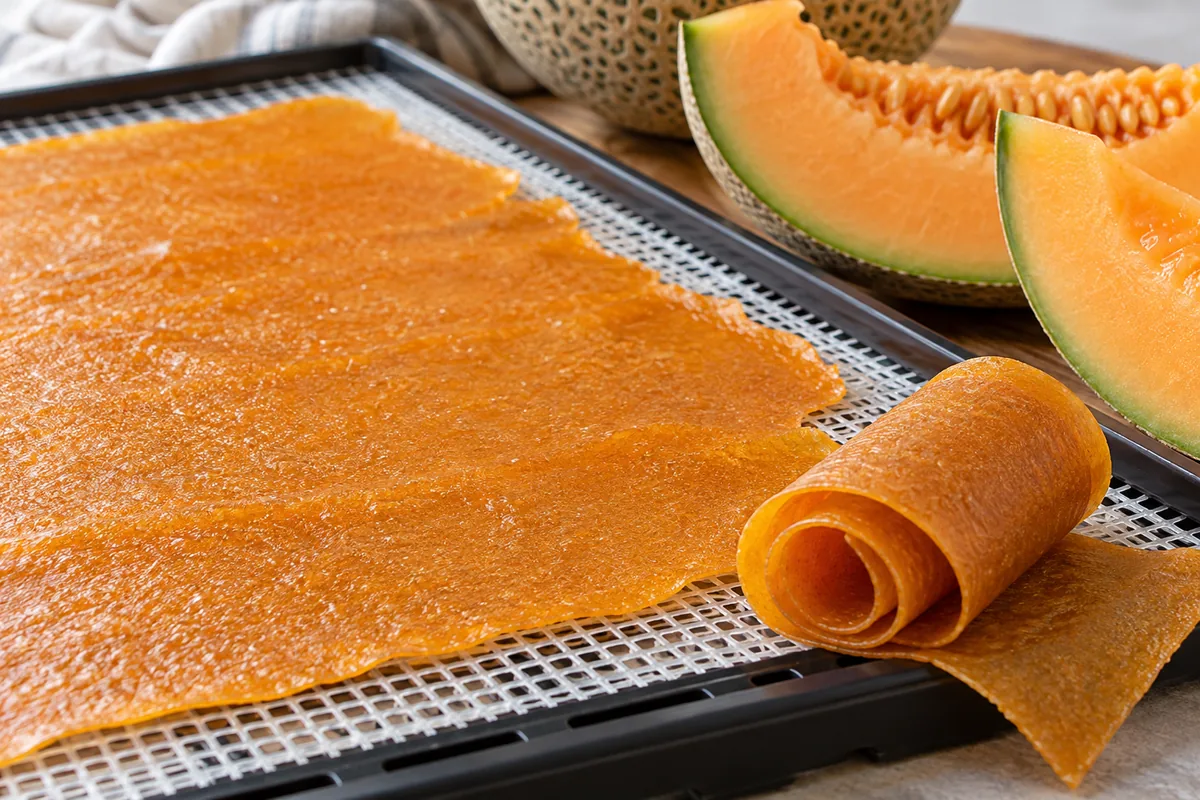
Ripe melon purée can be dried as a thin fruit-leather sheet, but it should be refrigerated or frozen because this guide does not establish a shelf-stable melon-leather process.
Method
- Wash the rind before cutting the melon. Remove rind and seeds, purée the ripe flesh and strain off excess juice if it is very watery.
- Spread the purée evenly on a purpose-made leather sheet or lined tray, following the dehydrator manufacturer’s instructions.
- Use the manufacturer’s fruit-leather drying instructions and check the centre as well as the edges; the sheet should be leathery throughout with no wet or moist pockets.
- Cool completely, then cut or roll the sheet with clean parchment between layers.
- Pack airtight and refrigerate or freeze. This guide does not establish shelf stability for melon leather; discard if condensation or mould appears.
Storage
Refrigerator or freezer in an airtight pack · No validated shelf-stable storage period established
Sources and scope
- Sp 50 780 Preserving Foods Berries — Oregon State University Extension
Method-specific source recorded in the prior content audit
- Drying — University of Minnesota Extension
Method-specific source recorded in the prior content audit