
Freezing Parsnip
General preservation or storage guidance
Small, tender parsnips freeze as peeled cubes after a brief blanch, then work best in soups, mash and other cooked dishes.
Method
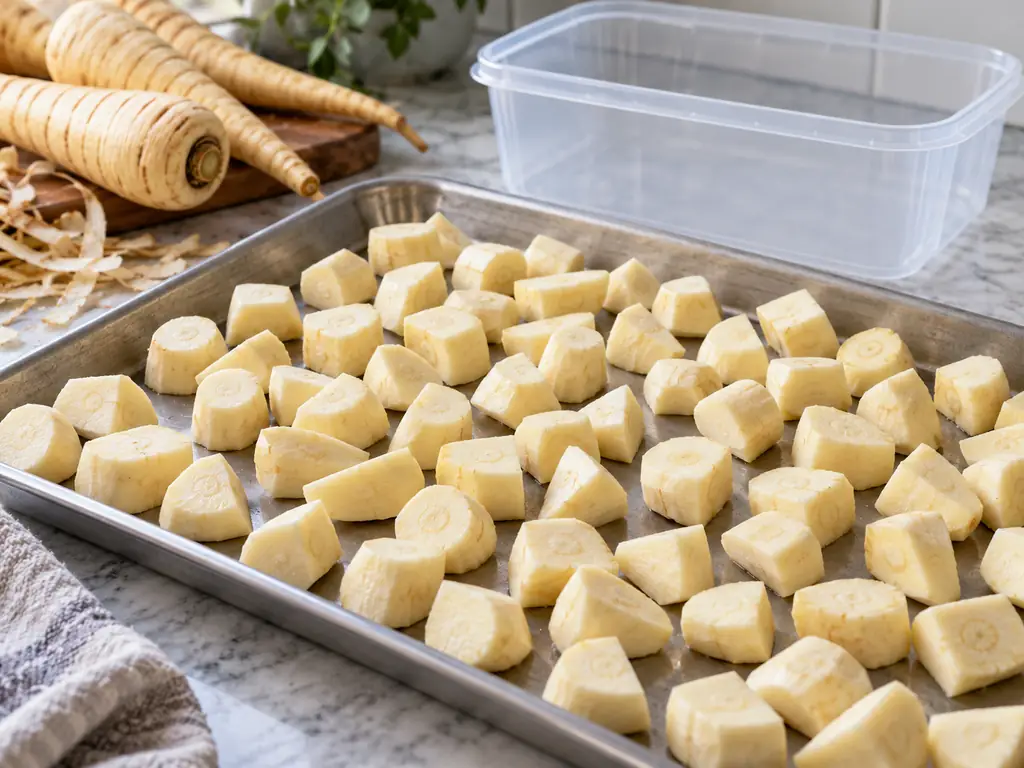
- Choose small-to-medium firm parsnips with mild flavour. Wash, peel, trim the ends and cut into even 1.3 cm cubes.
- Bring a large pan of water to a rolling boil. Blanch the cubes for 2 minutes, timing once the water returns to the boil.
- Cool promptly in cold water for about as long as blanching, then drain thoroughly.
- Pack into freezer containers, leaving about 1 cm expansion space, or open-freeze on a tray until firm before bagging. Remove excess air, seal and label.
- Freeze promptly and cook from frozen in soups, stews or mash. The texture softens after thawing; do not refreeze thawed parsnips.
Storage
Freezer at −18°C or colder · Keep continuously frozen; quality declines gradually
Sources and scope
- Freezing Turnips Or Parsnips — National Center for Home Food Preservation
Method-specific source recorded in the prior content audit
Cool Storage for Parsnip
General preservation or storage guidance
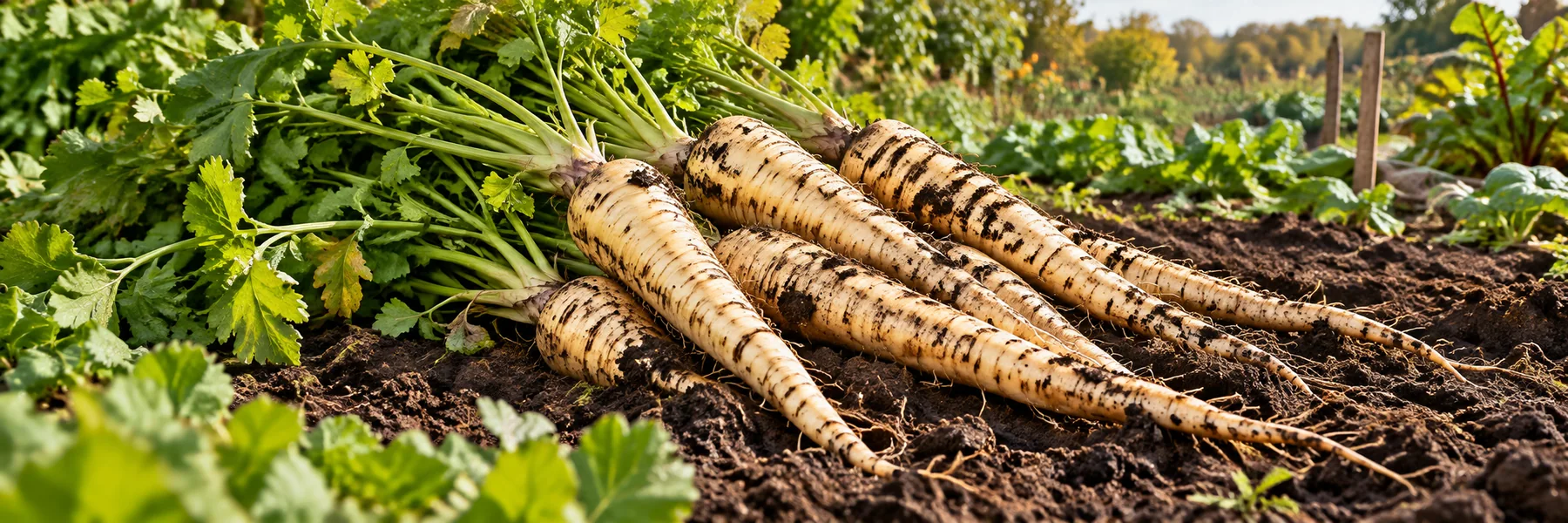
Parsnips can stay in sound, well-drained ground until needed or be lifted into barely moist sand for a dark, frost-free winter store.
Method
- Lift firm parsnips after the roots have matured; use fork-damaged, split or bruised roots promptly.
- Cut off the leafy tops close to the crown and brush away loose soil. Do not wash roots intended for storage.
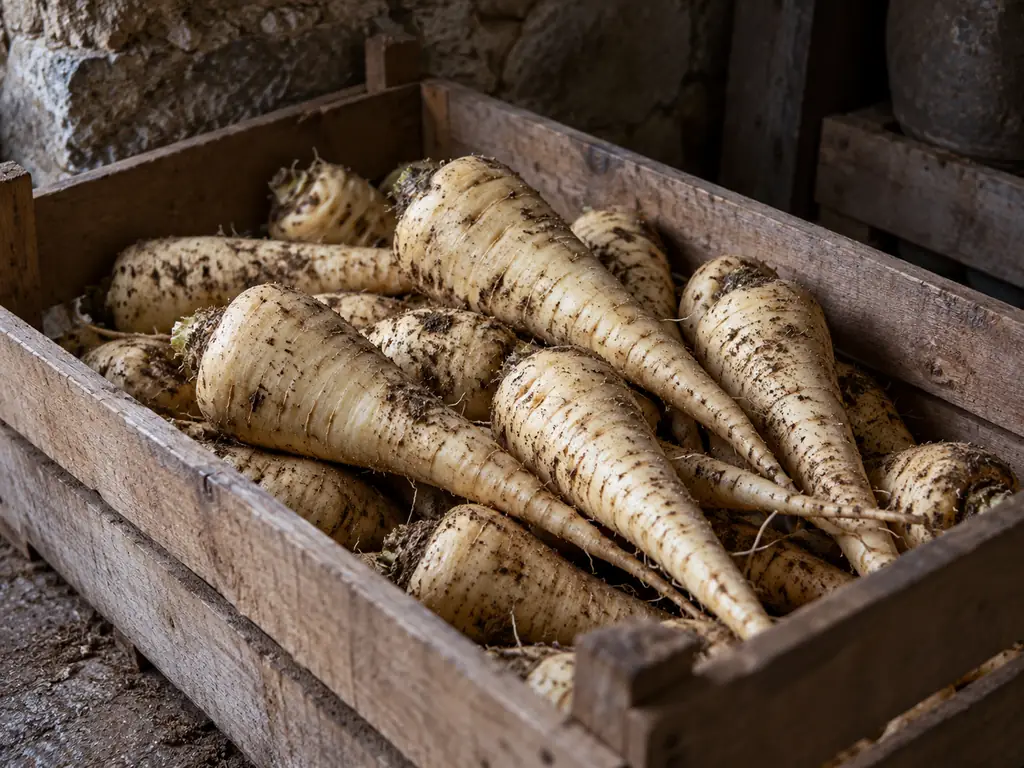
- For an indoor store, layer roots in a ventilated box of barely moist sand, keeping them apart and avoiding waterlogged sand.
- Keep the box dark, cool and frost-free. Alternatively, leave undamaged parsnips in well-drained ground and lift them as needed before the soil freezes.
- Check stored roots regularly and remove soft, mouldy or rotting ones. Wash each parsnip just before cooking.
Storage
Well-drained ground or a dark, frost-free box with barely moist sand · Inspect regularly; storage depends on conditions
Sources and scope
- Root Vegetables Storing — Royal Horticultural Society
Method-specific source recorded in the prior content audit
Clamping for Parsnip
General preservation or storage guidance
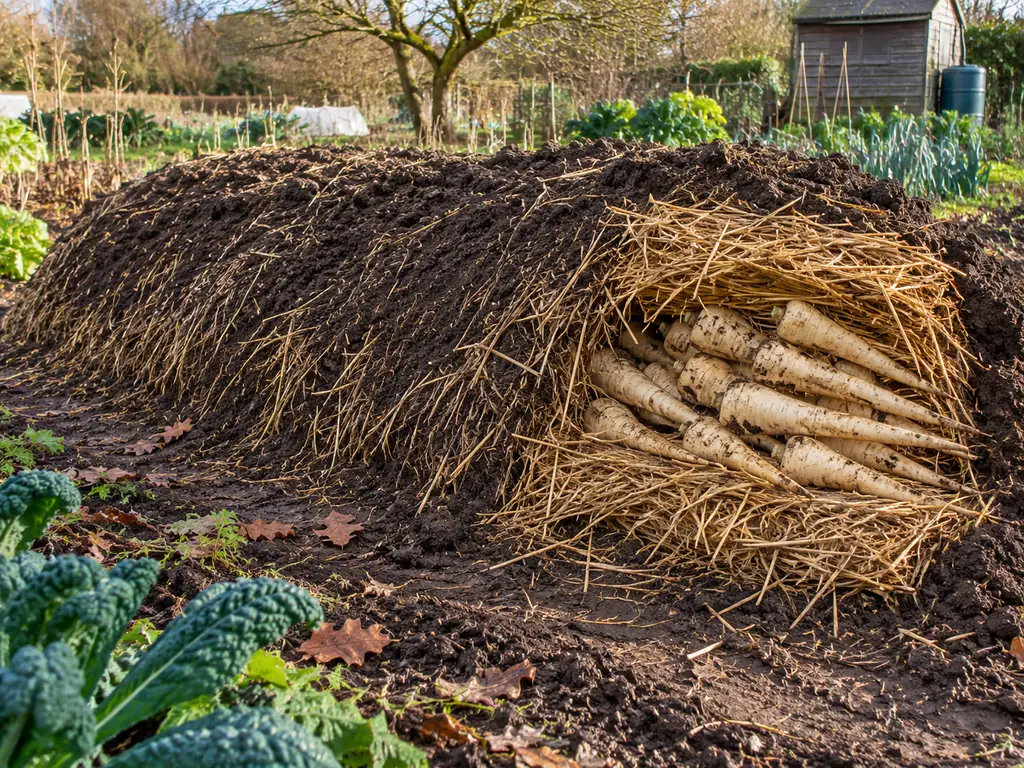
A parsnip clamp is a sheltered outdoor store: clean roots are stacked over dry straw, covered to shed rain and protected from frost.
Method
- Lift mature, sound parsnips in dry weather and handle them carefully. Set aside forked, cut, bruised or diseased roots for prompt use.
- Choose a sheltered, well-drained site and make a shallow drainage trench around the planned mound so water can run away.
- Lay a bed of clean, dry straw. Arrange the parsnips in a broad, stable mound with the crowns toward the centre and the roots sloping outward; keep the pile low enough to cover evenly.
- Cover the roots completely with dry straw, then add soil to shed rain and exclude light. Form a small vent at the top and keep the drainage channel clear.
- After heavy rain or frost, check that the cover remains intact. When taking roots, open only a small area, remove what is needed and re-cover it promptly; discard any rotting roots.
Storage
Outdoor clamp on sheltered, well-drained ground · Seasonal storage; inspect regularly and use in rotation
Sources and scope
- Root Vegetables Storing — Royal Horticultural Society
Method-specific source recorded in the prior content audit