
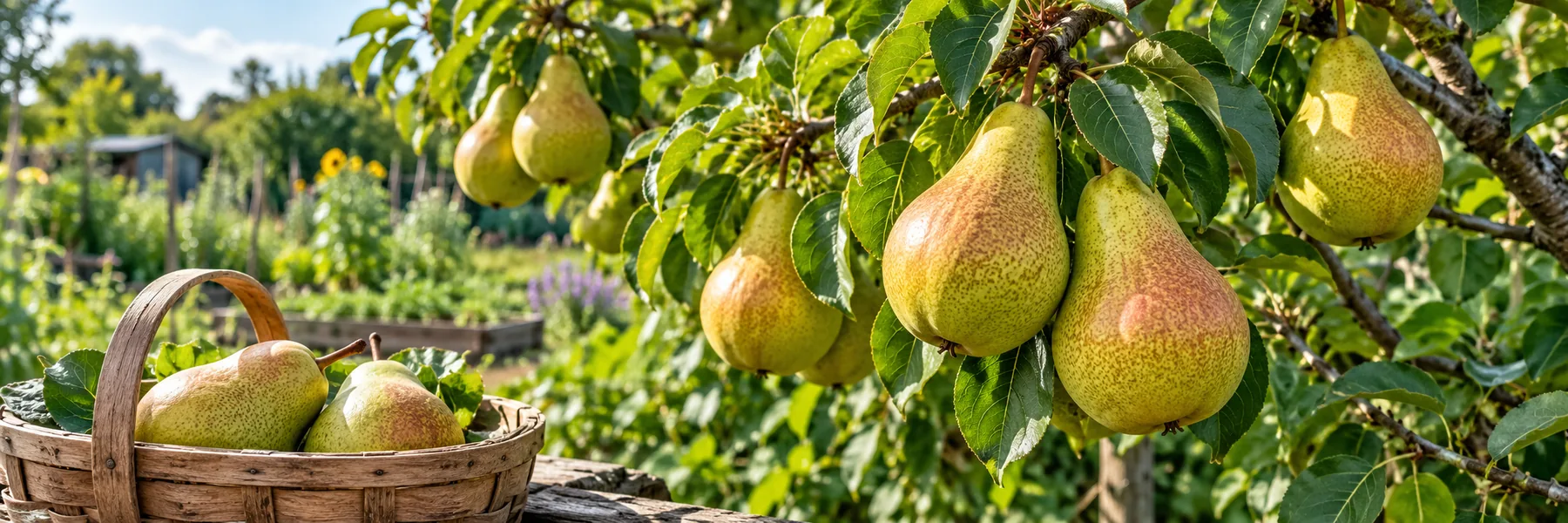
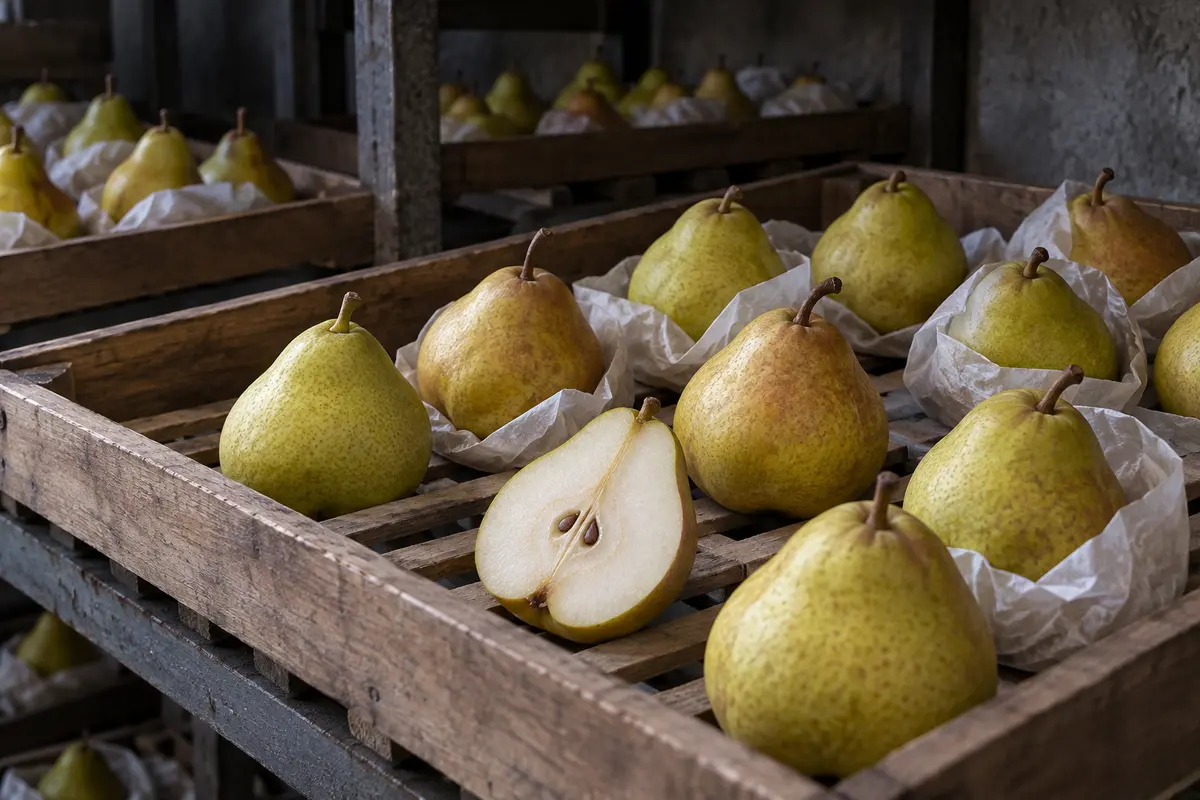
Cold Storage for Pear
General preservation or storage guidance
Sound pears keep longest when picked gently and stored cool, dark and ventilated.
Method
- Pick mature, unblemished pears gently; use windfalls, bruised or cut fruit first.
- Do not wash fruit for storage; separate by variety and remove any damaged pieces.
- Lay fruit in a single layer in a slatted tray or shallow box so air can circulate.
- Keep cool, dark and frost-free, away from strong-smelling produce.
- Inspect weekly and remove any fruit that softens, leaks or shows rot; bring pears indoors to ripen before eating.
Storage
Cool, dark, frost-free ventilated store · Cultivar and condition affect storage; inspect weekly
Sources and scope
- Grow Your Own — Royal Horticultural Society
Method-specific source recorded in the prior content audit
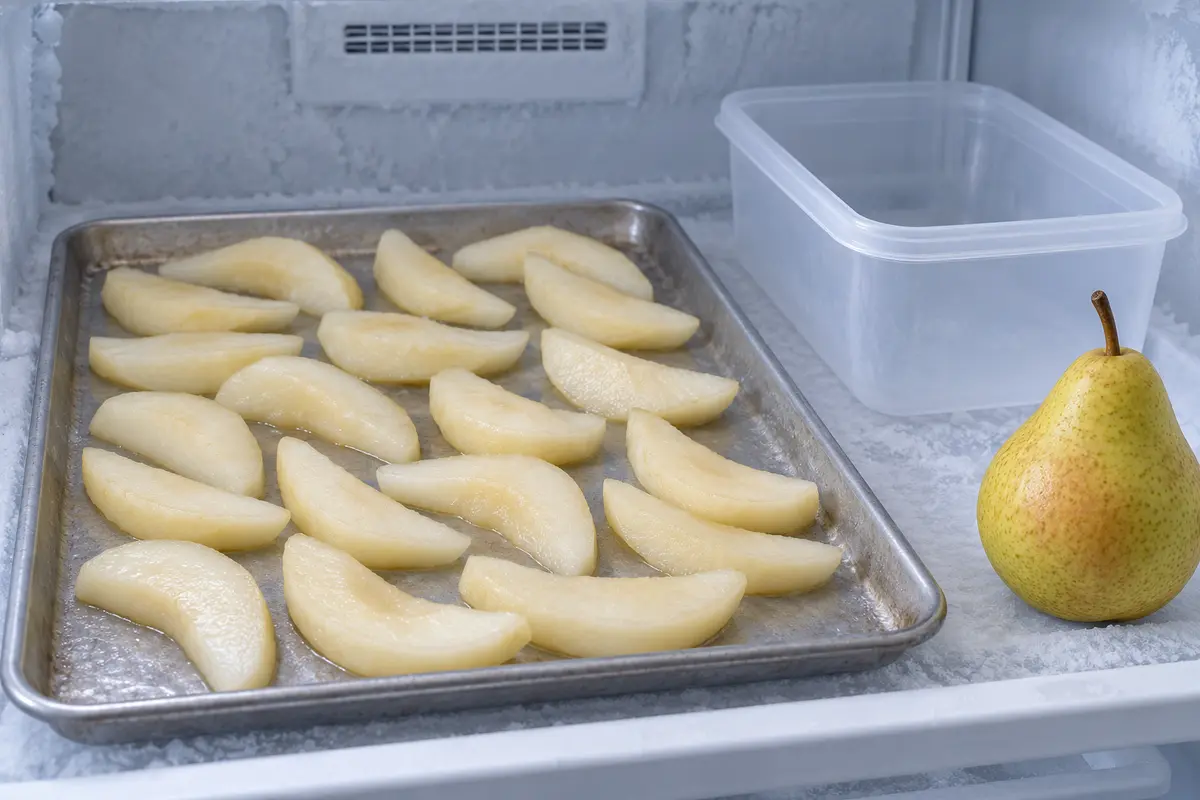
Freezing Pear
General preservation or storage guidance
Firm, non-mealy pears freeze well in a syrup pack; the syrup helps protect their colour and texture, though thawed fruit will be softer.
Method
- Choose full-flavoured pears that are crisp and firm rather than mealy. Wash, peel and core them; cut medium pears into twelfths and large pears into sixteenths.
- Prepare a cold 40% sugar syrup using the tested ratio of 2¾ cups sugar to 4 cups water. Bring the syrup to a boil in a saucepan.
- Add the pear pieces to the boiling syrup and heat for 1–2 minutes, depending on their size. Drain the fruit and cool it promptly.
- Pack the pears into freezer containers and cover with cold 40% syrup, leaving the headspace required by the container. A small piece of crumpled freezer paper can keep fruit submerged.
- Seal and freeze promptly. Thaw in the refrigerator or cook from frozen; do not refreeze thawed fruit.
Storage
Freezer at −18°C or colder · Keep continuously frozen; no exact quality period stated
Sources and scope
- Freezing Pears — National Center for Home Food Preservation
Method-specific source recorded in the prior content audit
- Syrups — National Center for Home Food Preservation
Method-specific source recorded in the prior content audit
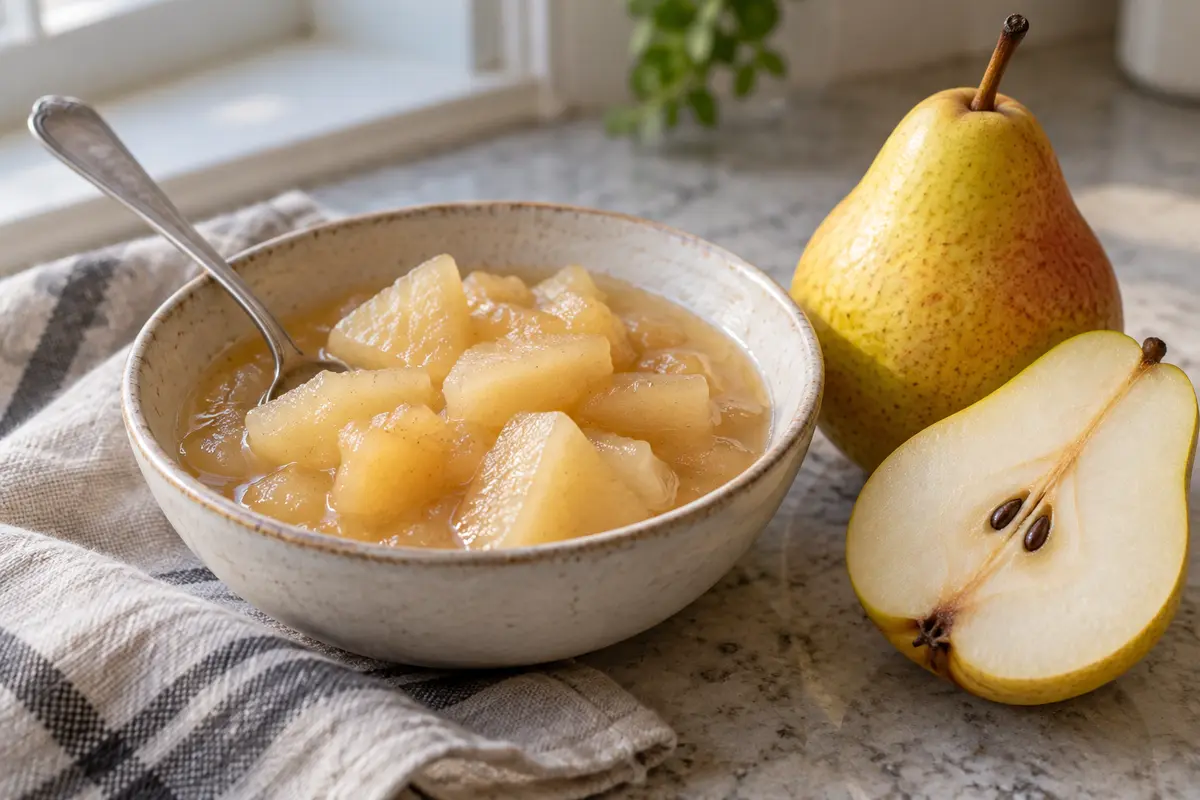
Pear Compote
General preservation or storage guidance
Gently cook prepared pears until tender for a spoonable compote.
Method
- Wash pears, peel if desired, halve, core and cut into even chunks.
- Put the fruit in a saucepan with a small splash of water; add sugar or spices to taste, not as a preserving ratio.
- Cover and cook gently, stirring occasionally, until tender; add a little water if the pan becomes dry.
- Mash for a smooth sauce or leave the fruit in pieces for compote.
- Divide into shallow covered portions and cool quickly; refrigerate within 2 hours and eat within 48 hours, or freeze.
Storage
Covered portions in the refrigerator or freezer · Refrigerate cooked food within 2 hours; eat within 48 hours or freeze.
Sources and scope
- How To Chill Freeze And Defrost Food Safely — UK Food Standards Agency
Method-specific source recorded in the prior content audit
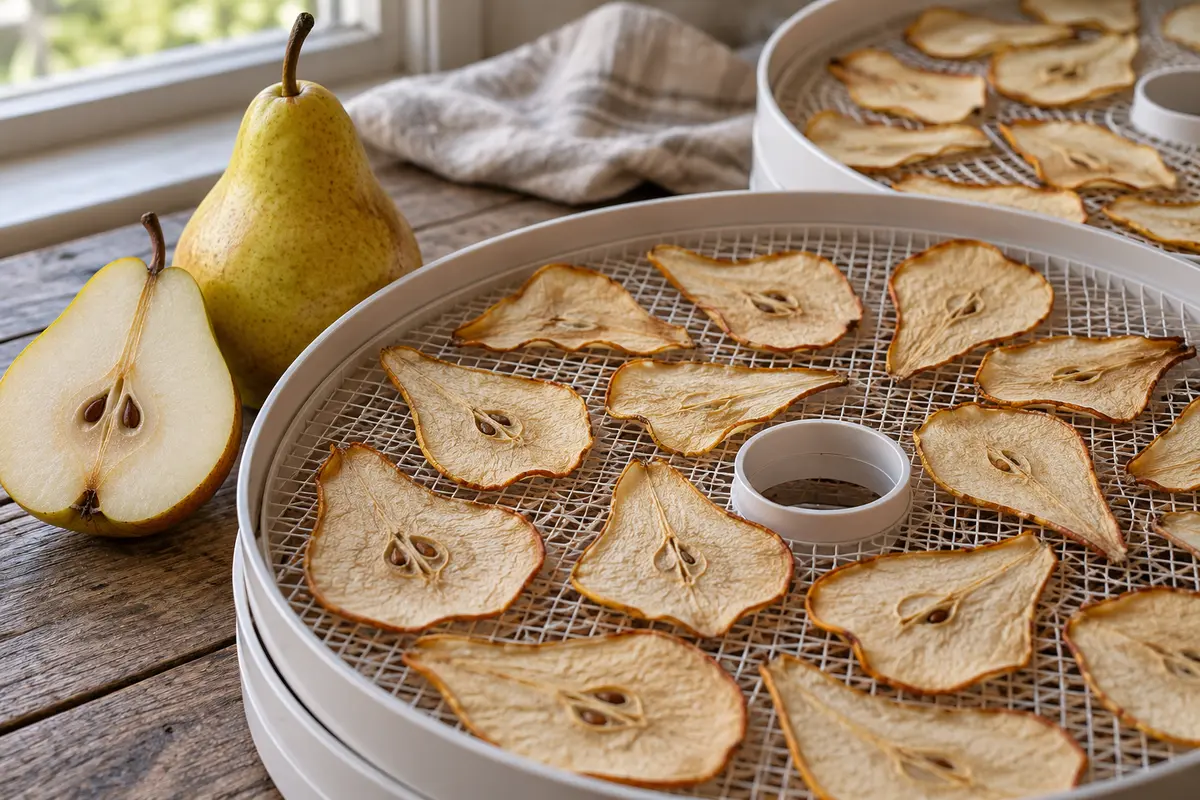
Drying Pear
General preservation or storage guidance
Pears can be dehydrated in evenly prepared pieces for later cooking.
Method
- Wash pears, core and cut into even 5–6 mm rings; peel only if preferred.
- Arrange in a single layer on dehydrator trays with space for airflow; do not overlap pieces.
- Dry at the appliance’s fruit setting and rotate trays if needed; check the thickest piece. Fruit should be pliable without wet or sticky patches.
- Cool completely; condition in a loosely packed sealed jar for 7–10 days, shaking daily and checking for condensation. Return damp pieces to the dehydrator.
- Pack airtight in small amounts and store cool, dry and dark; discard mouldy food.
Storage
Cool, dry, dark place in an airtight container · No exact storage period stated; check for moisture
Sources and scope
- Drying Fruits — University of Minnesota Extension
Method-specific source recorded in the prior content audit