
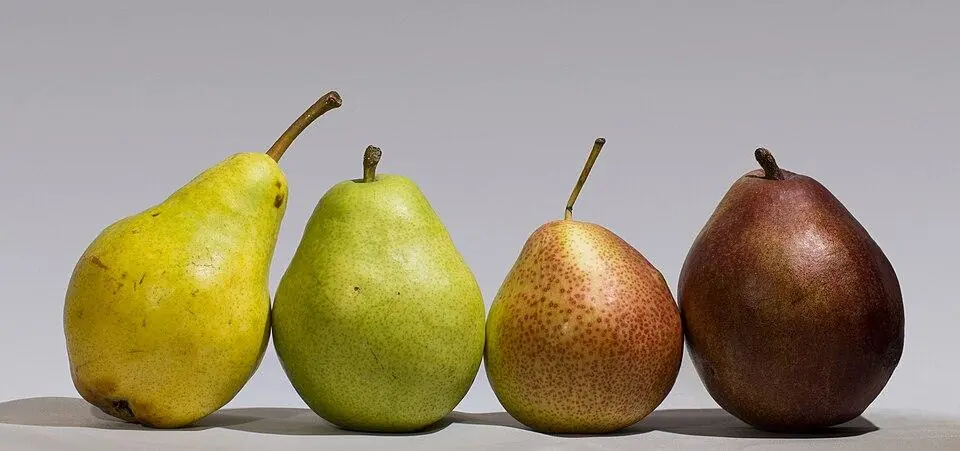
Choose a pear for your space and climate
Pears need a long season and a sheltered, sunny position to flower and ripen well in the UK. A warm wall suits a fan-trained tree; dwarfing rootstocks can suit a small plot but may need permanent staking and reliable moisture. Check the mature size, soil preference, harvest season and whether the cultivar is suitable for your region before buying. Pears often flower earlier than apples, so avoid frost pockets where blossom can be damaged.
Most pear cultivars need pollen from another compatible pear flowering at the same time. Some are self-fertile, but a compatible partner often improves fruit set. Check flowering groups and pollination information; simply planting two pears does not guarantee compatibility. A few cultivars are triploid and require two other suitable pollinators. Bees and other insects must be active during bloom.
Plant and establish the tree
Plant bare-root trees while dormant, commonly from late autumn to early spring, when the soil is workable. Container-grown trees can be planted at other times if watered carefully. Pears prefer fertile, reasonably deep soil that does not dry out quickly. Avoid waterlogged ground and sites exposed to strong winds.
Dig a wide hole, spread roots naturally and keep the graft union above the soil. Backfill with the excavated soil, firm gently, water thoroughly and stake according to the rootstock and exposure. Mulch with mature compost but leave a gap around the trunk. Water new trees in dry weather for the first few seasons, especially during fruit growth, and keep grass from competing close to the young tree.
Prune, thin and manage problems
Pruning depends on whether the pear is a bush tree, cordon, fan or another trained form. Young trees may need formative pruning to build a balanced framework. Established free-standing pears are commonly pruned in winter while dormant, whereas trained restricted forms often need summer pruning to control extension growth. Use clean sharp tools and avoid removing large amounts at once; vigorous regrowth can follow severe pruning.
Thin a heavy set of fruitlets in early summer if branches are overloaded, leaving a sensible spacing rather than allowing many pears to press together. Inspect for pear midge, aphids, scab, canker and damaged or rotting fruit. Remove fallen fruit and diseased material, keep airflow through the canopy and use barriers only where they can be secured safely. Persistent dieback or canker needs diagnosis before major cuts.
Pick and ripen pears correctly
Unlike many apples, most pears are picked while still firm and ripened indoors. Harvest timing varies with cultivar and weather. A fruit that lifts easily with an upward twist and separates cleanly is a useful sign; do not wait for every pear to soften on the tree, because some cultivars can become gritty or overripe. Test one or two fruits first and keep notes for the next season.
Handle fruit gently and place it in a cool room to ripen. Check frequently because pears can change from firm to ready quickly. Refrigerate ripe pears or use them promptly. Store only undamaged fruit in a cool, airy place and inspect regularly; storage life varies substantially between cultivars.
Common mistakes
- Choosing a large rootstock or unsuitable cultivar before checking the available space and local season.
- Assuming any second pear will pollinate the first without checking flowering group and compatibility.
- Letting young trees dry out, or planting into a frost pocket with exposed early blossom.
- Leaving all pears to soften on the tree instead of testing and picking at the correct stage.