
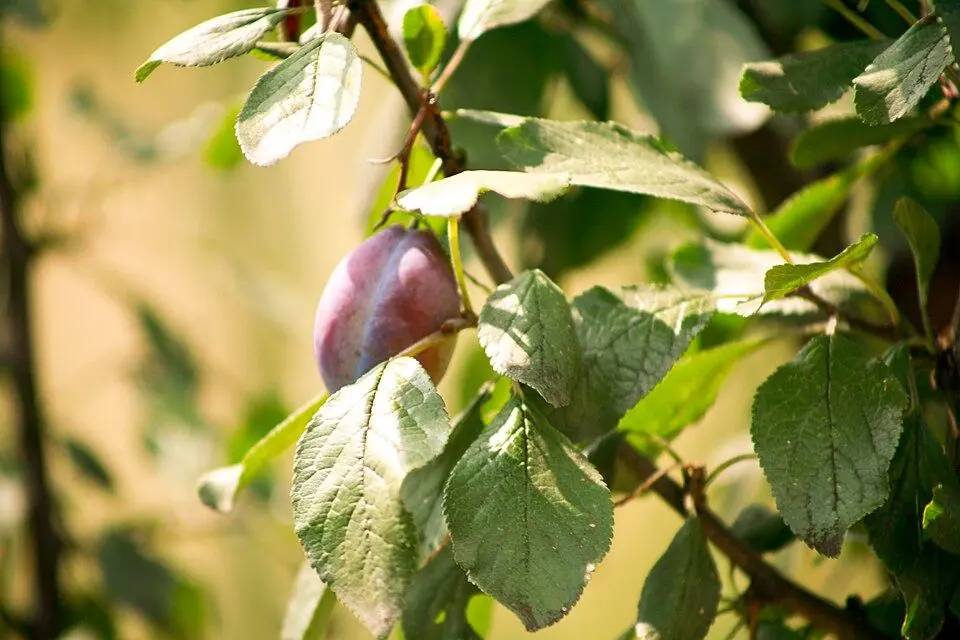
Choose a tree that fits the site
Plum trees need more room than a vegetable bed, so check the eventual size of the rootstock and training form before buying. A compact rootstock, fan or cordon can suit a small garden; a vigorous tree needs more space. Many plums are self-fertile, but some need a compatible pollination partner. Check the named cultivar before purchase.
Plant bare-root trees while dormant, generally November to March when the soil is not frozen or waterlogged. Container trees can be planted at other mild times. Choose full sun, shelter from strong winds and soil that drains well. Set the graft union above the soil, stake young trees and keep a weed-free mulch ring around the trunk.
Water and care for young trees
Water deeply during the first few summers, particularly in dry spells and while fruit is swelling. Mulch annually but leave a gap around the trunk to reduce the risk of rot. Avoid excessive nitrogen feeding, which can produce soft shoots and a dense canopy.
If the tree carries a very heavy crop, thin some small fruitlets after the natural early-summer drop. This can reduce branch strain and help remaining fruits size up. Support a heavily laden branch with a prop rather than waiting for it to split.
Prune in summer, not in winter
Prune plums and other stone fruit in summer, when warm, dry conditions reduce the risk of silver leaf entering pruning wounds. Remove dead, damaged or crossing branches and keep a balanced framework. Avoid routine hard pruning; large cuts can stress the tree and encourage disease.
For a fan-trained tree, tie in suitable young branches and remove growth that crowds the centre. Use sharp, clean tools and avoid pruning in wet weather. If a large branch must be removed, make a careful cut at the branch collar and seek experienced advice for substantial structural work.
Protect blossom and harvest ripe fruit
Late frost can damage blossom, particularly in cold pockets. A sheltered site and suitable cultivar help, but a tree in open ground cannot always be protected. Avoid insecticides when flowers are open, and maintain nearby flowering plants for pollinators. Secure fruit netting on a frame where birds take the crop, checking it regularly for trapped wildlife.
Pick plums when the colour is developed and the fruit gives slightly to a gentle touch. Handle them carefully because bruises speed deterioration. Eat soon, chill briefly or freeze prepared fruit. Remove brown-rot fruit promptly and dispose of it rather than leaving it beneath the tree.