
Freezing Plum
General preservation or storage guidance
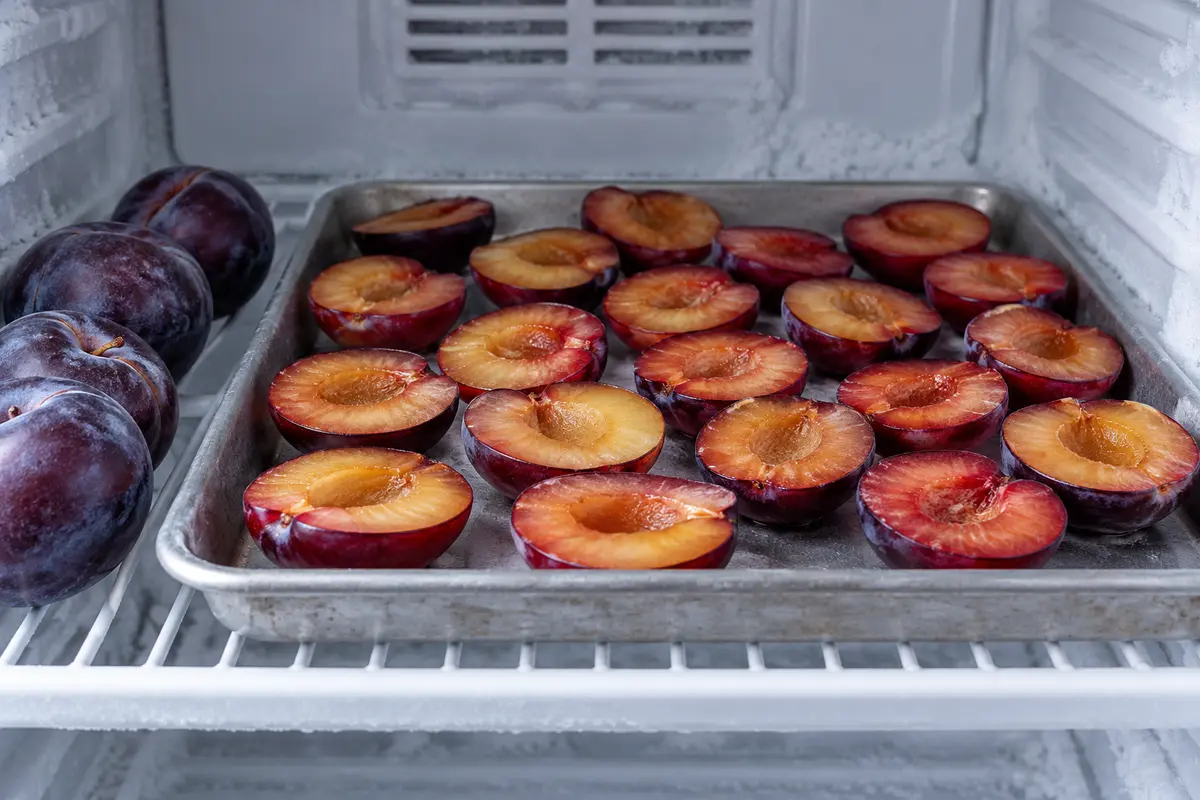
Pitted plum halves or wedges can be tray-frozen separately, making it easy to measure portions for pies, compote and other cooked dishes.
Method
- Choose sound, ripe plums; wash and dry them, remove stalks and stones, then halve or cut into wedges.
- Line a baking tray and arrange the plum pieces in a single layer with space between them so they do not freeze into one solid block.
- Freeze the tray until the pieces are firm. Work promptly so the fruit does not begin to thaw.
- Transfer the frozen plums to labelled freezer bags or rigid containers, press out excess air, seal and return them to the freezer.
- Use from frozen in cooking or thaw in the refrigerator. The flesh will be softer after thawing; do not refreeze thawed fruit.
Storage
Freezer at −18°C or colder · Keep continuously frozen; no exact quality period stated
Sources and scope
- Fruits — National Center for Home Food Preservation
Method-specific source recorded in the prior content audit
Plum Compote
General preservation or storage guidance
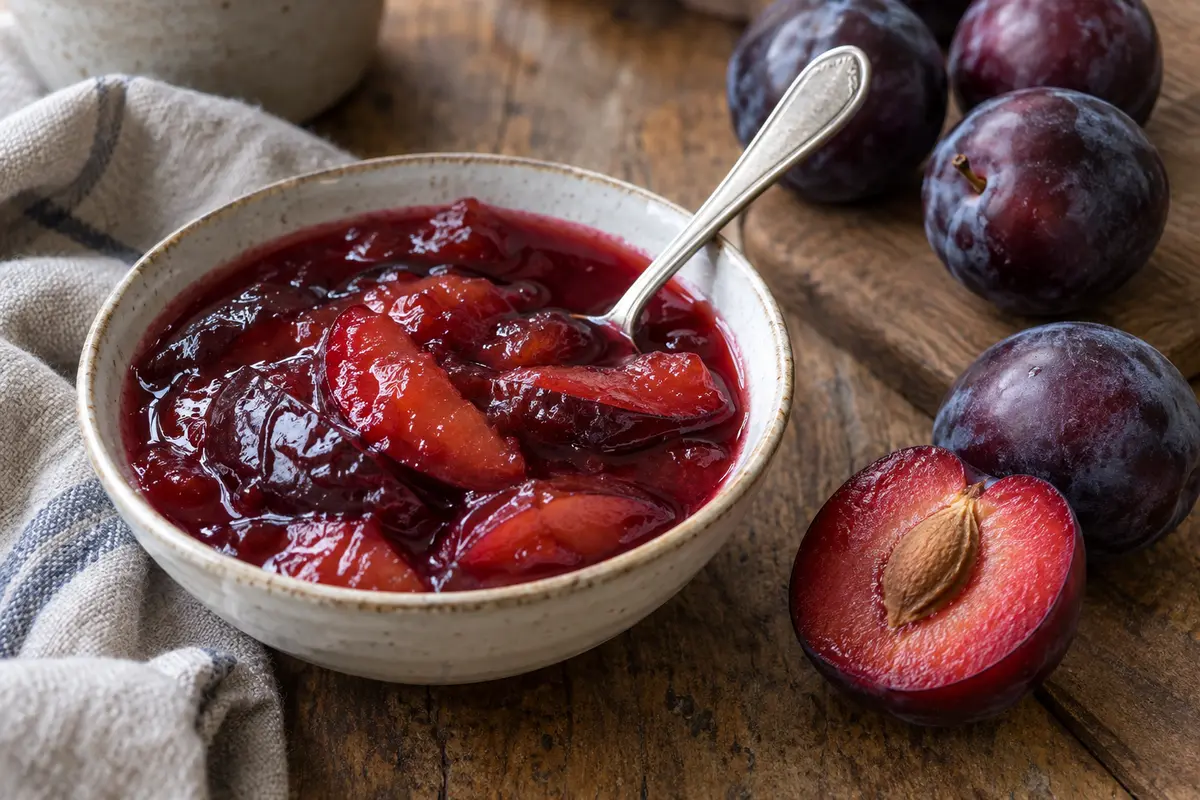
Gently cook prepared plums until tender for a spoonable compote.
Method
- Wash plums, halve and remove stones.
- Put the fruit in a saucepan with a small splash of water; add sugar or spices to taste, not as a preserving ratio.
- Cover and cook gently, stirring occasionally, until tender; add a little water if the pan becomes dry.
- Mash for a smooth sauce or leave the fruit in pieces for compote.
- Divide into shallow covered portions and cool quickly; refrigerate within 2 hours and eat within 48 hours, or freeze.
Storage
Covered portions in the refrigerator or freezer · Refrigerate cooked food within 2 hours; eat within 48 hours or freeze.
Sources and scope
- How To Chill Freeze And Defrost Food Safely — UK Food Standards Agency
Method-specific source recorded in the prior content audit
Plum Jam
General preservation or storage guidance
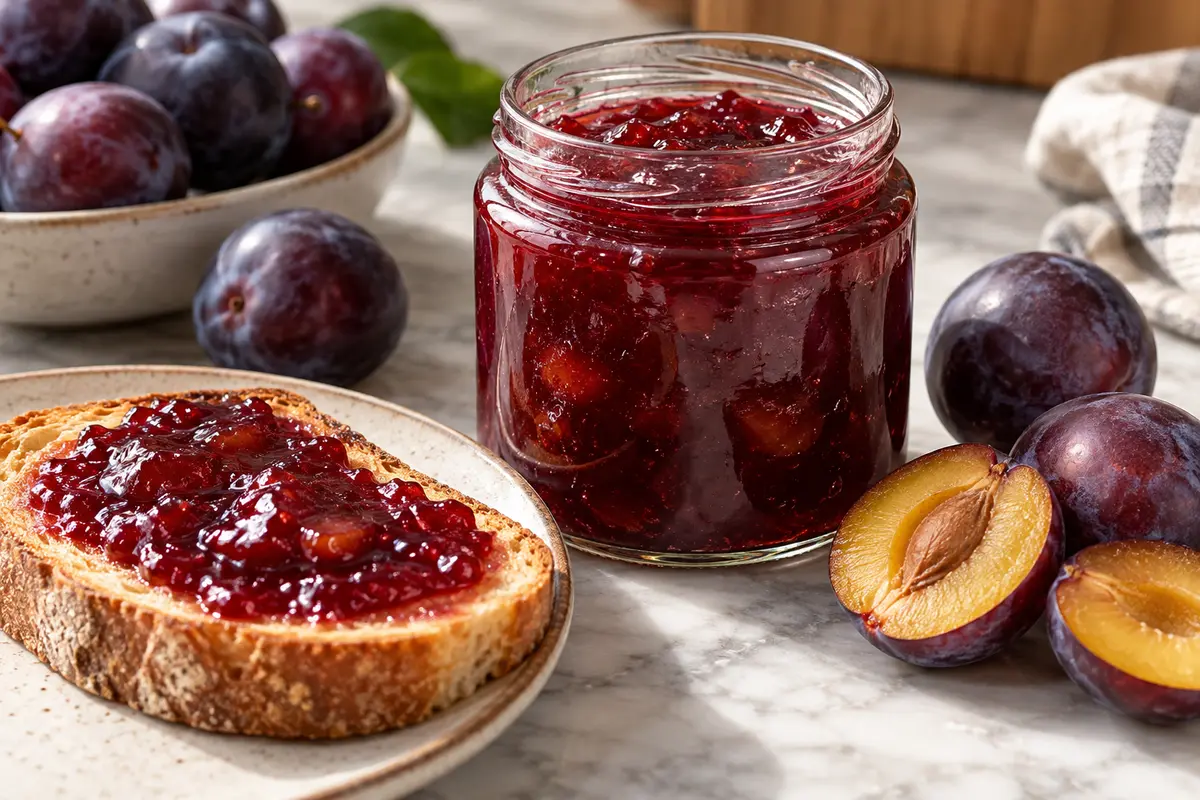
This tested no-added-pectin plum jam uses a fixed fruit, sugar, water and lemon-juice formula; follow its quantities and boiling-water process exactly for a cupboard-stored preserve.
Method
- For one batch, measure 2 US quarts (about 4 lb / 1.8 kg) chopped tart plums, 6 US cups sugar, 1½ US cups water and ¼ US cup lemon juice. Do not change the proportions or batch size.
- Wash the plums, remove the stones and chop the flesh. Combine all four measured ingredients in a large pan and heat slowly, stirring until the sugar dissolves.
- Bring the mixture to a boil, then cook rapidly, stirring constantly to prevent scorching, until it reaches the jellying point: 8°F (about 4.5°C) above the local boiling point of water, or 220°F (about 104°C) at sea level.
- Fill hot, sterile half-pint or pint jars, leaving ¼ inch (6 mm) headspace. Wipe the rims, fit prepared two-piece lids and process in a boiling-water canner for the tested time: 5 minutes up to 1,000 ft (305 m), 10 minutes at 1,001–6,000 ft (306–1,829 m), or 15 minutes above 6,000 ft (1,829 m).
- Cool the jars undisturbed, check each seal and refrigerate any jar that did not seal. Store sealed, processed jars in a cool, dark place; refrigerate after opening.
Storage
Store sealed, correctly processed jars in a cool, dark place; refrigerate after opening · Use the tested recipe’s storage guidance; no extra duration is added here
Sources and scope
- Plum Jam Without Pectin — National Center for Home Food Preservation
Method-specific source recorded in the prior content audit
- Using Boiling Water Canners — National Center for Home Food Preservation
Method-specific source recorded in the prior content audit
OSU/Ball Plum Sauce
Complete procedure from the cited tested source
A complete Ball Blue Book plum-sauce alternative reproduced by Oregon State University Extension. It is a distinct sauce recipe, not plum chutney.
Method
- For about four pint jars, measure 4 lb plums (about 12 large); 2 cups light brown sugar; 1 cup granulated sugar; ¾ cup chopped onion; 2 tablespoons mustard seed; 2 tablespoons finely chopped green chilli peppers; one 1 × 1¼ inch piece fresh ginger; 1 tablespoon salt; 1 minced garlic clove; and 1 cup cider vinegar labelled at least 5% acidity. Do not change ingredients or proportions.
- Wash and drain plums and chillies. Halve and pit plums, remove fibrous flesh and chop. Peel and chop the onion, measure ¾ cup. Remove chilli stems and seeds, finely chop and measure 2 tablespoons. Peel and finely mince the ginger.
- Combine all ingredients except the plums in a large saucepan. Bring to a boil over medium-high heat, stirring until sugar dissolves. Reduce to a gentle boil, add chopped plums and cook until the sauce is thick and syrupy, as directed in the source.
- Pack the hot sauce into hot pint jars, leaving ½ inch headspace. Wipe rims, centre lids and tighten bands fingertip-tight. The OSU text contains an unrelated line about syrup over pears; this plum-sauce recipe does not include that step.
- Ensure water covers jars by 1 inch and bring the canner to a rolling boil. Process pint jars for 20 minutes at 0–1,000 ft; add 5 minutes at 1,001–3,000 ft, 10 minutes at 3,001–6,000 ft, 15 minutes at 6,001–8,000 ft, and 20 minutes at 8,001–10,000 ft. Use only the source jar size and elevation schedule.
- Turn off heat, remove the canner cover, wait 5 minutes, then remove jars and cool for 12 hours. Check seals. Refrigerate any unsealed jar; store sealed, processed jars as directed in the cited source and refrigerate after opening.
Storage
Cool, dark storage for properly processed sealed pint jars; refrigerate after opening or if unsealed · Follow the cited source; no additional shelf-life claim is made
Sources and scope
- Preserving plums and prunes — Plum Sauce — Oregon State University Extension Service; Ball Blue Book recipe
Exact plum sauce formulation and pint-jar process adapted from Ball Blue Book, 38th edition. The page includes an unrelated pear-fill sentence, explicitly excluded here.
- Storing Home Canned Foods — National Center for Home Food Preservation / USDA
General guidance for storage of correctly processed home-canned jars; does not replace the recipe process.