
Cold Storage for Potatoes
General preservation or storage guidance
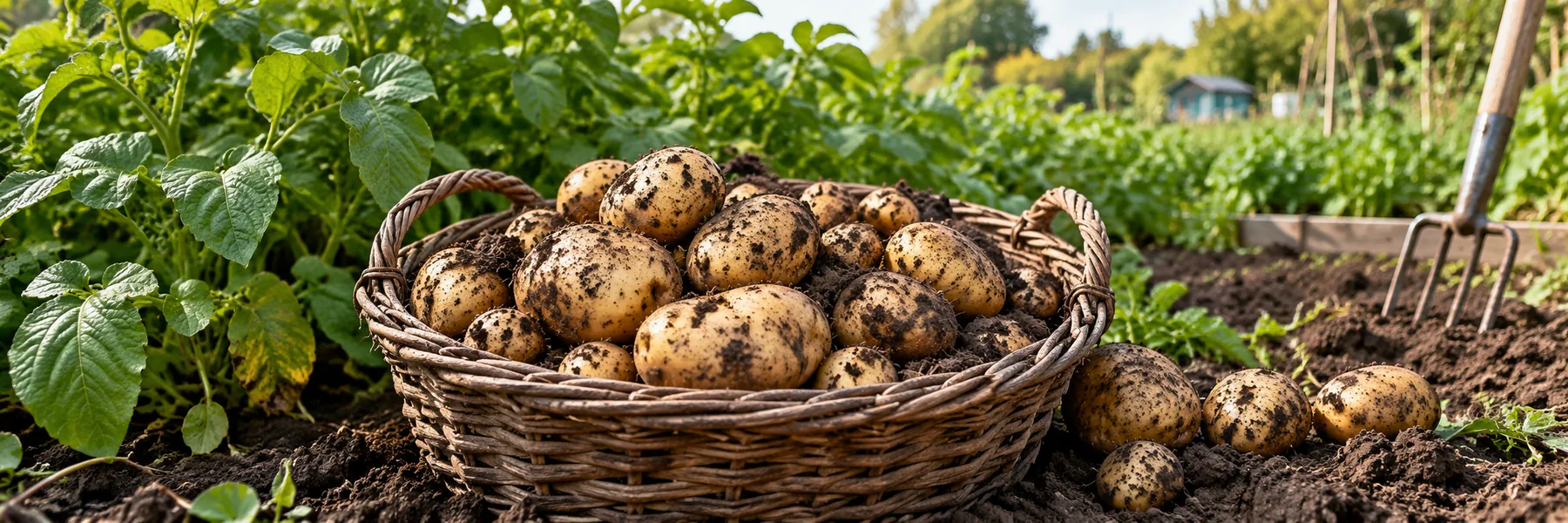
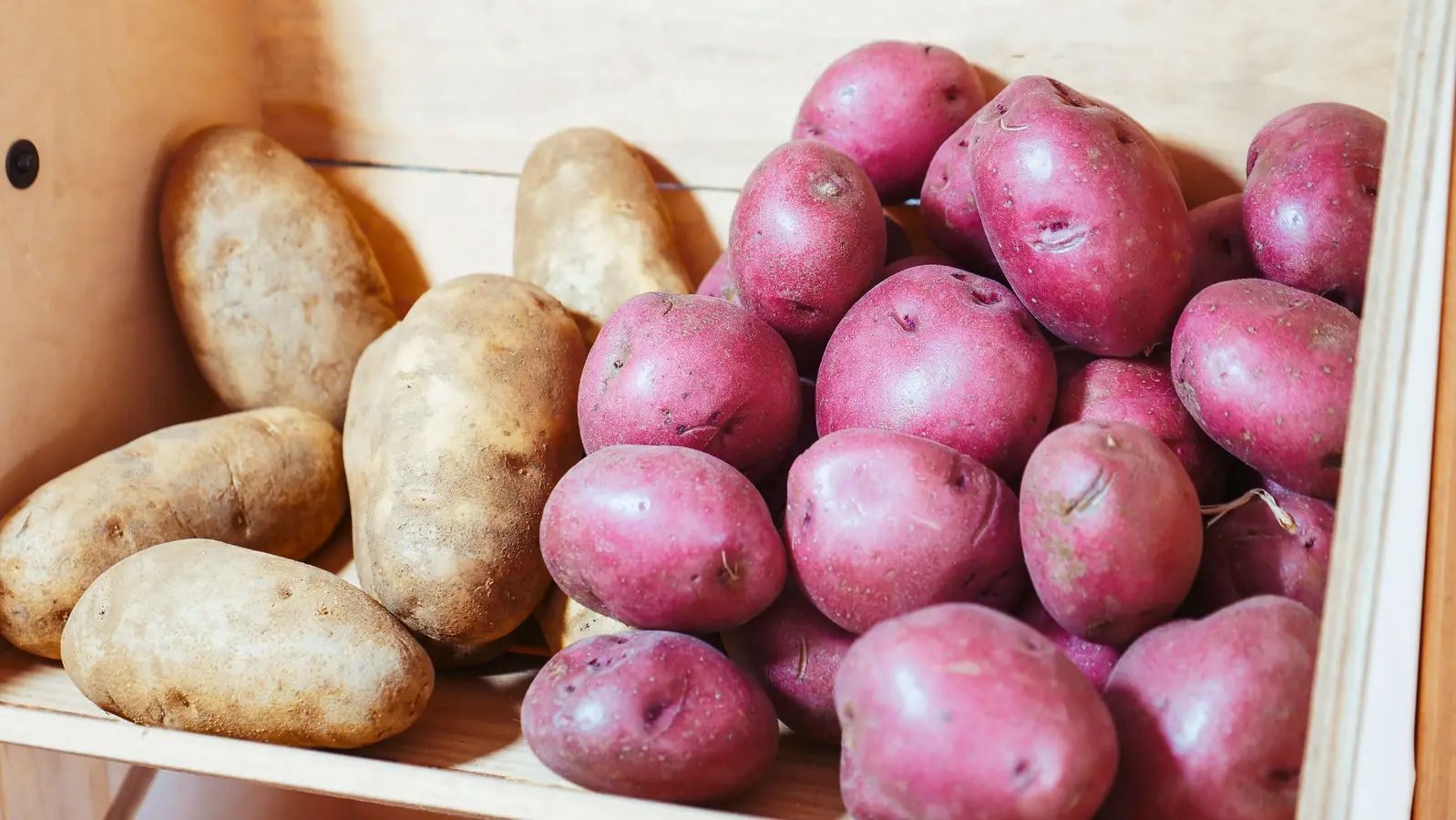
Mature potatoes keep best after their skins have set, stored dry, dark and frost-free; early potatoes are usually eaten soon after lifting.
Method
- For longer storage, choose mature potatoes and keep cut, bruised, diseased or green tubers out of the stored crop; use early potatoes promptly.
- Brush away loose soil; do not wash potatoes intended for storage. Let damp tubers dry in a shaded, airy place.
- Cure sound potatoes in a dark, ventilated place for 5–10 days so minor skin injuries can heal and the skin can set.
- Move the dry tubers into paper or hessian sacks or a ventilated tray, keeping them completely dark and protected from frost.
- Check the store regularly and remove any tubers that soften, rot, sprout heavily or turn green.
Storage
Cool, dark, frost-free store · Several months; inspect regularly
Sources and scope
- Root Vegetables Storing — Royal Horticultural Society
Method-specific source recorded in the prior content audit
- X5415e04 — Food and Agriculture Organization of the United Nations
Method-specific source recorded in the prior content audit
Freezing Prepared Potato
General preservation or storage guidance
Small new potatoes can be frozen after blanching; thawed potatoes are best used in cooked dishes.
Method
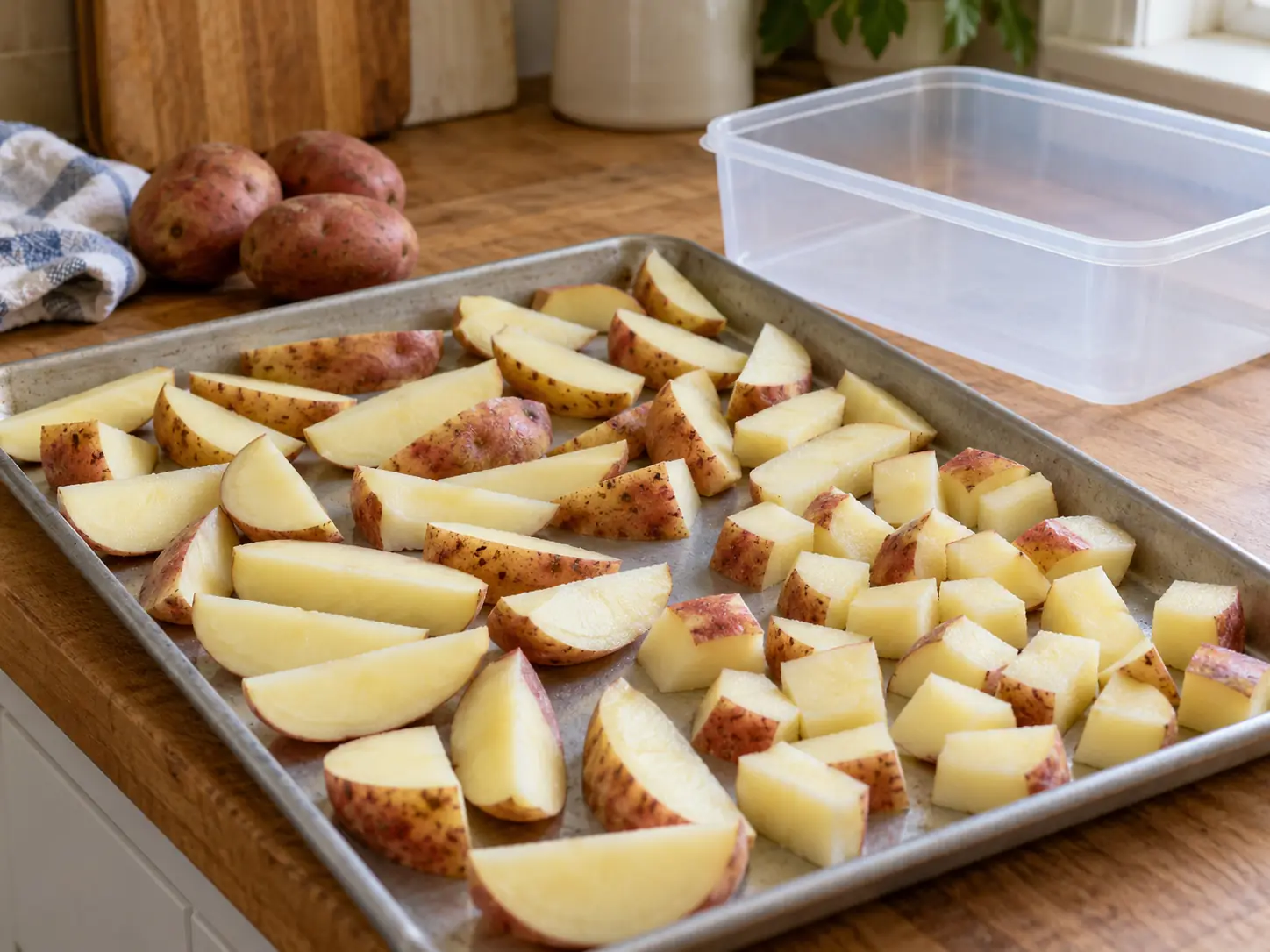
- Choose smooth, sound new potatoes of similar size; peel or scrape them and wash well.
- Bring a large pan of water to a full boil and blanch the potatoes for 3–5 minutes, depending on size. Start timing when the water returns to the boil.
- Cool promptly in cold water, then drain thoroughly.
- Pack whole or cut into freezer-safe containers, leaving about 1 cm expansion space; seal and label.
- Freeze promptly. Expect a softer texture after thawing and use the potatoes in cooked dishes.
Storage
Freezer · No method-specific quality period verified
Sources and scope
- Freezing New Irish Potatoes — National Center for Home Food Preservation
Method-specific source recorded in the prior content audit
Drying Potatoes
General preservation or storage guidance
Thin potato slices or strips are blanched before dehydration, then stored as a dry ingredient for soups and stews.
Method
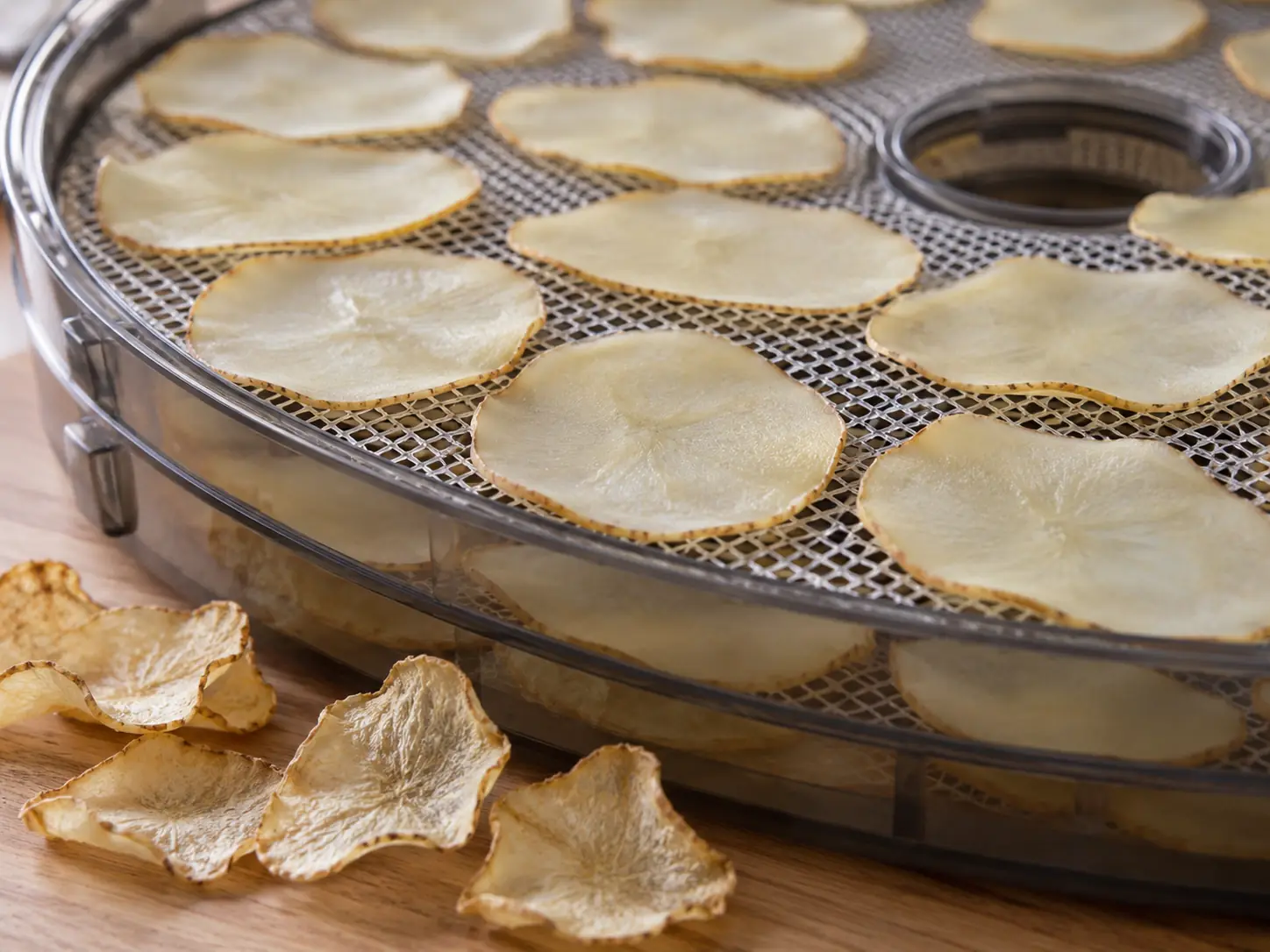
- Wash, peel and trim sound potatoes; cut into even 3 mm slices or narrow shoestring strips so they dry at a similar rate.
- Steam-blanch slices for 6–8 minutes or water-blanch them for 5–6 minutes, then drain well.
- Arrange in a single layer on dehydrator trays with space for air to circulate; do not overlap.
- Dry in a dehydrator for about 8–12 hours, checking the pieces as they approach the end; they should be dry and brittle, with no soft or damp centre. Oven drying can take up to twice as long and needs reliable low-temperature airflow.
- Cool completely before packing in clean, dry airtight containers. Store away from heat, light and moisture; inspect for condensation and discard mouldy food.
Storage
Airtight container in a cool, dry, dark place · No exact period stated; inspect for moisture during storage
Sources and scope
- Preserving Potatoes — National Center for Home Food Preservation
Method-specific source recorded in the prior content audit
- Food Dehydrators — National Center for Home Food Preservation
Method-specific source recorded in the prior content audit
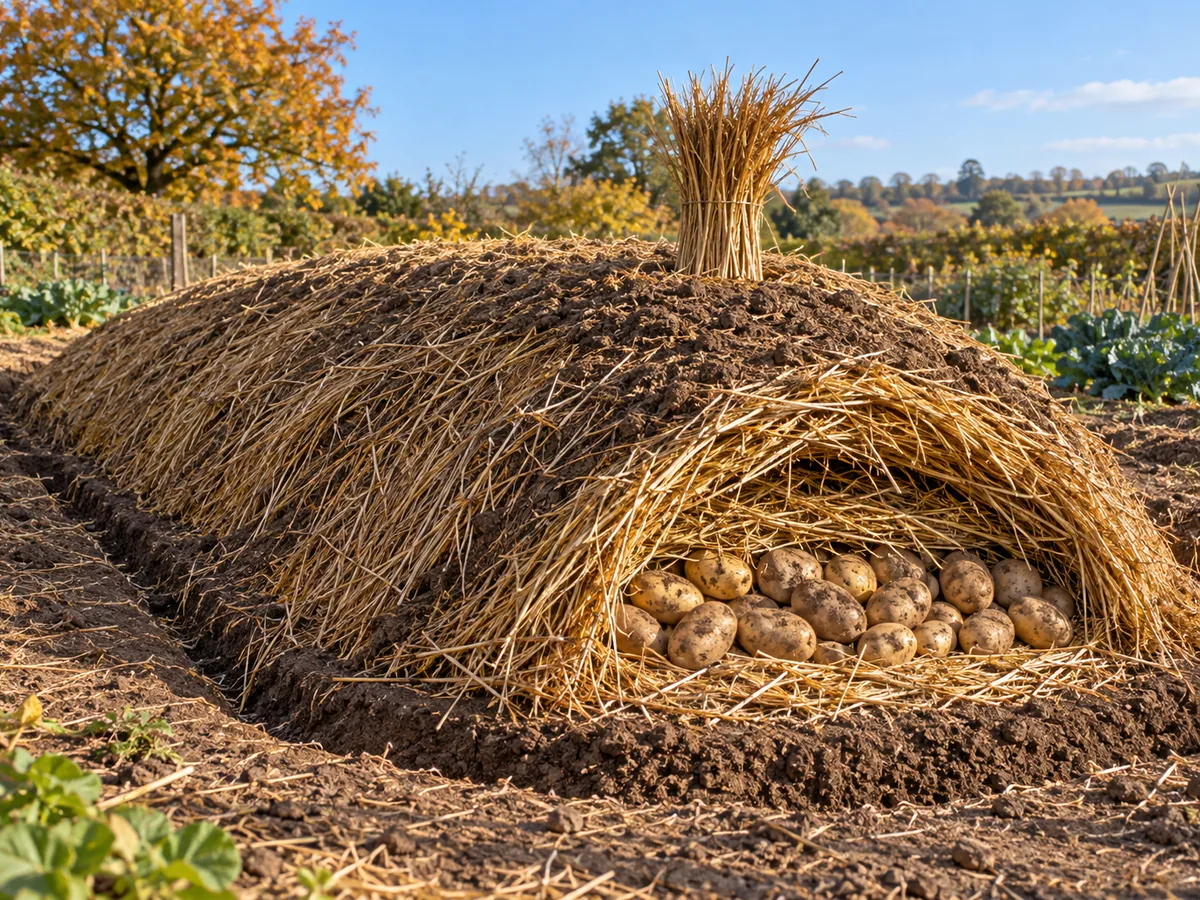
Clamping for Potatoes
General preservation or storage guidance
A clamp is an outdoor winter store for a large, sound maincrop harvest, insulated with straw and protected from rain and light.
Method
- Use mature, dry maincrop potatoes with set skins. Exclude green, wet, damaged or diseased tubers.
- Choose a sheltered, well-drained site; make a shallow drainage trench around the footprint so rain cannot pool beneath the heap.
- Lay a straw bed and form a broad, shallow pile of potatoes over a central ventilation channel. Keep the mound around 1 m high; widen it rather than building it higher.
- Cover the mound with a thick, even layer of clean dry straw, then cap it with soil to shed rain and exclude light. Leave the ventilation outlet clear.
- After heavy rain, frost or strong winds, check the cap and drainage without leaving the crop exposed. When opening the clamp, take only the amount needed and re-cover it promptly. Remove any rotting tubers.
Storage
Outdoor clamp on well-drained ground · Seasonal storage; inspect regularly and use the crop in rotation
Sources and scope
- Root Vegetables Storing — Royal Horticultural Society
Method-specific source recorded in the prior content audit
- X5415e04 — Food and Agriculture Organization of the United Nations
Method-specific source recorded in the prior content audit