
Growing at a glance
- Plant: first earlies around late March, second earlies early to mid-April and maincrops mid-April to early May; delay in cold or wet regions.
- Harvest: earlies from early to midsummer; maincrops from late summer into autumn when foliage naturally dies back.
- Spacing: roughly 30 cm for earlies and 35–40 cm for maincrops, with 60–75 cm between rows as a practical starting point.
- Position and soil: full sun in fertile, free-draining soil; avoid waterlogged ground.
- Water: during dry weather, especially as tubers bulk; containers need more frequent checks.
Choose seed potatoes and a useful crop window
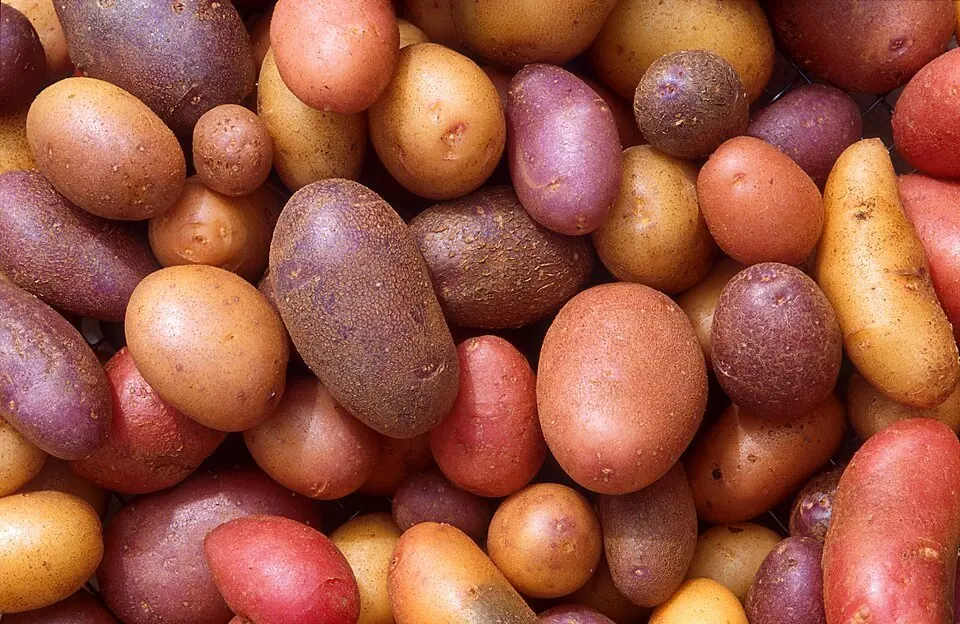
Potatoes are grown from certified seed tubers, not botanical seed. Choose first earlies for small new potatoes and an earlier bed turnover, second earlies for a later summer crop, or maincrops for larger tubers that can store. A variety’s disease resistance, texture and intended use matter as much as its label. Do not plant supermarket potatoes: their variety and disease status are uncertain.
Chitting means encouraging short, sturdy shoots in a cool, bright, frost-free place. It can advance an early crop but is optional, particularly for maincrops. In much of the UK, first earlies are planted around late March, second earlies in early to mid-April, and maincrops from mid-April to early May. Move later in cold or exposed areas and wait until soil is workable, not waterlogged.
- As a starting guide, space early tubers about 30 cm apart and maincrops about 35–40 cm apart; rows around 60–75 cm apart allow room to earth up. Follow the variety and growing method instructions.
- Containers are useful for a small crop, but need drainage, enough compost depth and regular watering.
Prepare the ground and plant
Choose a sunny bed with fertile, free-draining soil. Work in mature compost as part of bed preparation, not fresh manure immediately around tubers. Avoid ground where potatoes or tomatoes grew recently if you can rotate crops; this helps reduce the build-up of some pests and diseases. On heavy soil, use a raised bed or container if winter waterlogging is a problem.
Set tubers about 10–15 cm deep with shoots facing up, then cover with soil. Protect early shoots from late frost with soil, fleece or another suitable cover. As stems grow, draw soil up around them in stages, leaving the top leaves exposed. Earthing up protects young shoots and keeps developing tubers covered from light; it is not a guarantee of a larger harvest, and gardeners who cannot earth up can still grow potatoes successfully.
Water, feed and keep plants healthy
Water in dry spells, especially from flowering through tuber bulking. Containers need closer attention and may need watering even after rain because foliage can shed water away from the compost. Aim for steady moisture rather than alternating drought and flooding, which can lead to poor growth or tuber defects. Ground-grown crops usually need no routine fertiliser in reasonably fertile soil; on poor soil, use only a suitable product at the label rate. Heavy nitrogen can encourage excessive leaf growth.
Check leaves for late blight symptoms: dark, spreading patches and rapid collapse during warm, humid weather. If blight is confirmed, remove and dispose of infected haulm according to local guidance rather than composting it. Keep tubers covered, and inspect the crop for slug damage, wireworm or rot. Do not save seed from diseased plants. Rotation, clean seed and early action are more useful than trying to cure a badly infected crop.
Lift at the right stage and store safely
Lift first earlies once plants flower or once tubers have reached a useful size; gently feel under the plant and take what you need. Second earlies are generally lifted later in summer. Maincrops are usually ready when foliage yellows and dies back naturally, but the calendar and foliage can be affected by blight or weather. Choose a dry day and loosen soil with a fork set away from the stems to avoid spearing tubers.
For storage, let sound tubers dry briefly in a sheltered, airy place and brush off loose soil; do not wash them. Keep them in breathable sacks or boxes in a cool, dark, frost-free place, checking regularly and removing soft or rotting potatoes. Light can turn tubers green; green potatoes and green parts should not be eaten. Use damaged or early-lifted potatoes first rather than storing them for months.
Common mistakes to avoid
Planting into cold, saturated soil can delay growth and invite rot, while planting too early exposes shoots to frost. Chitting is helpful for some early crops but is not compulsory. Earthing up is useful protection from light and frost, not a substitute for watering during a dry spell. Do not use diseased tubers as seed or assume a blighted haulm is safe for a cool compost heap. Record variety, planting date and harvest date so next year’s plan reflects your own site.