
Curing Pumpkin
General preservation or storage guidance
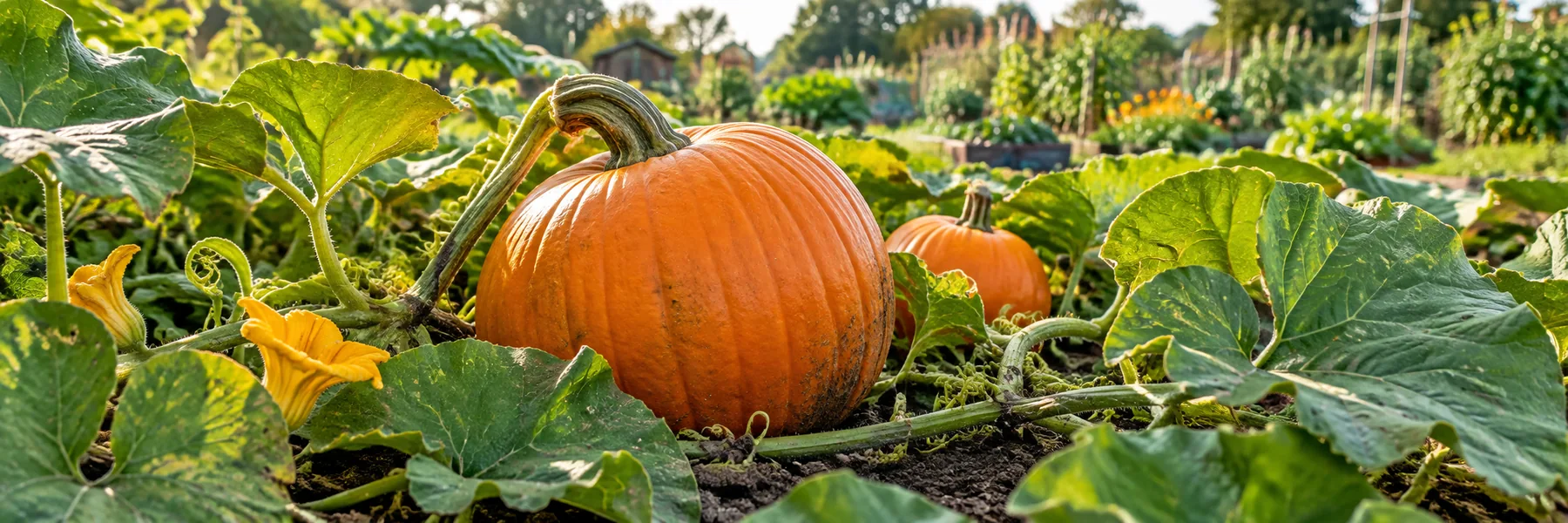
Curing a mature pumpkin hardens its rind and lets small harvest marks dry before the fruit moves into storage.
Method
- Choose a fully coloured pumpkin with a hard rind that does not dent under a fingernail; leave soft, deeply cut or bruised fruit for prompt use.
- Cut it from the vine with a sharp knife, leaving a generous length of stem attached. Handle by the body, not the stem.
- If conditions are warm and rain-free, cure it in the garden for 7–10 days on a dry surface. Bring it under cover if rain, damp weather or frost threatens.
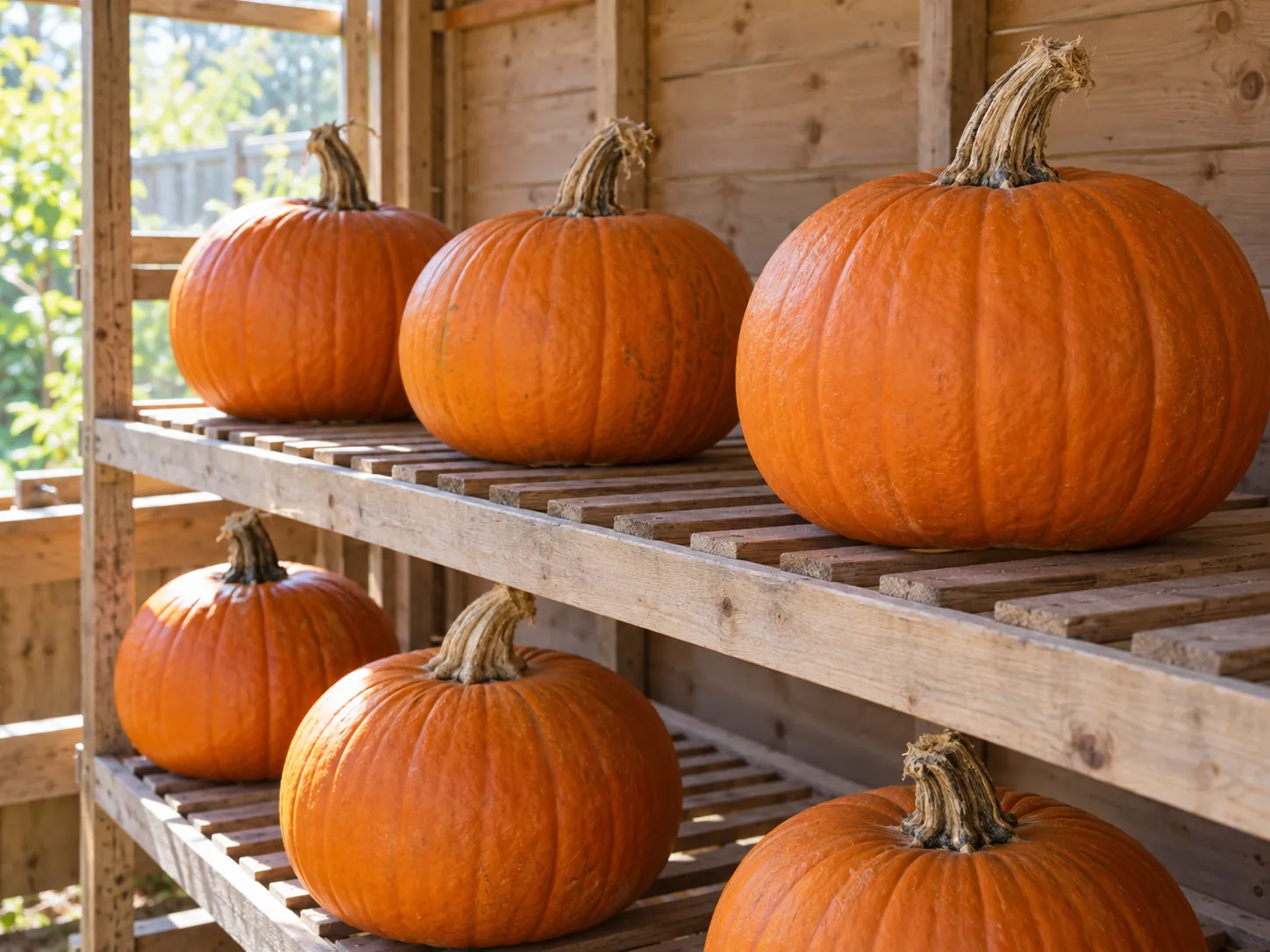
- In unsettled weather, cure indoors in a covered, airy place; leave space around each pumpkin and circulate dry air past the fruit.
- When the rind feels hard and minor nicks have dried, move it to the crop’s cool, dry storage place. Do not store wet or damaged pumpkins.
Storage
Warm, dry and well ventilated during curing; protect from rain and frost · Cure until the rind is firm and small cuts have dried
Sources and scope
- Harvesting And Storing Melons Squash And Pumpkins — University of Minnesota Extension
Method-specific source recorded in the prior content audit
- Sp 50 767 Preserving Pumpkins Winter Squash — Oregon State University Extension
Method-specific source recorded in the prior content audit
Cool Storage for Pumpkin
General preservation or storage guidance
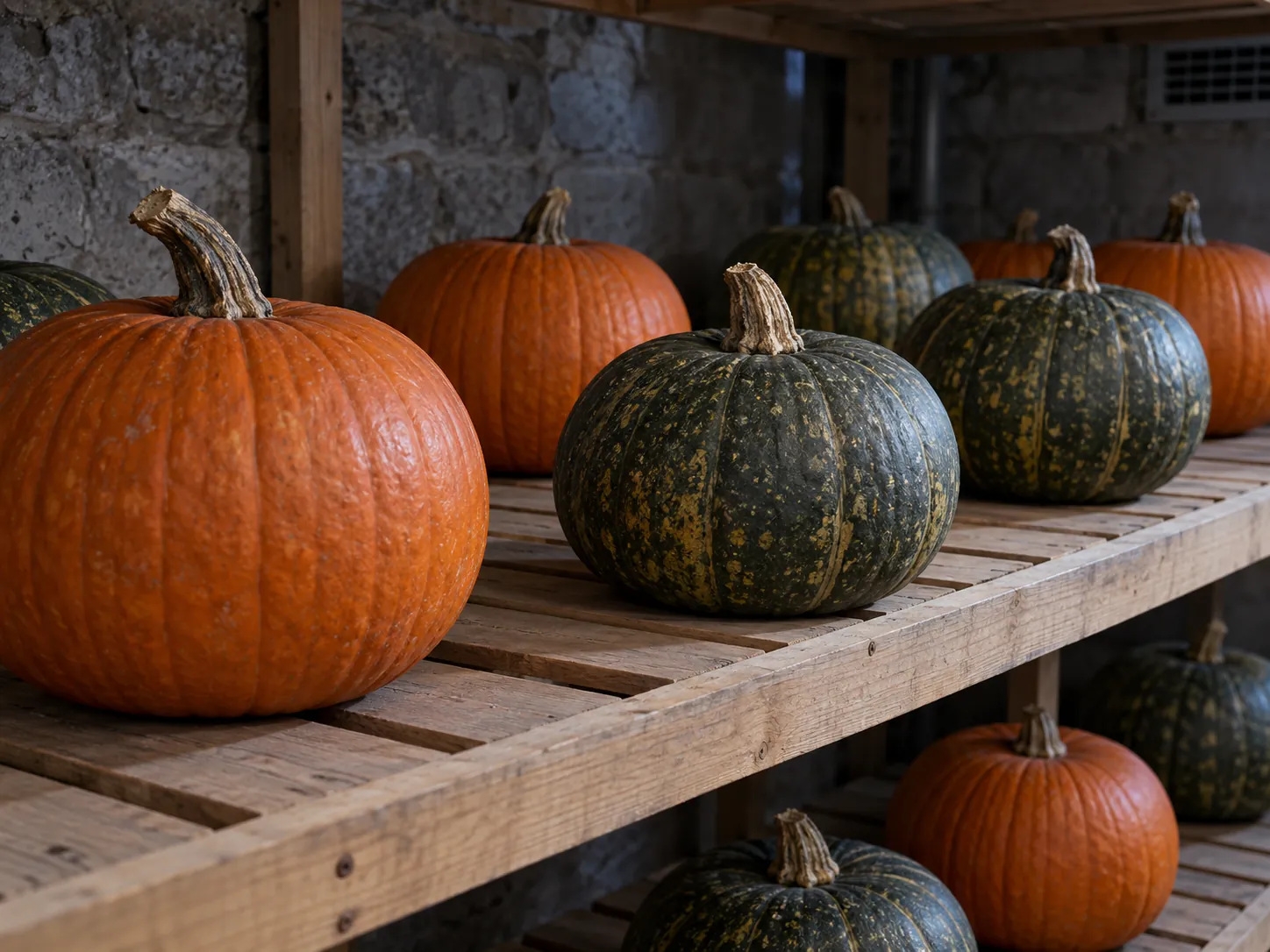
A cured, uncut pumpkin keeps best in a dry, ventilated store near 10–13°C; varieties differ, so inspect the fruit often.
Method
- Store only fully mature pumpkins with a hard rind and firm, unbroken stems; use bruised, cut or frost-damaged fruit first.
- Do not wash fruit for storage. Brush away loose dry soil and let any surface moisture dry before putting it away.
- Arrange pumpkins in one layer on a shelf or slatted tray so air can move around each fruit; avoid stacking or letting them touch if space allows.
- Keep the store dry and ventilated, around 10–13°C, and protect the crop from frost and damp condensation.
- Inspect weekly. Use a pumpkin promptly if a small area softens; discard fruit with spreading rot, mould or leakage.
Storage
Dry, ventilated store around 10–13°C; protect from frost · Variety-dependent, commonly 1–6 months under suitable conditions
Sources and scope
- Harvesting And Storing Melons Squash And Pumpkins — University of Minnesota Extension
Method-specific source recorded in the prior content audit
- Sp 50 767 Preserving Pumpkins Winter Squash — Oregon State University Extension
Method-specific source recorded in the prior content audit
Freezing Puree for Pumpkin
General preservation or storage guidance
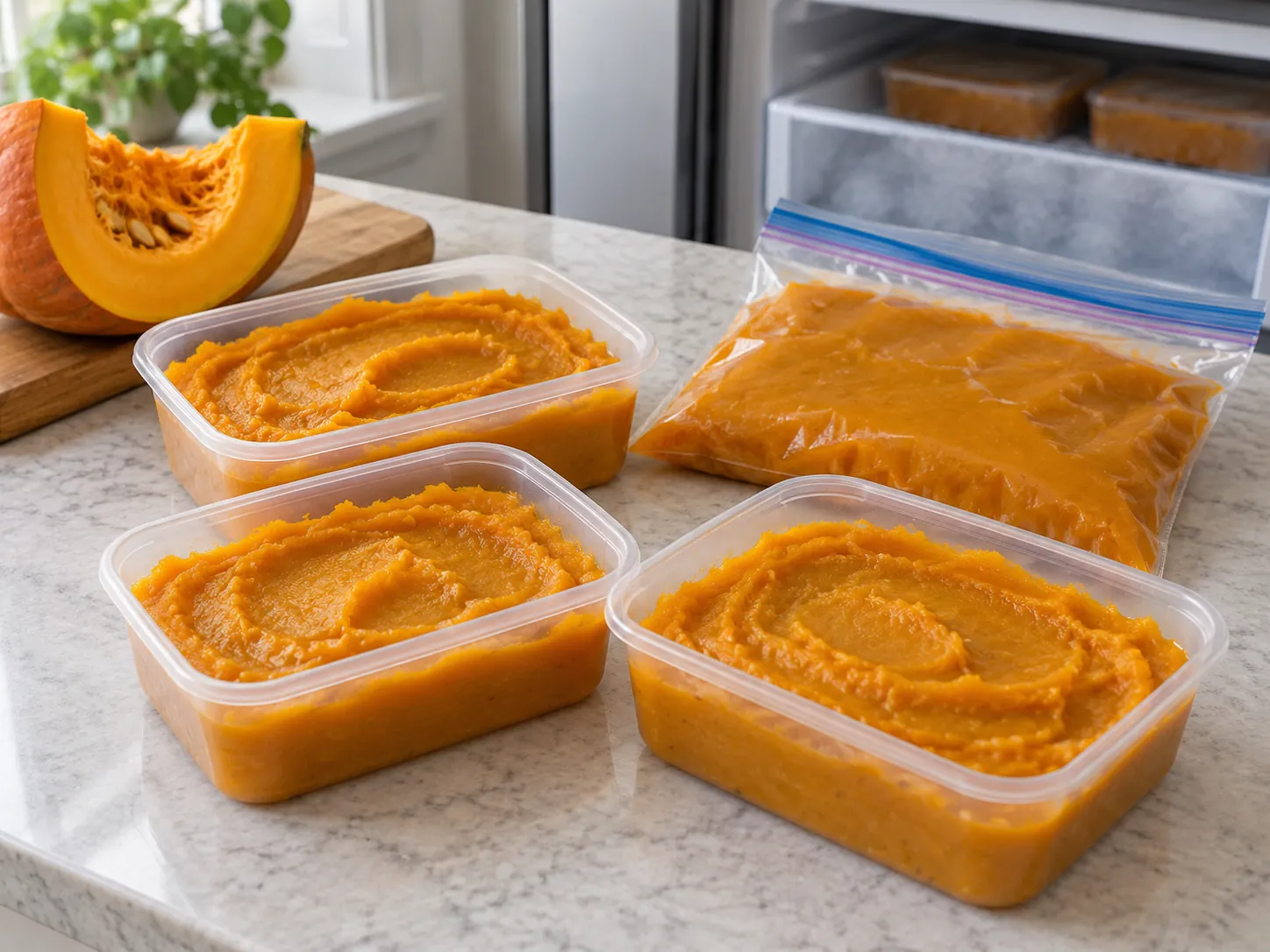
Cooked pumpkin purée freezes in measured portions for soups, baking and sauces; home-canned pumpkin purée is not recommended.
Method
- Choose a fully coloured, mature pumpkin with firm flesh. Wash the outside, cut into cooking-size wedges and remove seeds and stringy fibres.
- Roast, steam or boil the pieces until the flesh is completely tender; avoid adding cream, butter or other ingredients before freezing.
- Scoop the flesh from the rind and mash or purée until smooth. For food safety, cool promptly in shallow portions rather than leaving a deep pan at room temperature.
- Pack the cool purée into freezer-safe containers, leaving about 1 cm headspace for expansion, or use measured freezer bags laid flat.
- Seal, label and freeze promptly. Thaw in the refrigerator and use in cooked dishes; do not attempt to can this purée or store it in a sealed jar at room temperature.
Storage
Freezer at −18°C or colder · Keep continuously frozen; no exact quality period stated
Sources and scope
- Freezing Pumpkin — National Center for Home Food Preservation
Method-specific source recorded in the prior content audit
- Sp 50 767 Preserving Pumpkins Winter Squash — Oregon State University Extension
Method-specific source recorded in the prior content audit
Drying Pumpkin
General preservation or storage guidance
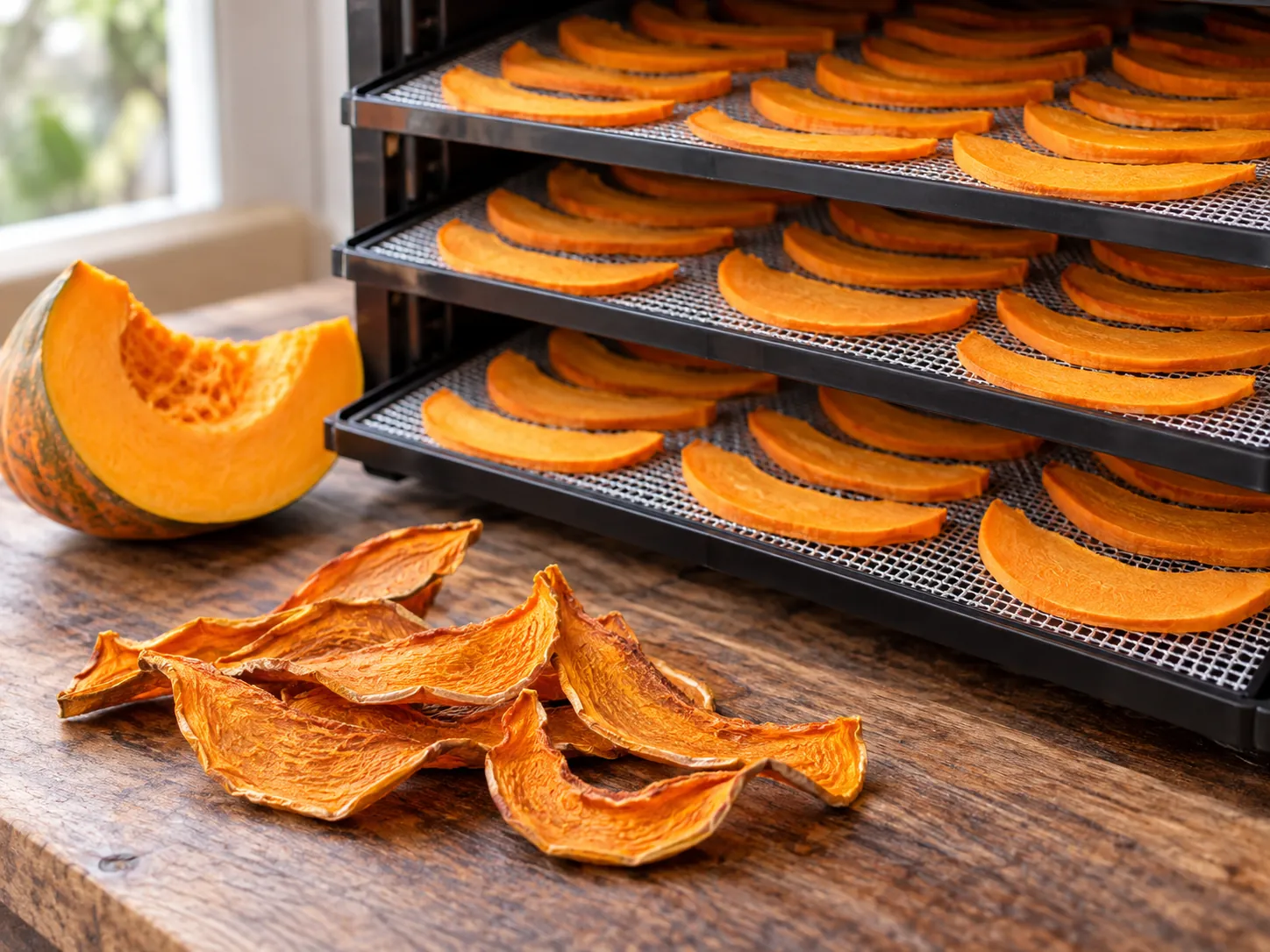
Thin, steam-blanched pumpkin strips dry into a compact ingredient for pies and savoury dishes; brittle dryness and post-drying conditioning help prevent moisture pockets.
Method
- Choose mature, sound pumpkin; wash the rind, cut it in half and remove seeds and stringy pulp. Peel the thin outer skin.
- Cut the flesh into even strips about 6 mm (¼ in) thick.
- Steam the strips for 2–3 minutes, until almost tender, then arrange in one layer on dehydrator trays without overlap.
- Dry at about 60°C (140°F) for 2–3 hours, then reduce to about 54°C (130°F) and continue until the strips are tough and brittle; allow roughly 10–16 hours total, depending on thickness and the dehydrator.
- Condition the fully dried strips in a large airtight container for 1 week, shaking daily. If moisture appears, return the pieces to the dehydrator and repeat conditioning. Store airtight in a cool, dry place and use within 1–2 months for best flavour.
Storage
Airtight container in a cool, dry place after conditioning · Oregon State advises using within 1–2 months at room temperature for best flavour
Sources and scope
- Sp 50 767 Preserving Pumpkins Winter Squash — Oregon State University Extension
Method-specific source recorded in the prior content audit
- Drying — University of Minnesota Extension
Method-specific source recorded in the prior content audit