
Curing Shallot
General preservation or storage guidance
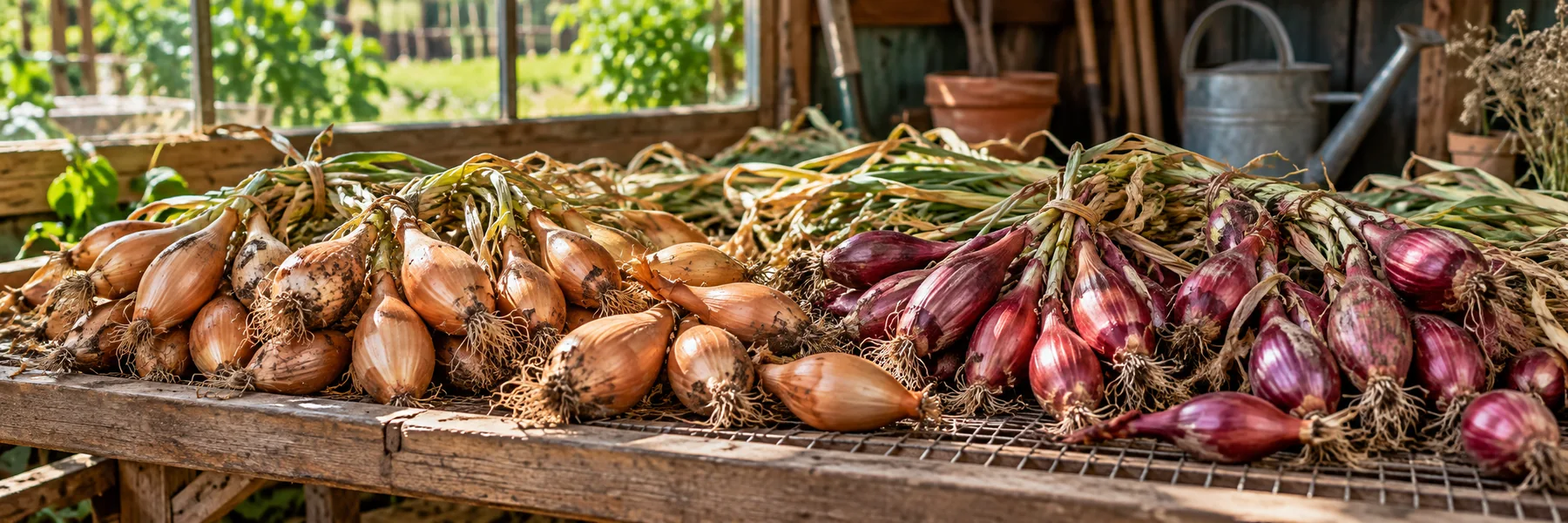
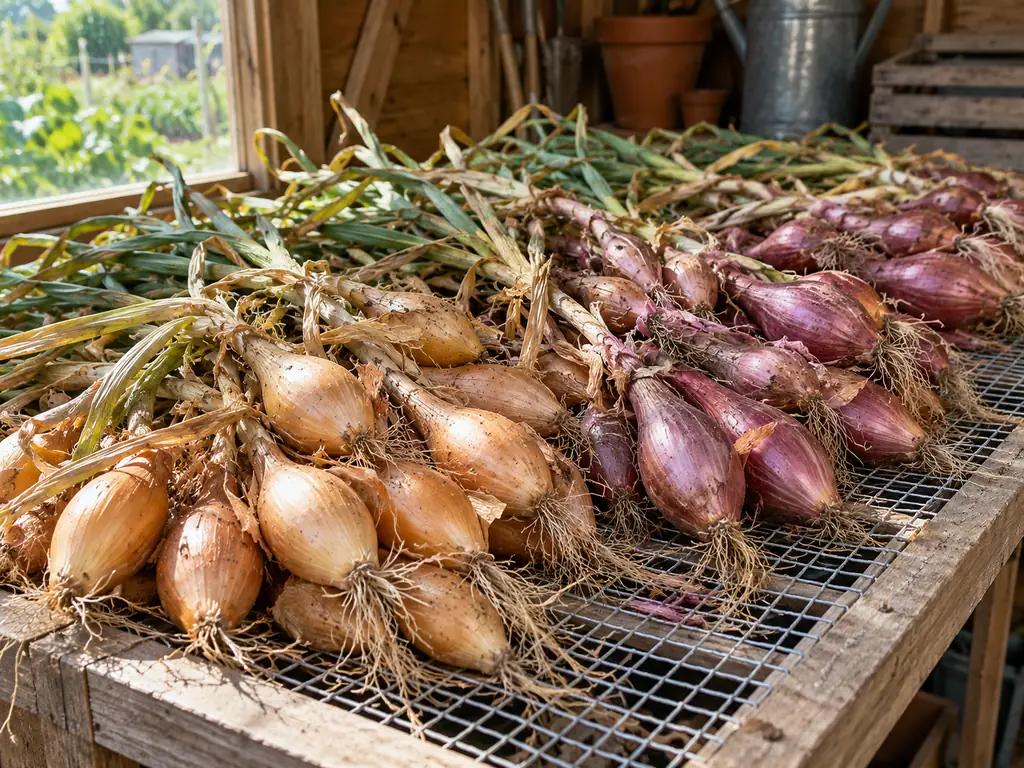
Shallot clusters are lifted when their foliage yellows and flops over, then separated and dried thoroughly before storage.
Method
- Lift shallots when the leaves turn yellow and flop over, usually in mid- to late summer. Loosen the clusters with a hand fork and avoid bruising the bulbs.
- Separate the clusters into individual bulbs and brush off loose soil; do not wash them. Use damaged or bolted bulbs first.
- Spread the shallots in a single layer on wire racks or slatted trays so air circulates underneath. Dry outdoors in full sun when conditions are dry, or in a greenhouse or ventilated shed in damp weather.
- Continue for about two weeks, checking that skins and foliage dry evenly. The foliage should be papery and the outer skins dry before packing.
- Trim only the fully dry foliage and roots, and keep any damp or damaged bulb out of long-term storage.
Storage
Single layer on wire racks or slatted trays in sun or a ventilated shed · Cure until foliage is dry and papery
Sources and scope
- Grow Your Own — Royal Horticultural Society
Method-specific source recorded in the prior content audit
Dry Storage for Shallot
General preservation or storage guidance
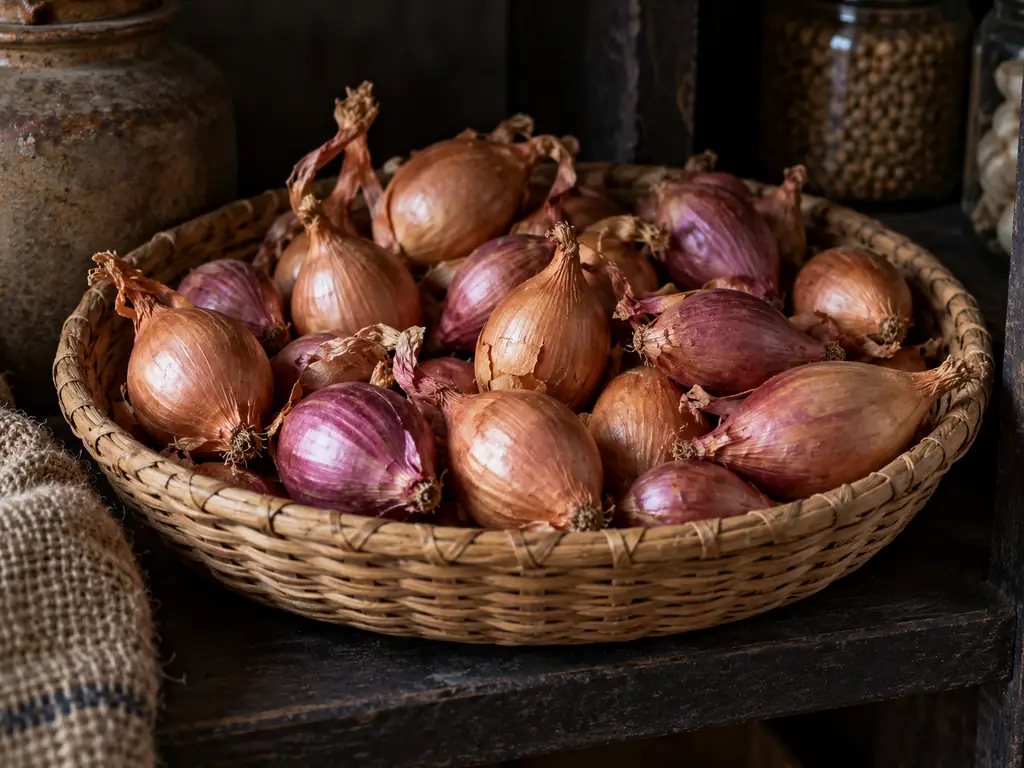
Thoroughly dried shallots can keep for months when stored whole in airy containers and protected from damp.
Method
- Choose fully cured, firm bulbs with dry papery skins. Set aside bruised, split, bolted or mouldy shallots for prompt use.
- Brush away loose dry soil; do not wash or peel bulbs intended for storage.
- Trim dry foliage and roots, then place the shallots in net bags or a single layer in slatted trays so air can circulate.
- Store in a light, cool, dry and well-ventilated place; avoid a dark cupboard because darkness encourages sprouting.
- Check regularly and remove soft or mouldy bulbs. Separate clusters only if needed to improve airflow.
Storage
Light, cool, dry and well-ventilated place · RHS reports 6–8 months for well-cured shallots; inspect regularly
Sources and scope
- Grow Your Own — Royal Horticultural Society
Method-specific source recorded in the prior content audit
Quick Refrigerator Pickled Shallots
Home recipe · fridge or freezer method
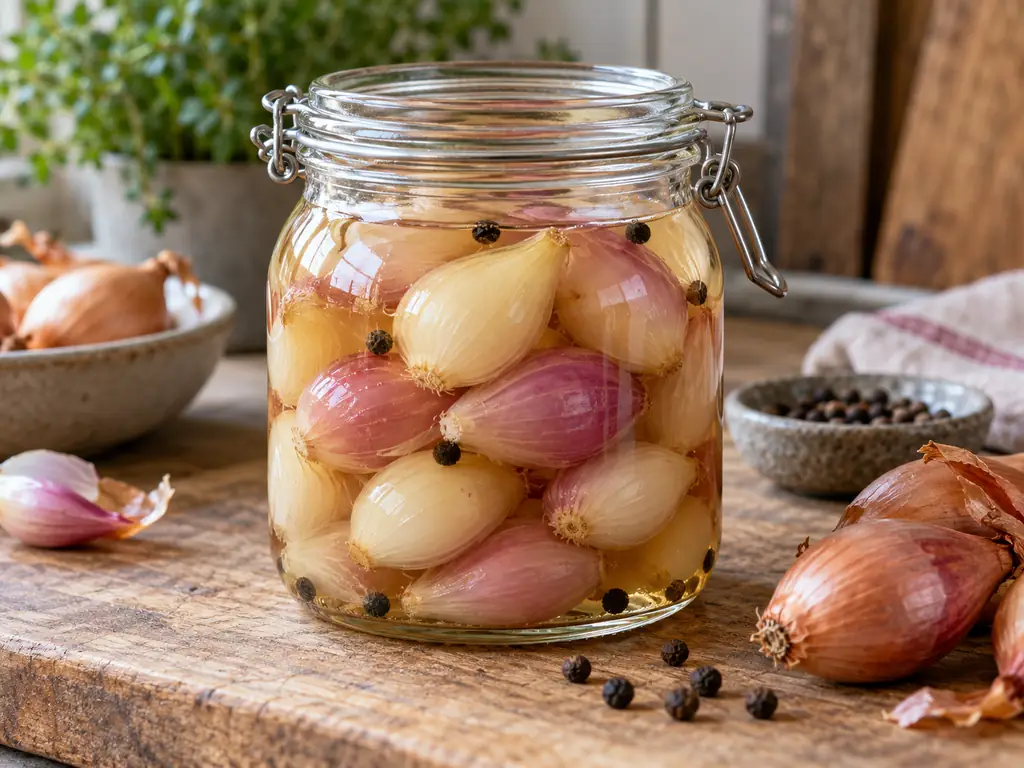
A small-batch shallots vinegar pickle for prompt use from the refrigerator.
Ingredients
- 500 g fresh shallots, washed and cut peeled and thinly sliced
- 250 ml white vinegar labelled 5% acidity
- 250 ml water
- 15 g (1 tbsp) caster sugar
- 5 g (1 tsp) salt
- ½ tsp mustard seeds
Equipment
- Saucepan
- Clean heatproof jar with lid
- Kitchen scales and measuring jug
Method
- Wash the shallots, remove damaged pieces and prepare it as specified: peeled and thinly sliced. Pack loosely into a clean heatproof jar with the aromatics.
- Put vinegar, water, sugar and salt in a saucepan. Bring just to the boil, stirring until the sugar and salt dissolve.
- Pour the hot liquid over the vegetables until covered. Let the jar cool at room temperature, then refrigerate within 2 hours.
- Keep the vegetables submerged and refrigerated. This small-batch recipe is for prompt use and is not a canning recipe.
- Serve chilled as a relish or side. Use clean utensils; eat within 48 hours and discard sooner if there are signs of spoilage.
Storage
Refrigerate at 0–5°C within 2 hours; keep chilled throughout · Eat within 48 hours; freeze any cooked leftovers promptly if they will not be used
Sources and scope
- How to chill, freeze and defrost food safely — Food Standards Agency
Storage guidance only: keep the fridge between 0°C and 5°C, cool cooked food and refrigerate within 1–2 hours, and eat leftovers within 48 hours or freeze. This source does not validate the recipe or any shelf-stable process.