
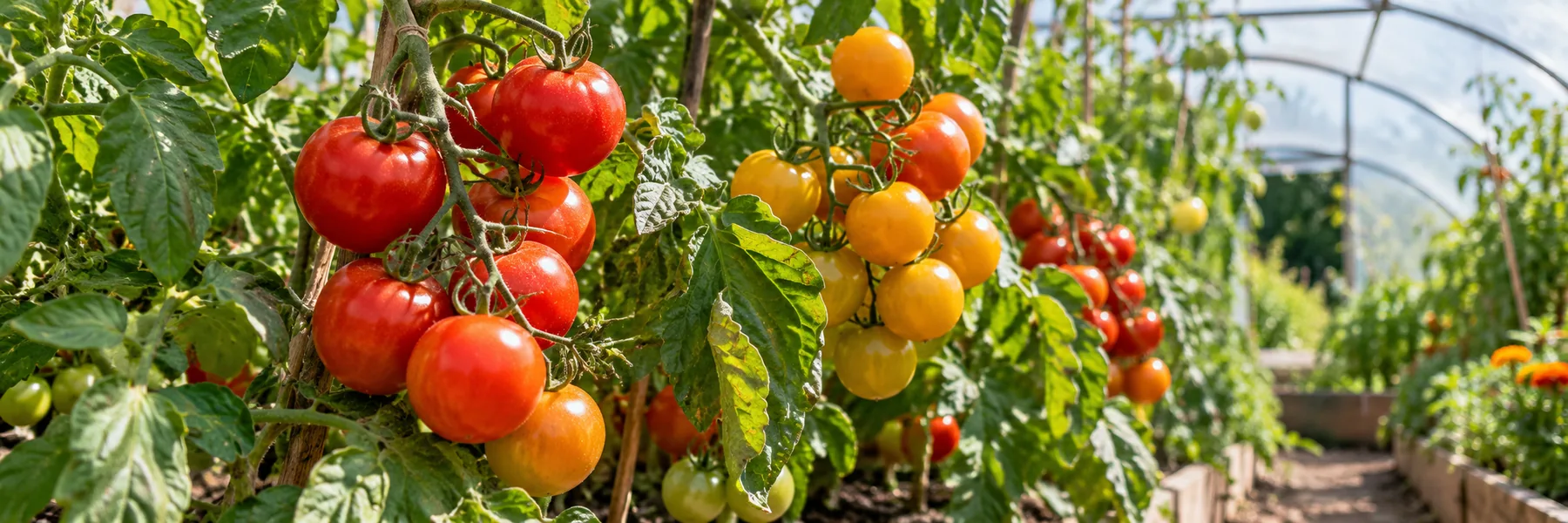
Tomato Passata
General preservation or storage guidance
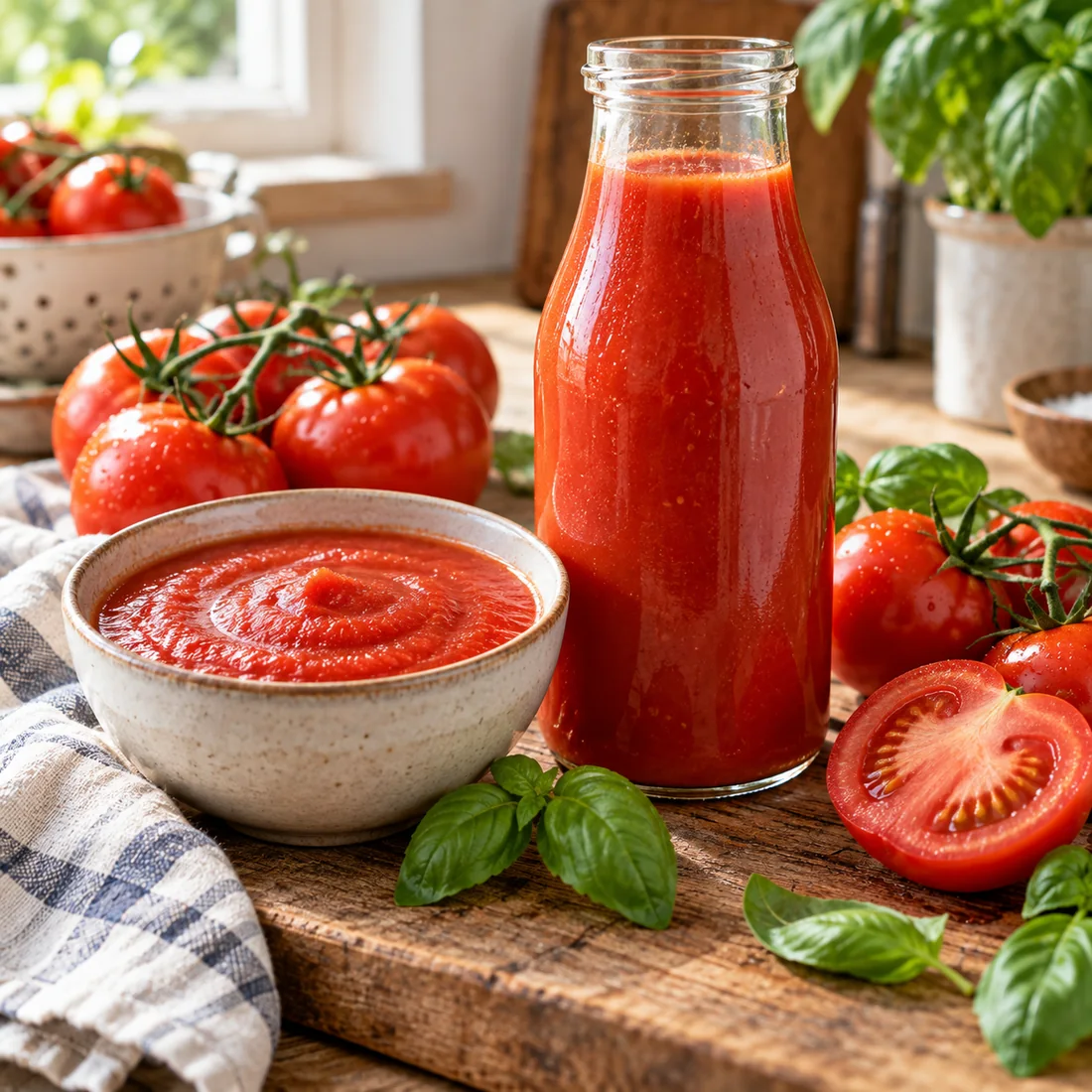
Passata concentrates ripe tomatoes into a smooth sauce that can be portioned for pasta, soups and stews.
Method
- Choose ripe, sound tomatoes; wash, remove the cores and cut into quarters, trimming away damaged areas.
- Put the tomatoes in a wide pan and simmer, stirring occasionally, until fully collapsed and juicy.
- Pass through a food mill or sieve to remove skins and seeds if you want a smooth passata; return the sauce to the pan and simmer to the thickness you prefer.
- Divide into shallow, freezer-safe portions. Cool promptly, refrigerate within two hours, or freeze as soon as cool; leave expansion space in containers.
- Thaw frozen passata in the refrigerator and reheat until piping hot before serving. Do not treat an unprocessed jar as shelf-stable.
Storage
Refrigerator or freezer · Refrigerate and use within 48 hours, or keep frozen; no frozen quality period stated
Sources and scope
- Cooking Your Food — UK Food Standards Agency
Method-specific source recorded in the prior content audit
Tomato Chutney
General preservation or storage guidance
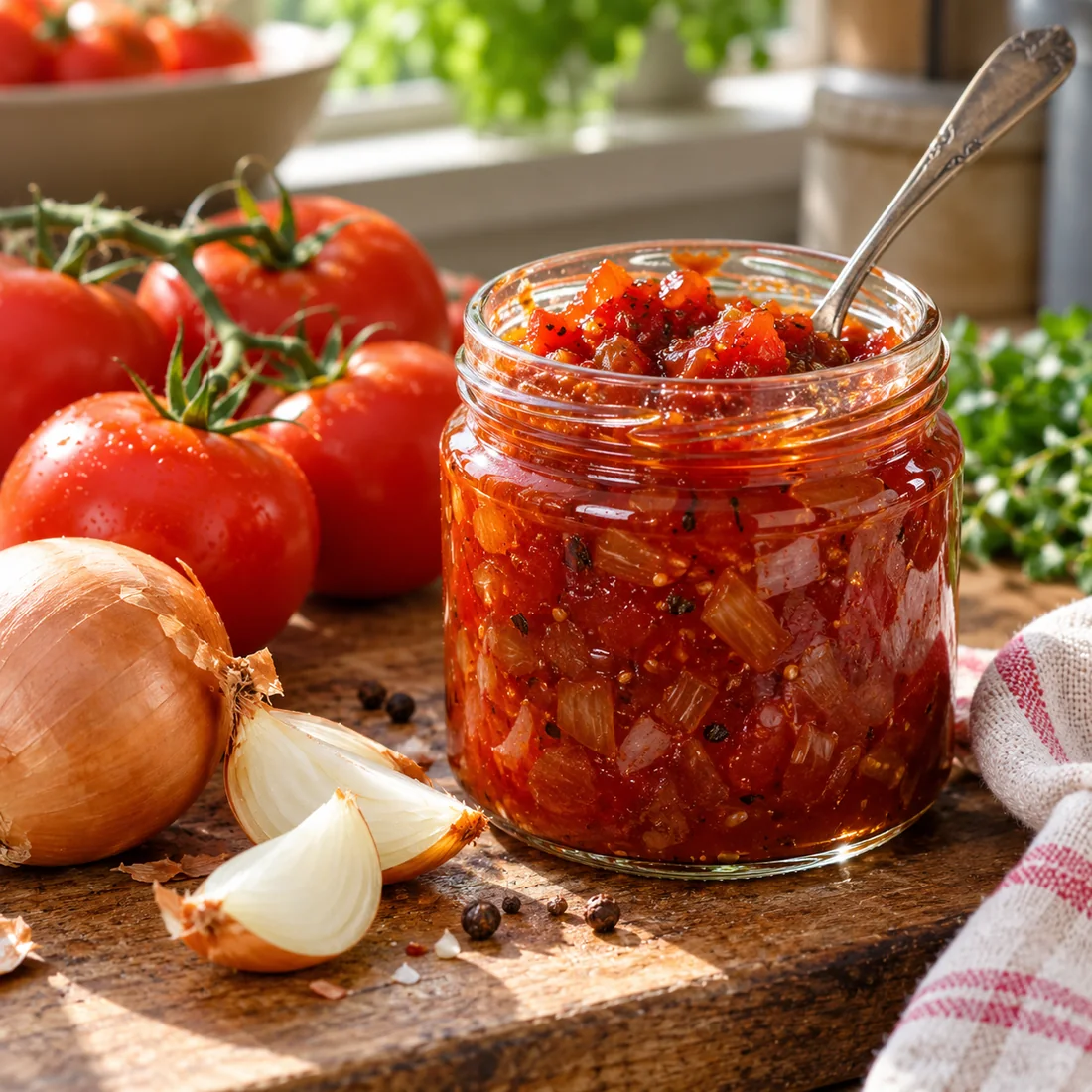
A tested tomato-and-apple chutney uses measured 5% vinegar and brown sugar, then receives a boiling-water process in pint jars.
Method
- For about 7–8 pints, measure 3 quarts chopped peeled tomatoes, 3 quarts peeled and chopped apples, 2 cups seedless raisins, 2 cups chopped onion, 1 cup chopped green pepper, 2 lb brown sugar, 1 quart white vinegar labelled 5% acidity, 4 tsp canning salt and 1 tsp ground ginger. Tie ¼ cup whole mixed pickling spice in clean cloth.
- Wash tomatoes, dip briefly in boiling water to loosen their skins, cool, peel and chop. Wash, peel, core and chop apples; measure the prepared quantities accurately.
- Combine all measured ingredients except the spice bag in a large pan. Add the spice bag, bring to a boil, then simmer gently, stirring often, until thickened and reduced by about half (about 1 hour). Remove the spice bag.
- While the chutney cooks, wash pint jars and keep them hot. Fill hot jars with boiling chutney, leaving ½ inch headspace; remove trapped air bubbles, wipe rims and fit prepared two-piece lids.
- Process pint jars in a boiling-water canner for 10 minutes at elevations up to 1,000 ft (305 m), 15 minutes from 1,001–6,000 ft (306–1,829 m), or 20 minutes above 6,000 ft (1,829 m). Keep jars covered by boiling water throughout.
- Lift jars out and leave undisturbed for 12–24 hours. Check each seal; refrigerate any unsealed jar and use as a fresh cooked food. Store sealed jars cool and dark, and refrigerate after opening.
Storage
Sealed, processed jars in a cool, dark cupboard; refrigerate after opening · Use the tested recipe; discard leaking, unsealed or spoiled jars
Sources and scope
- Tomato Apple Chutney — National Center for Home Food Preservation
Method-specific source recorded in the prior content audit
Freezing Tomatoes
General preservation or storage guidance
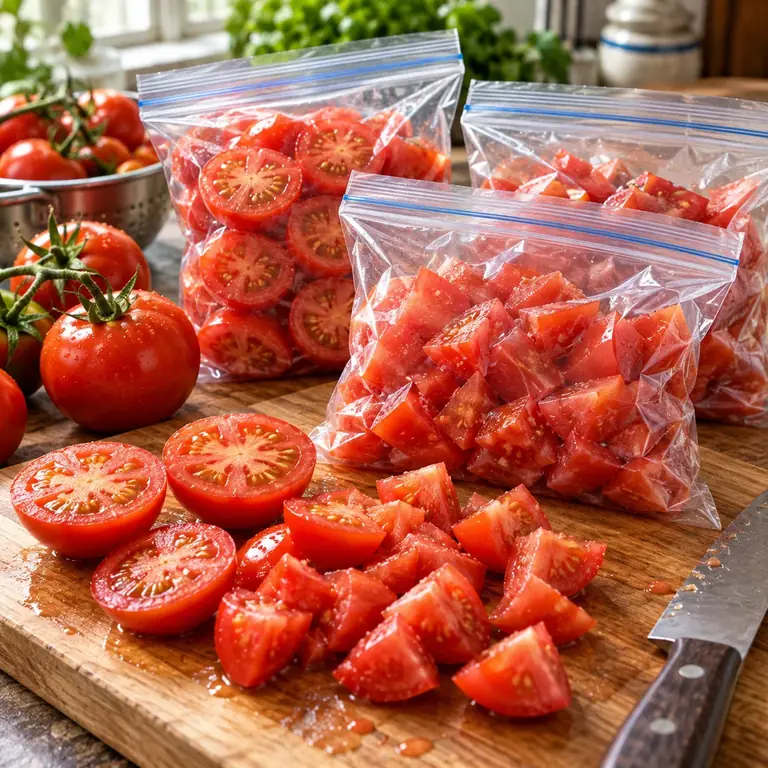
Freezing preserves ripe tomatoes for cooked sauces and soups; their flesh softens after thawing.
Method
- Select firm, ripe, deep-red tomatoes and wash them under running water.
- For easy peeling, dip each tomato in boiling water for about 30 seconds, then cool; core and slip off the loosened skin. Peeling is optional if the tomatoes will be sieved after cooking.
- Leave small tomatoes whole or cut larger ones into pieces.
- Pack into freezer-safe containers, leaving expansion space, or spread pieces on a tray to freeze separately before bagging. Remove excess air, seal and label.
- Freeze promptly. Use thawed tomatoes in cooking or sauces rather than dishes where a firm fresh texture is needed.
Storage
Freezer-safe container or bag · Up to 10–12 months for best quality
Sources and scope
- Freezing Tomatoes — National Center for Home Food Preservation
Method-specific source recorded in the prior content audit
Drying Tomatoes
General preservation or storage guidance
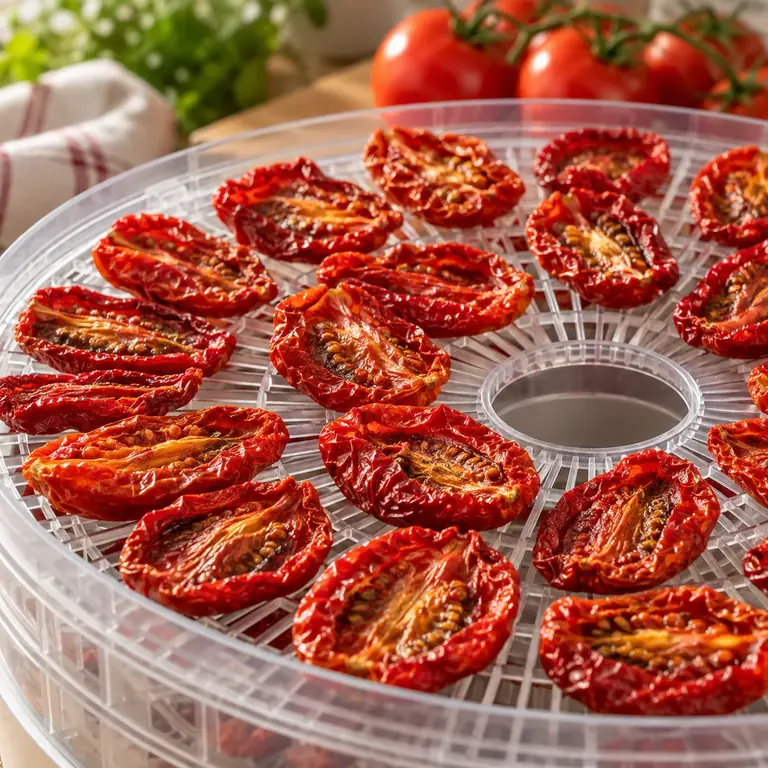
Meaty paste tomatoes dry into concentrated, chewy pieces that can be crumbled into cooked dishes.
Method
- Choose sound paste tomatoes such as plum types; wash, remove the core and trim any damaged areas. Cherry tomatoes may be halved without peeling.
- Slice larger tomatoes into even 6–12 mm slices, or halve/quarter small tomatoes so pieces are similar in thickness.
- Arrange in a single layer on dehydrator trays with air gaps; rotate trays and turn pieces if the appliance dries unevenly.
- Dry at about 60°C in a food dehydrator for roughly 10–18 hours, until slightly pliable but not sticky and with no moist areas. Time varies with size and airflow.
- Cool completely, pack airtight and store cool, dry and dark. Check for condensation; return damp pieces for further drying and discard mouldy food.
Storage
Airtight container in a cool, dry, dark place · No exact period stated; inspect for moisture during storage
Sources and scope
- Tomatoes — extension.illinois.edu
Method-specific source recorded in the prior content audit
- Food Dehydrators — National Center for Home Food Preservation
Method-specific source recorded in the prior content audit
Pickled Green Tomatoes
General preservation or storage guidance
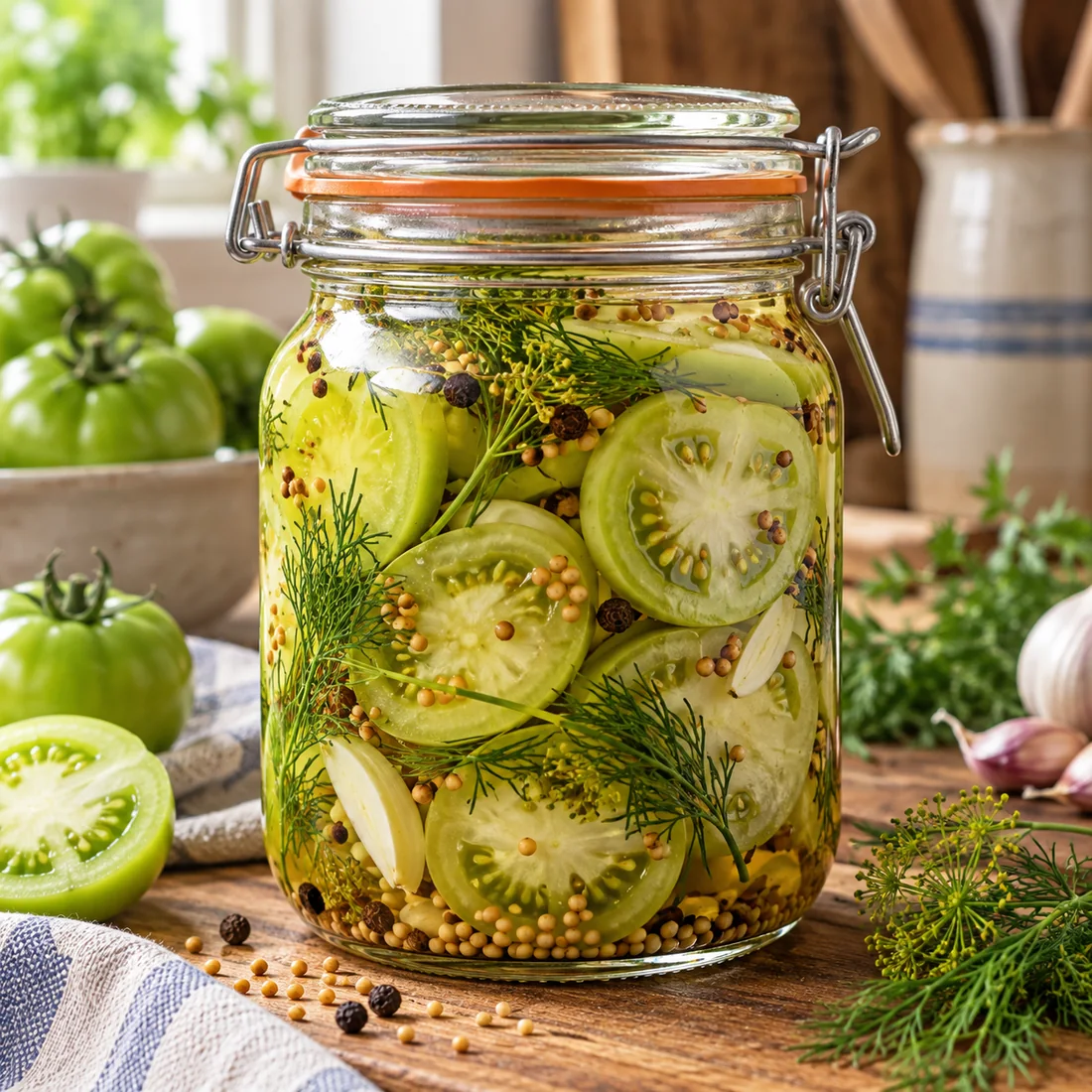
Firm unripe tomatoes are salted, simmered in a measured 5% vinegar-and-spice mixture, then processed in a boiling-water canner.
Method
- For about 9 pints, weigh 10–11 lb (4.5–5 kg) green tomatoes; measure 2 cups sliced onion, ¼ cup pickling salt, 3 cups brown sugar, 4 cups vinegar labelled 5% acidity, and 1 tbsp each mustard seed, allspice, celery seed and whole cloves.
- Wash tomatoes and onions; slice evenly. Put them in a non-reactive bowl, sprinkle with the measured salt and leave 4–6 hours, then drain thoroughly.
- Stir the brown sugar into the vinegar until dissolved. Tie the measured spices in a clean spice bag and add it with the drained tomato and onion slices. Add only enough water to cover if needed.
- Bring to a boil and simmer about 30 minutes, stirring to prevent sticking, until the tomato slices are tender and translucent; remove the spice bag.
- Fill hot pint jars with the hot mixture and liquid, leaving ½ inch headspace. Remove bubbles, wipe rims and fit prepared lids.
- Process pints in a boiling-water canner for 10 minutes up to 1,000 ft (305 m), 15 minutes from 1,001–6,000 ft (306–1,829 m), or 20 minutes above 6,000 ft (1,829 m). Keep jars covered by boiling water; cool undisturbed 12–24 hours, check seals and refrigerate any unsealed jar.
Storage
Sealed, processed jars in a cool, dark cupboard; refrigerate after opening · Follow the tested recipe and processing method; refrigerate unsealed jars
Sources and scope
- Pickled Sweet Green Tomatoes — National Center for Home Food Preservation
Method-specific source recorded in the prior content audit