
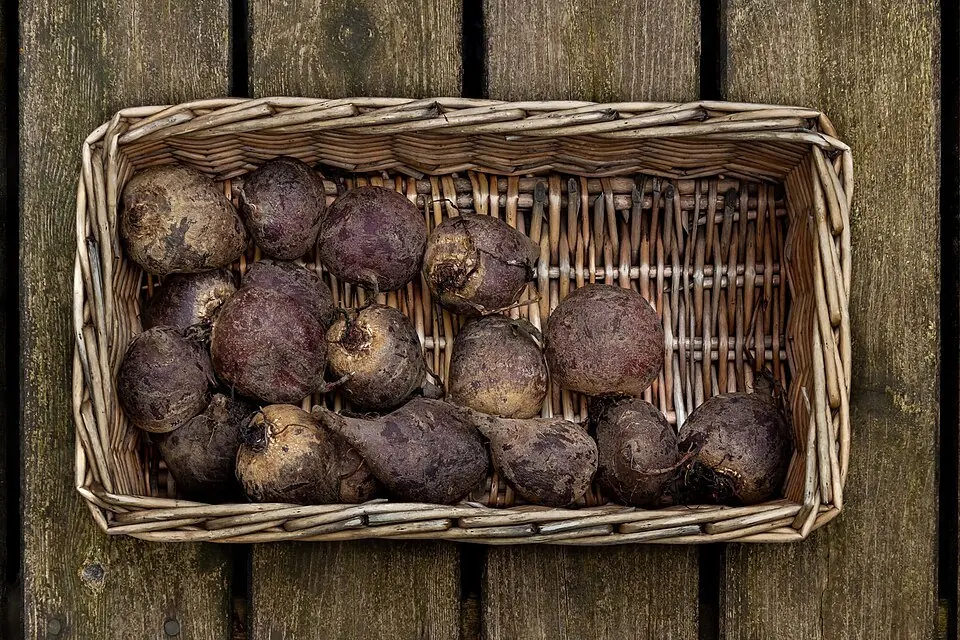
Growing at a glance
- Beetroot: sow late March or April to July; harvest from early summer to mid-autumn.
- Salad radishes: sow in spring and late summer; pick young, often four to six weeks after sowing.
- Turnips: sow in succession from spring into late summer and harvest young roots through the growing season.
- Swede: sow late spring to early summer; allow a long season and harvest from autumn into winter.
- All prefer an open site, even moisture and crop-specific spacing; use the seed packet for variety details.
Treat each root crop as its own sowing plan
Beetroot, salad radishes, turnips and swede share a preference for moisture-retentive soil, but their seasons and spacing differ. Use successive short rows rather than sowing a whole packet at once. This spreads harvests and reduces the chance that roots become oversized, woody or pithy. Choose a sunny open bed with a fine surface and avoid fresh manure immediately before sowing.
Beetroot can be sown from late March or April to July once the soil is warming; early sowings benefit from fleece or a cloche. Salad radishes are best in spring and late summer, avoiding hot dry spells. Turnips are commonly sown from spring through late summer for successive young roots. Swede needs a longer season and is usually direct-sown from late spring to early summer for autumn or winter harvest.
- Beetroot: sow seed clusters about 2–2.5 cm deep and roughly 10 cm apart; thin to one plant if you want larger roots, or leave small clusters for baby roots.
- Salad radish: sow about 1 cm deep and 2.5–5 cm apart in rows around 15 cm apart; repeat small sowings every few weeks.
- Turnip: follow the variety packet for depth and final spacing; thin promptly so roots have room to swell.
- Swede: sow about 2 cm deep, thin to roughly 20–25 cm apart and allow a long growing season.
Sow into prepared soil and keep the row moist
Remove clods and stones, make shallow drills and water the base if the soil is dry. Cover seed lightly, label each row and keep the surface moist until seedlings emerge. Beetroot seed is a cluster, so more than one seedling may appear at each sowing point. Radishes germinate quickly, often within about a week in suitable conditions; parsnip-style patience is not needed. Swede grows slowly and needs a clear, weed-free row.
Direct sowing is usually simplest. Beetroot can be started in modules for an earlier crop, but transplant seedlings with minimal root disturbance. Radishes can be used as a quick crop between slower rows, provided they are harvested before crowding the main crop. In cool northern or exposed gardens, wait for soil to warm and protect early sowings; in hot weather, sow radish in light shade and water consistently.
Thin, water and prevent common problems
Thin seedlings when they are large enough to handle, using the spacing for the crop and intended size. Overcrowding produces undersized roots and encourages poor airflow. Keep moisture reasonably even while roots swell: drought can make radishes hot and pithy, and irregular watering can split beetroot. Water deeply during a dry spell rather than sprinkling the surface repeatedly.
Flea beetle can make small holes in young radish and turnip leaves; fine mesh can protect the crop. Swede, turnip and other brassica roots can be affected by clubroot, so rotate them with other plant families and do not move soil from infected beds. Beetroot may bolt after cold checks or heat and drought; choose a bolt-resistant variety for early sowings. Remove badly diseased plants and keep weeds down while seedlings are small.
Harvest at the size and stage you prefer
Pull salad radishes while roots are small and crisp, commonly around four to six weeks after sowing; leaving them too long makes them woody or hot. Beetroot can be harvested from golf-ball size upwards, but very large roots may be coarser. Use alternate roots as baby beet and let the rest continue. Turnips are usually tastiest young, before they become tough. Swede is slower and can be lifted from autumn, often left in the ground into winter where soil is not frozen or waterlogged.
Loosen soil beside each root before lifting to avoid breaking it. Beetroot leaves are edible; take a few outer leaves but leave enough for the root to keep growing. Store sound beetroot and swede in cool conditions, and protect roots left in the ground from severe frost where needed. Use small radishes promptly because they do not store well.
Avoid the most common crop-specific errors
Do not assume the four crops need identical spacing or harvest dates. Radish needs frequent sowing and quick picking; beetroot seed clusters need thinning decisions; turnip is best used young; swede needs months to bulk up. Avoid drought, fresh manure and overcrowded rows. Read the packet for the cultivar’s maturity and bolt resistance, and adjust sowing according to your soil temperature and local weather.