
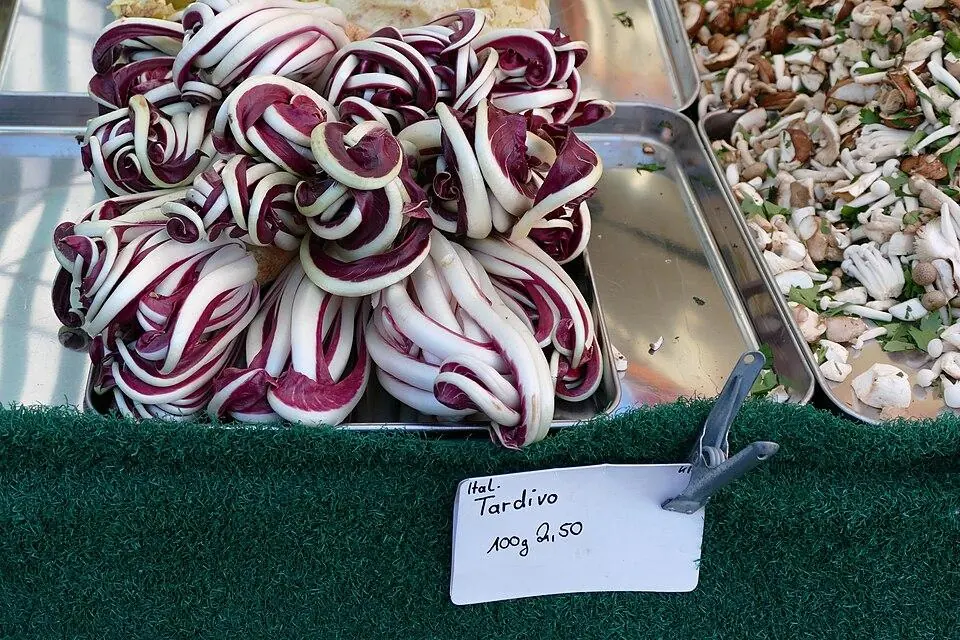
Know which chicory you are growing
Chicory is a diverse group of leafy crops with a pleasantly bitter flavour. Forcing types are grown for roots that are lifted in autumn and then kept in darkness to produce pale winter chicons. Radicchio forms coloured or red-and-white heads, while sugarloaf types make elongated heads; these are usually harvested as mature heads or young leaves. Check the variety description because sowing and harvest habits differ.
Chicory is generally more reliable in an open, sunny site with fertile, well-drained soil. It can tolerate cool conditions, but prolonged cold or stress may encourage premature flowering. Avoid ground recently enriched with fresh manure, which can cause forked roots in forcing varieties.
Sow for leaves or roots
For forcing roots, sow outdoors in late spring to early summer, following the seed packet’s timing for the cultivar and local conditions. Make drills around 1 cm deep, water the base in dry soil, sow thinly and cover lightly. Thin seedlings to about 10–15 cm apart, allowing roots to develop evenly. Direct sowing avoids root disturbance. For radicchio and sugarloaf, sow in succession from late spring into summer so heads mature as temperatures cool; late sowings may need protection in colder districts.
Keep the row weed-free and water during dry spells, particularly while roots or heads are swelling. Uneven moisture can make leaves harsh and may contribute to bolting. A light mulch after the soil is warm helps retain moisture. Protect young seedlings from slugs and flea beetles; fine mesh can help with flea beetles if sealed at the edges and kept clear of foliage.
Lift and force roots in winter
In autumn, lift sound forcing roots before the ground becomes difficult to work or hard frost damages them. Select firm, healthy roots of similar size, trim the leaves back to a short crown without cutting into the growing point, and shorten very long roots if necessary. Keep the crown intact. Store roots cool and frost-free until you are ready to force them; do not force damaged or diseased roots.
To force, place roots upright and close together in a deep container of damp compost or soil, with their crowns level. Cover the container with an opaque box or move it to a genuinely dark place. Keep it cool rather than warm and keep the medium just moist. Chicons develop over several weeks, depending on temperature and the cultivar. Harvest each firm head by cutting it just above the root crown. Darkness is essential: light produces greener, more bitter leaves.
Harvest outdoor heads and solve common problems
Harvest radicchio and sugarloaf heads when they are well formed and firm for their type; baby leaves can be picked earlier. Cold weather may improve colour in some radicchio, but very late crops in exposed sites may fail to heart before winter. Use fleece or a cloche for temporary protection if the variety is suitable, and ventilate during mild weather.
If plants bolt, consider cold stress after early sowing, dry spells, crowding or a variety poorly suited to the sowing window. Forked forcing roots often follow root disturbance, stony soil or fresh manure. Loose, green chicons usually indicate that forcing was too bright or too warm. Correct the cause for the next batch rather than adding fertiliser.
Common mistakes
- Treating every chicory type as a forcing crop; radicchio and sugarloaf are commonly grown for outdoor heads.
- Transplanting forcing roots after they have started growing, which can deform them.
- Forcing roots in light or warm rooms, resulting in green, bitter, loose heads.
- Sowing too early in cold soil or allowing the crop to dry out while heads form.