
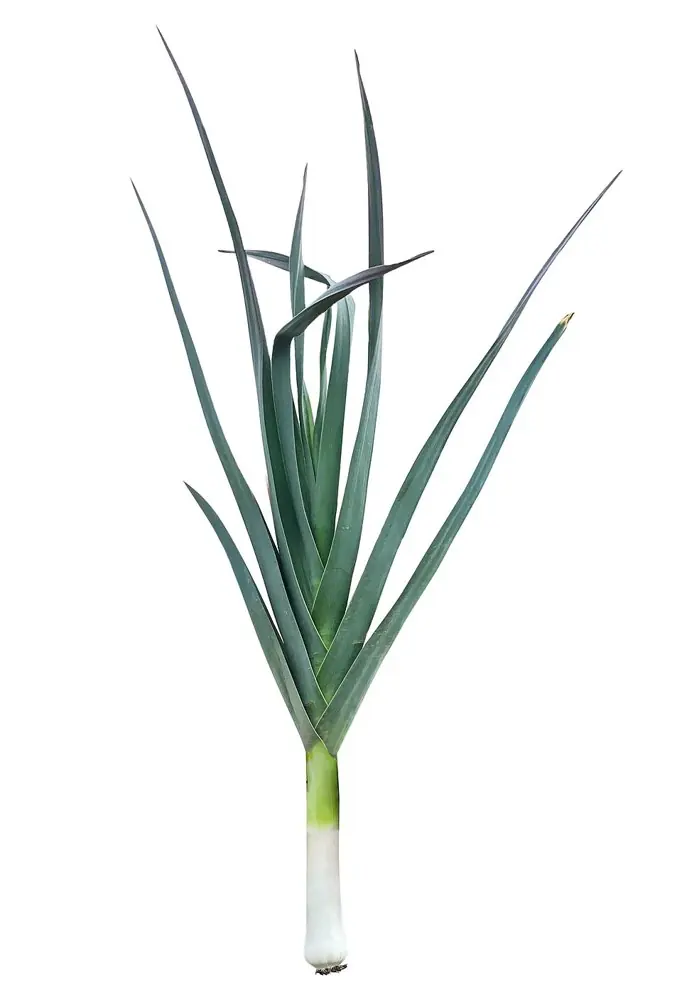
Sow at the right time for your variety
Leeks are slow-growing and useful through autumn and winter. Early and maincrop varieties are usually sown indoors in late winter or in an outdoor seedbed during spring; later varieties may be sown later. Check the packet because the crop window depends on the variety and region. Use fresh seed compost and label each sowing with its date.
Sow indoors in trays or modules and grow seedlings in bright light. Outdoors, prepare a fine seedbed and sow shallowly in rows. Keep seedlings evenly moist and thin them if crowded. Harden indoor plants gradually before transplanting. Pencil-thick plants are a useful guide, but do not delay until they become root-bound.
Transplant with a dibber
Choose a sunny, fertile bed that holds moisture but drains in winter. Add mature compost before planting and avoid placing leeks in the same allium bed year after year where rotation is possible. Make holes about 15 cm deep and 15 cm apart, with rows around 30 cm apart; widen spacing for larger varieties.
Trim only very long roots if needed. Drop each plant into a hole and water it in; do not pack soil around the stem. Rain and irrigation gradually wash soil into the hole, keeping the shank clean. Some gardeners earth up later to lengthen the white shank, but it is optional and should not bury the growing point.
Maintain growth and protect the crop
Water in dry weather, especially after transplanting and during rapid summer growth. Keep weeds down while plants are small, using shallow hoeing or hand weeding so roots are not damaged. A mulch of mature compost helps conserve moisture. Feed only if growth is weak on poor soil and follow a suitable product label.
Use insect-proof mesh where leek moth or allium leaf miner is a known local problem, fitting it before adults begin laying eggs and sealing edges. Check leaves for rust, which can mark foliage, and remove badly affected leaves. Rotation and good spacing reduce risk but cannot guarantee disease-free plants.
Harvest as needed through winter
Leeks can be lifted as soon as they reach a useful size, from autumn through winter. They stand in the ground well in ordinary cold weather, so take only what you need. In frozen or very hard soil, avoid forcing a fork close to the stem; wait for a thaw or loosen the ground carefully.
Lift remaining plants before spring flower stems form. Brush off loose soil, trim roots and remove damaged outer leaves. Wash between the leaf layers before cooking. Leeks keep only briefly after lifting, so use them promptly or refrigerate in a breathable bag.