
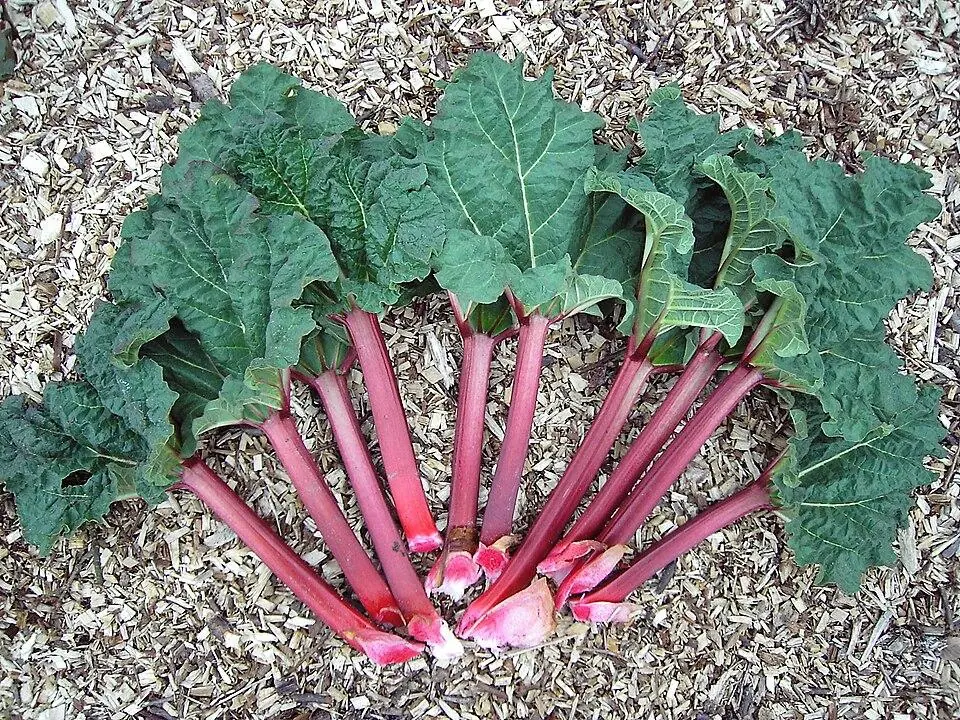
Plant a crown with room to spread
Rhubarb is a long-lived perennial, so choose a position where it can remain for years. It grows well in sun or light shade in fertile, moisture-retentive soil, but the crown must not sit in waterlogged ground. Allow about 90 cm or more around a plant, depending on the variety, so large leaves have room.
Plant dormant crowns in autumn or early spring when the soil is workable. Set the growing point at or just above soil level; burying it deeply can encourage rot. Work mature compost into the bed beforehand, water in and mulch annually without covering the crown. Remove flower stalks at the base if the plant begins to flower.
Let the plant establish before harvesting
Do not harvest stems in the first growing season after planting. In the second year, take only a light pick for a short time. From the third year, harvest established plants over a limited spring and early-summer period, then stop by late June or earlier if stems become thin. The leaves must remain to feed the crown for next year.
Pull a few outside stalks with a gentle twist at the base rather than cutting every stem. Remove leaves immediately and compost them only where appropriate; rhubarb leaves contain oxalic acid and are not edible. Never offer the leaves as food to people or animals.
Water, divide and recover
Water during prolonged dry spells, especially while stems are developing. A mature clump may tolerate some dryness, but consistent moisture supports better growth. If the plant becomes crowded and crops poorly, divide it while dormant, usually in autumn or early spring. Each division should retain a healthy growing point and substantial root.
Forcing is optional and should only be done with a healthy, well-established crown. Cover it in winter with an opaque forcing pot to encourage earlier, paler stems. Forcing exhausts the plant, so harvest lightly and let that crown recover for a season or longer before forcing again.
Spot problems and use stems promptly
Wet, poorly drained soil can rot crowns. Remove damaged leaves and improve drainage rather than adding more water. Slugs may shelter beneath large leaves, so clear debris and inspect around the crown. Late frost can damage emerging stems; leave affected growth until the extent is clear, then remove it cleanly.
Harvest firm stalks and use them fresh, or refrigerate briefly in a breathable bag. Rhubarb freezes well when cut into portions. If preserving it at room temperature, use a tested recipe with its stated acidity and processing directions; do not improvise shelf-stable methods.