
Curing Garlic
General preservation or storage guidance
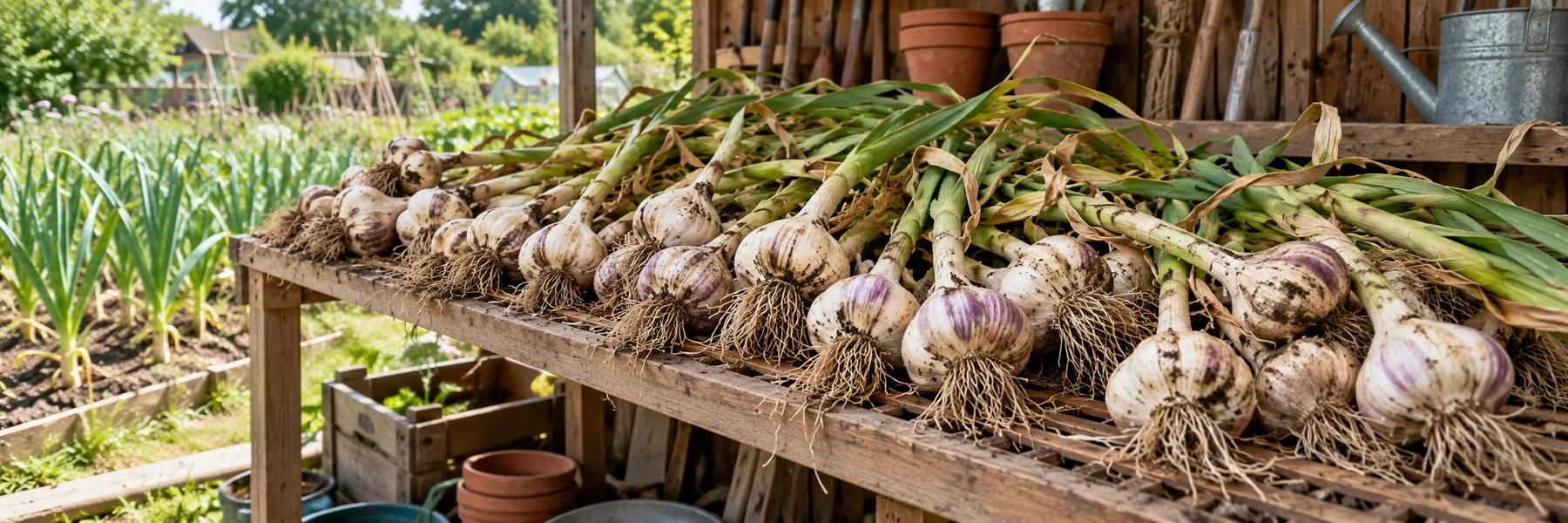
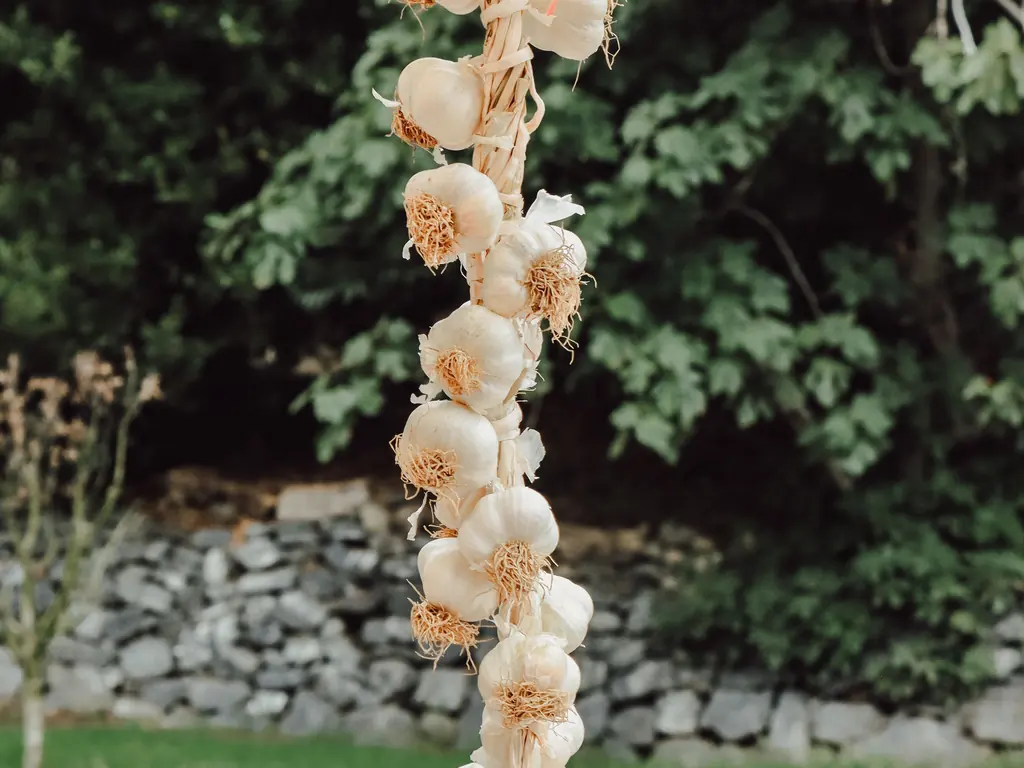
Curing garlic dries the lifted bulbs and foliage before storage, helping the outer wrappers and neck finish drying without bruising the cloves.
Method
- Lift garlic when the leaves have turned yellow but before the plant is completely dry. Use a fork to loosen soil and lift bulbs gently; bruising shortens storage life.
- Do not wash bulbs. Brush away loose soil carefully and keep wrappers, roots and stems intact during curing.
- Lay bulbs in a single layer in a sunny, dry place with good airflow, such as a ventilated greenhouse; if weather is damp, move them to a dry shed. Avoid temperatures above 30°C.
- Leave for about 2–4 weeks depending on weather, until foliage is dry and rustling and the outer wrappers feel papery. Check that no bulb is staying damp.
- Separate damaged bulbs for immediate use. Trim stems and roots only after curing is complete.
Storage
Single layer in a dry, well-ventilated shaded or sunny place below 30°C · Cure until foliage is dry and rustling
Sources and scope
- Grow Your Own — Royal Horticultural Society
Method-specific source recorded in the prior content audit
- Harvest And Storage Of Vegetables And Fruits — Utah State University Extension
Method-specific source recorded in the prior content audit
Dry Storage for Garlic
General preservation or storage guidance
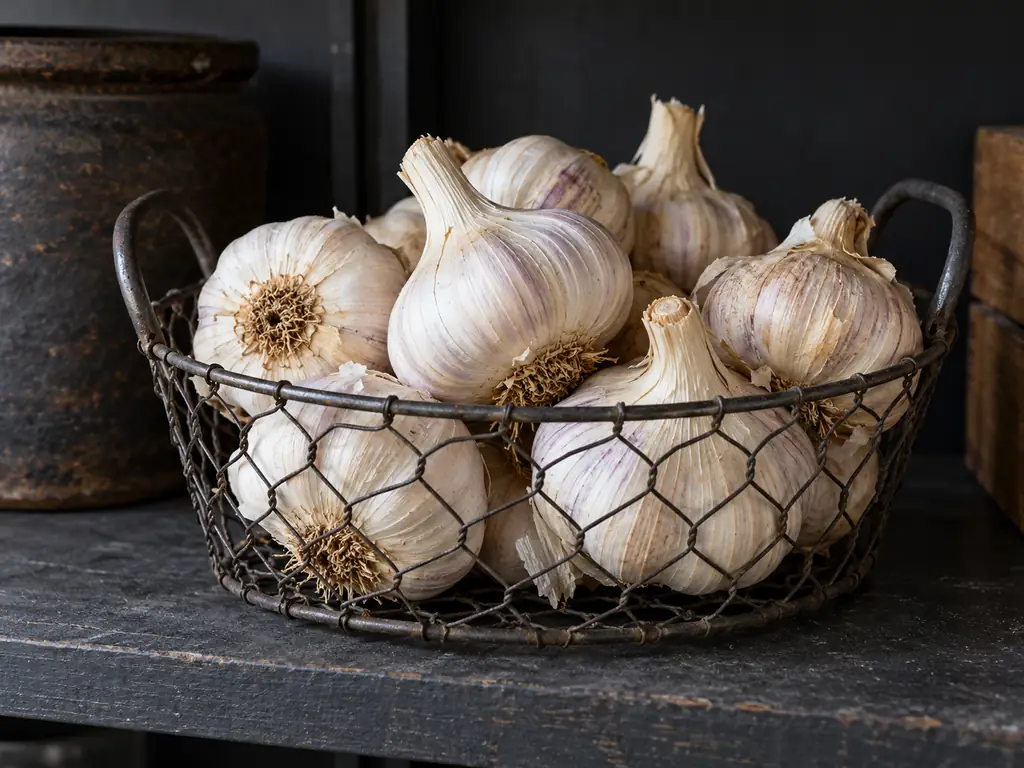
Fully cured garlic stores best whole, dry and ventilated; keep bulbs intact until needed because separated cloves keep for less time.
Method
- Store only firm, fully cured bulbs with intact wrappers. Set aside cut, bruised, mouldy or sprouting bulbs for prompt use.
- Do not wash or separate the cloves before storage; remove only loose dry soil.
- For softneck garlic, braid the dry stems if they remain flexible. Otherwise place bulbs in mesh bags or a ventilated tray.
- Keep the bulbs cool, dry and out of direct sunlight with airflow around them; avoid damp cupboards and condensation.
- Inspect regularly and remove any bulb that softens, moulds or develops a strong off smell. Break a bulb into cloves only when ready to use.
Storage
Cool, dry place (about 5–10°C) in mesh bags or plaited softneck stems · Several months; inspect regularly and expect cultivar differences
Sources and scope
- Grow Your Own — Royal Horticultural Society
Method-specific source recorded in the prior content audit
Dehydrating for Garlic
General preservation or storage guidance
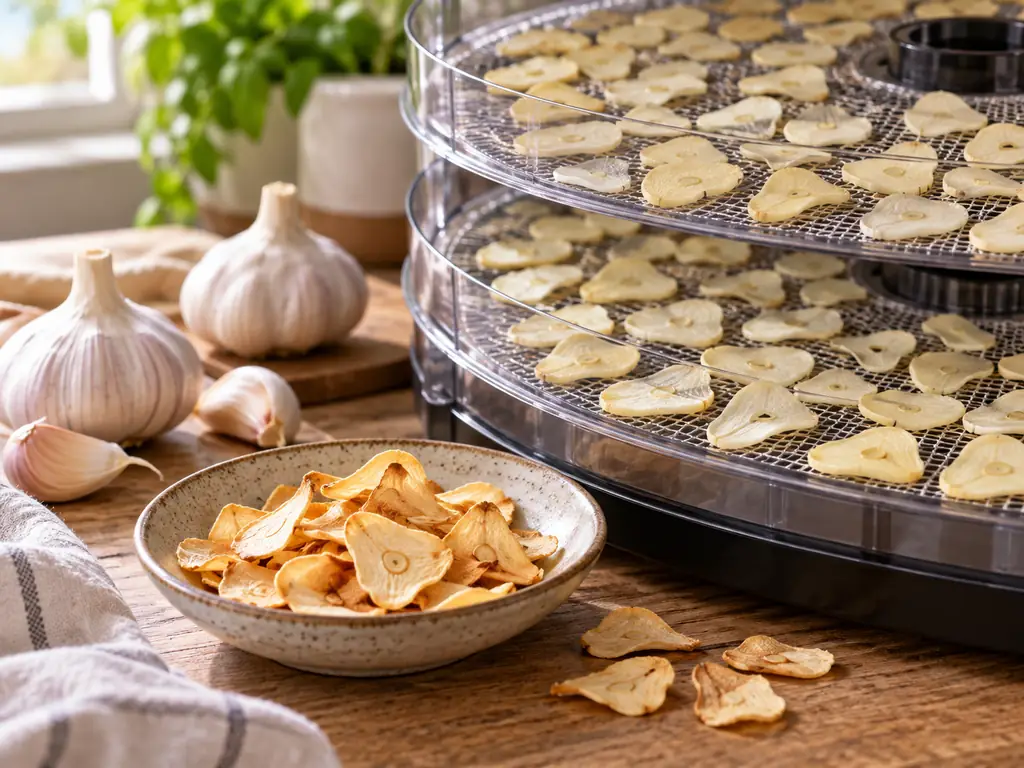
Thin garlic slices dehydrate into crisp pieces that can be ground into garlic powder; dry them completely before milling or packing.
Method
- Choose firm garlic bulbs. Separate the cloves, peel them and trim away any damaged or discoloured parts.
- Slice cloves evenly to about 6 mm thick so they dry at a similar rate; do not add oil or wet seasoning.
- Arrange slices in a single layer on dehydrator trays with air space between pieces.
- Dry at about 60°C (140°F) for roughly 2–3 hours, checking the thickest pieces; they should be crisp and brittle throughout. Continue drying if any remain flexible or damp.
- Cool completely, then store slices airtight away from light and moisture. Grind only small amounts into powder as needed; discard if condensation or mould appears.
Storage
Airtight container in a cool, dry, dark place · Check for moisture or clumping; no exact period stated
Sources and scope
- Garlic — Utah State University Extension
Method-specific source recorded in the prior content audit
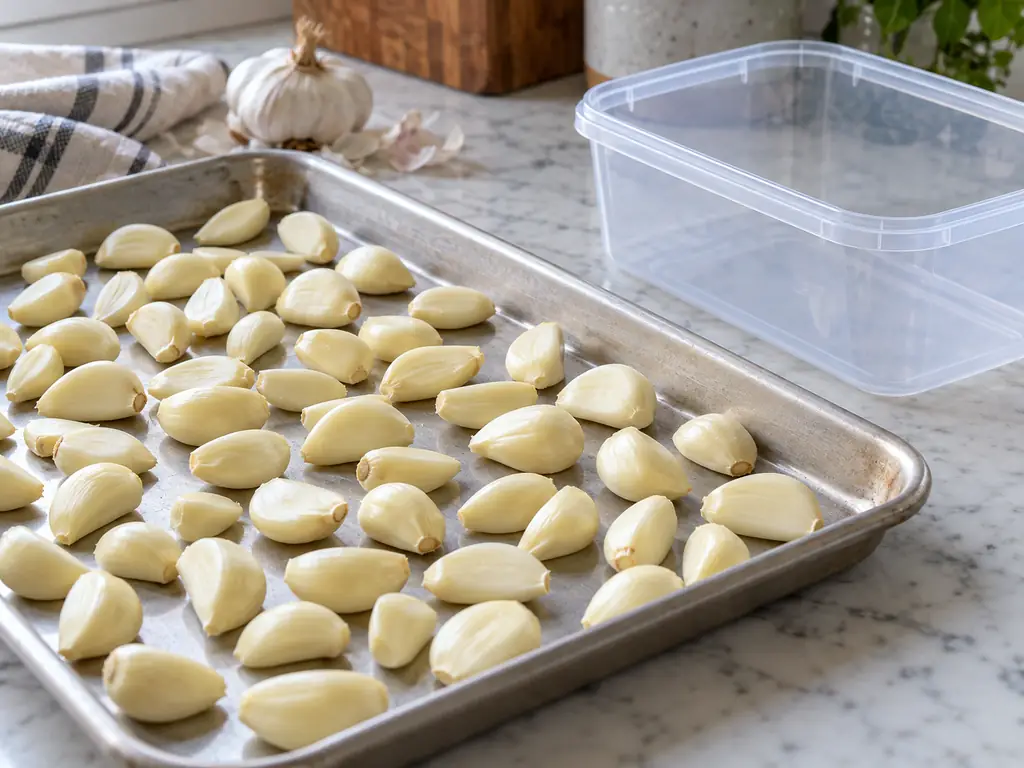
Freezing Cloves for Garlic
General preservation or storage guidance
Whole or chopped garlic can be frozen in tightly sealed cooking portions, though frozen garlic may lose flavour and change texture.
Method
- Choose sound garlic bulbs. Separate cloves, peel them if desired, and discard dried, soft or mouldy cloves.
- Freeze cloves whole, or chop/mince the amount you usually use in one dish. Do not mix fresh garlic with oil for room-temperature storage.
- Wrap cloves or portions tightly in freezer-safe film or place them in small freezer containers to limit garlic odour transfer.
- Label and freeze promptly. Keep the portions sealed and continuously frozen.
- Use frozen cloves directly in cooking, or thaw only the needed portion in the refrigerator. Texture and flavour may be weaker after freezing; do not refreeze thawed garlic.
Storage
Freezer at −18°C or colder in airtight wrapping · Keep continuously frozen; no exact quality period stated
Sources and scope
- Garlic — Utah State University Extension
Method-specific source recorded in the prior content audit
- Freezing Garlic In Oil — National Center for Home Food Preservation
Method-specific source recorded in the prior content audit